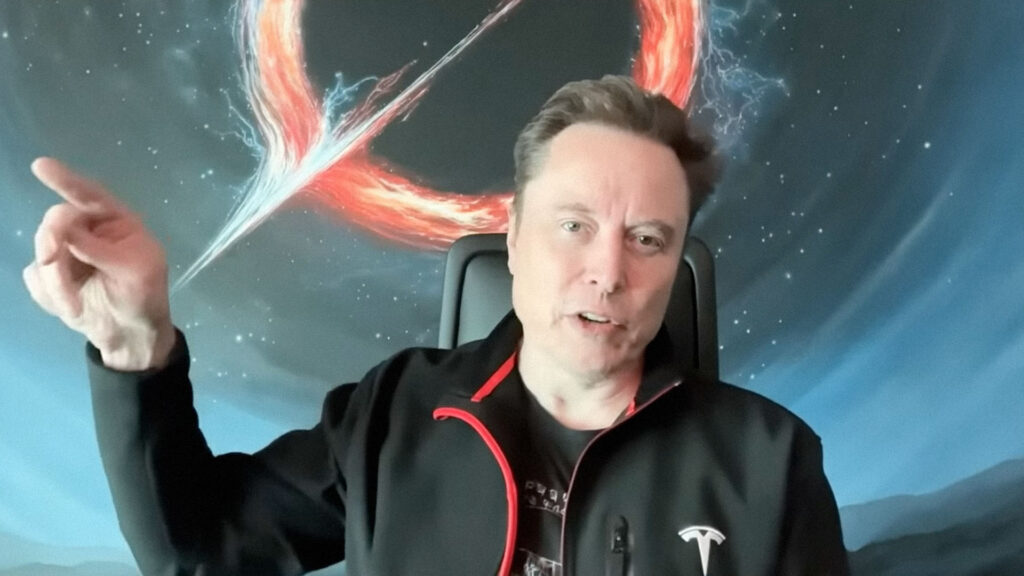
In a recent exchange, Elon Musk addressed remarks made by Ford CEO Jim Farley, who suggested that BYD, rather than Tesla, should be viewed as the main competitor in the U.S. automotive industry. Farley’s comments came during the Rapid Response podcast, where he argued that American automakers should focus on Chinese competitors like BYD when assessing market threats.
Farley stated, “If you’re an American and you want us to beat the Chinese in the car business, you’re all going to want to pay attention, not necessarily to Tesla.” He further noted that Tesla hasn’t released an updated vehicle recently, though he acknowledged their past successes.
Musk responded by highlighting Tesla’s ongoing developments, particularly the pending approval of their Full Self-Driving (Supervised) software in China and the production capabilities of their Shanghai plant. “This is before supervised FSD is approved in China. Limiting factor is production output in Shanghai,” Musk commented.
GigaShanghai’s Role in Tesla’s Strategy
Tesla’s Shanghai factory, GigaShanghai, plays a crucial role in the company’s global operations. In March, the plant delivered over 85,600 vehicles, marking an 8.7% year-over-year increase. For the first quarter, the plant’s deliveries reached 213,000 units, representing nearly 60% of Tesla’s global output for that period.
Grace Tao, Tesla’s VP of China, revealed that the plant’s product localization rate exceeds 95%, supported by over 400 Chinese suppliers. Notably, the Shanghai facility also serves as Tesla’s largest export hub, having shipped more than 29,000 vehicles in March alone.
Beyond automotive production, GigaShanghai might also play a role in manufacturing Optimus humanoid robots, as suggested by a Tesla China executive. However, no specific plans have been confirmed yet.
Challenges for Full Self-Driving Approval in China
While Tesla’s Full Self-Driving software is awaiting full regulatory approval in China, Musk predicted that such approval might happen by early 2026. Despite this optimism, Chinese state media reported that approval is not imminent, and Tesla currently only has partial authorization to test on public roads.
Meanwhile, Chinese firms like XPeng and Baidu are advancing their autonomous technologies, offering competitive systems often at no extra cost to consumers.
Musk on BYD’s Production Issues
In line with his response to Farley, Musk has previously commented on BYD’s challenges, particularly their significant sales decline in February, which marked the worst in six years. He noted the financial difficulties of running a factory below 50% capacity, describing it as “mega pain.”
Farley’s Perspective on Chinese Competition
Farley praised BYD for its cost efficiency, supply chain management, and manufacturing expertise, while also acknowledging the substantial government subsidies Chinese manufacturers receive. He warned that global automakers must become cost-competitive to survive against Chinese firms.
Although initially critical of the potential impact of Chinese EVs in the U.S., Farley later emphasized the importance of partnerships with Chinese companies, reflecting Ford’s strategic discussions with Geely and BYD on shared manufacturing and battery supply.
Ford’s EV Strategy and Restructuring
Farley highlighted the need for American automakers to innovate, indicating that future U.S. EV buyers will demand diverse and affordable options. Ford is developing a Universal Electric Vehicle platform to offer a competitively priced electric pickup truck, following the discontinuation of the F-150 Lightning.
This initiative is part of Ford’s broader restructuring of its EV business, which includes merging its Electric Vehicle, Digital, and Design teams with its global Industrial System. Despite financial challenges, Ford remains committed to its EV strategy, projecting profitability by 2029.
Original Story at eletric-vehicles.com