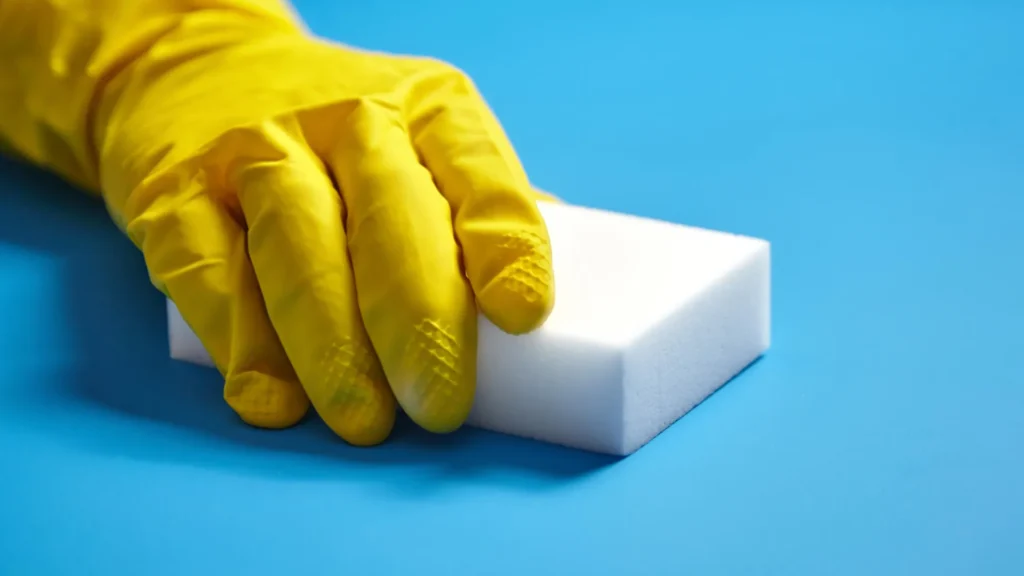
If you’ve ever used a “magic eraser” to tackle stubborn stains, you know how effective these sponges can be. However, there’s growing concern among scientists about the environmental impact of these cleaning tools. As melamine sponges break down, they release tiny plastic particles that contribute to microplastic pollution.
A recent study in ACS Environmental Science & Technology highlights that melamine sponges could be a significant source of microplastics. Researchers estimate the monthly release of over a trillion microplastic fibers globally, stemming from the use and disposal of these sponges.
Understanding Melamine Sponges
Melamine sponges are crafted from poly(melamine-formaldehyde) polymer, forming a rigid network of plastic strands within a lightweight foam. While soft to touch, the sponge’s internal structure functions like fine sandpaper, allowing it to erase stains by physically scraping them away. This same action, however, causes the sponge to wear down over time.
The Microplastic Release Process
As the sponge is used, small foam pieces wear away, breaking down into microplastic fibers. These fibers, often smaller than 5 millimeters, can be difficult to detect. Once they enter wastewater systems, they may pass through treatment plants and eventually end up in natural water bodies, posing a risk to aquatic life and potentially entering the human food chain.
The Study’s Insights
Researchers Yu Su, Baoshan Xing, Rong Ji, and their team investigated how much plastic these sponges release by testing products from three major brands. By simulating real-world use, they discovered that denser sponges tend to release fewer microplastic fibers compared to less dense ones.
The study estimated that a single sponge could release about 6.5 million fibers per gram of material lost. By combining this data with sales figures, they projected that around 1.55 trillion microplastic fibers could be released monthly, primarily based on Amazon sales data from August 2023. This number could be even higher considering other retailers.
Addressing Microplastic Pollution
To mitigate the environmental impact, manufacturers could design denser, more durable sponges to reduce fiber release. Consumers can also consider using natural cleaning materials without plastic content or improving filtration systems to capture microplastics before they reach the environment.
An Overlooked Environmental Concern
While melamine sponges are efficient cleaning tools, their contribution to microplastic pollution is a growing concern that many might not have considered. This everyday product could have a more significant environmental impact than initially thought.
The study received funding from the National Natural Science Foundation of China and the Key-Area Research and Development Program of Guangdong Province.
Original Story at www.sciencedaily.com