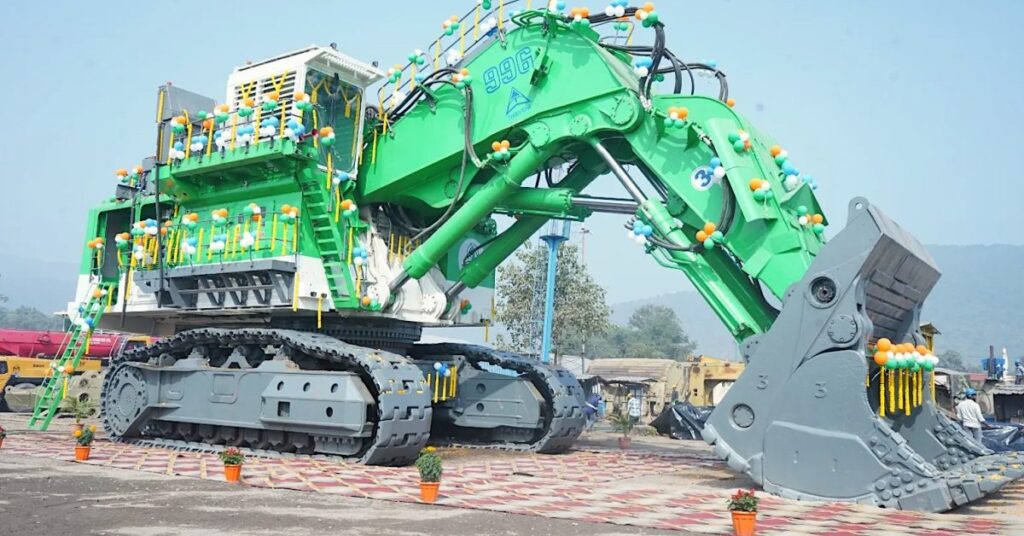
Lloyds Metals Pioneers Eco-Friendly Mining with Electric Excavator Conversion
In an innovative leap towards sustainable mining practices, Lloyds Metals and Energy has successfully converted a massive 650-ton Liebherr R 996 excavator from diesel to electric power. This marks the company’s first step in a series of planned transformations aimed at reducing emissions and operational costs.
Previously, Liebherr had set the precedent for such conversions in 2024 with the R 9400 model at Fortescue’s Christmas Creek site in Australia. However, Lloyds Metals has taken a bold step by independently executing this conversion through its in-house engineering teams, completely redesigning the power, control, and safety systems of the excavator.
According to B. Prabhakaran, Managing Director of Lloyds Metals and Energy, the initiative is about more than just electrifying equipment. “This landmark achievement, is not just about electrifying a machine,” explains Prabhakaran. “(It) is about reimagining the future of mining. At LMEL, we believe that responsible mining and sustainability must go hand in hand. This achievement demonstrates India’s capability to deliver world-class, zero-emission solutions in even the most complex and heavy-duty environments.”
Commitment to “Make in India”
The conversion aligns with Lloyds Metals’ dedication to the “Make in India” initiative by developing and sourcing all major components domestically. Although specific details about the electric R 996’s performance are not yet public, it is expected to rival its diesel counterpart, which boasts the ability to move 60-70 tons per pass and nearly 3,000 horsepower.
Industry-Wide Shift Towards Electrification
With increasing pressure to move away from fossil fuels, the mining industry is rapidly adopting electric solutions. At CES 2024, companies like Hyundai, Bobcat, Volvo CE, and Caterpillar showcased electric and autonomous mining equipment. These advancements are crucial as analysts, including IDTechEx, highlight the significant fuel costs associated with traditional equipment.
Electric haul trucks, such as the 240-ton model from Caterpillar, offer the potential for cost-free recharging in scenarios with extensive regenerative braking. This shift not only reduces fuel expenses but also minimizes maintenance and downtime, enhancing the total cost of ownership benefits.
SOURCE | IMAGES: Lloyds Metals; via EPC, Future Mobility.
Original Story at electrek.co