Lessons from Hurricane Lala: Power Outages and Grid Resilience in Hawaiʻi
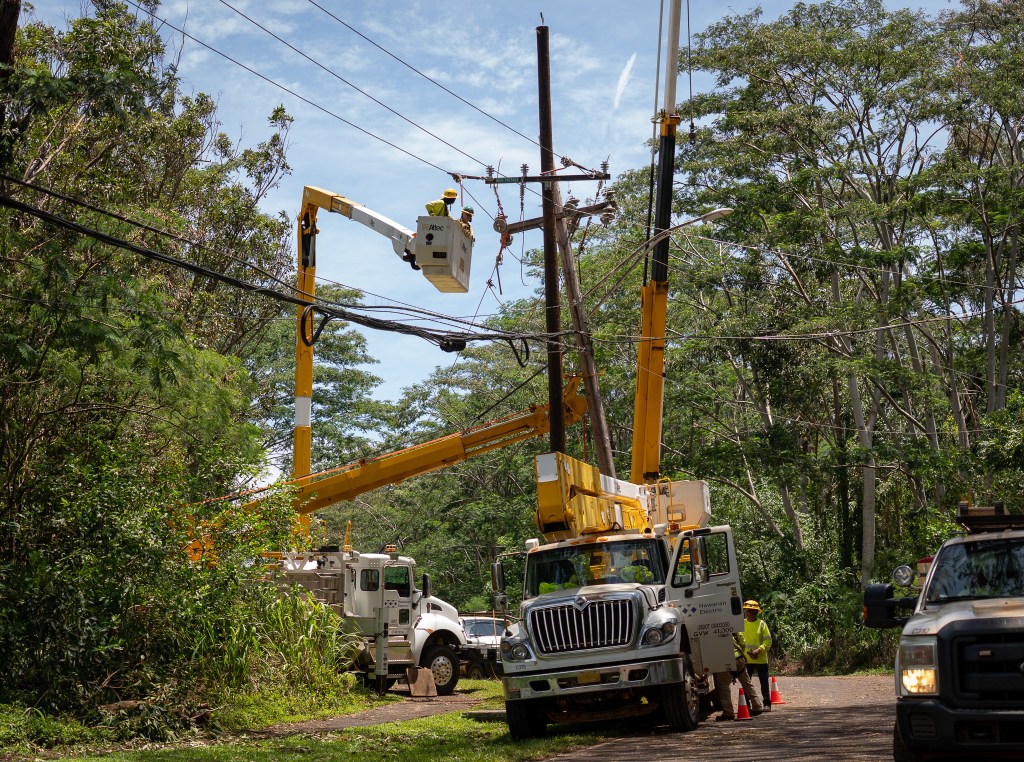
As Hurricane Lala unleashed its fury on Hawaiʻi, leaving a significant portion of its residents without power, questions about the state’s energy infrastructure have surfaced. Despite Hawaiian Electric Co.’s (HECO) previous investments in grid fortification, the storm exposed vulnerabilities that have prompted calls for a deeper investigation into the causes of the outages.
Following Lala’s impact, which left 60% of Hawaiʻi households in darkness, the urgency to understand the grid’s failure couldn’t be more pronounced. Many residents, already familiar with power disruptions from past weather events like the Kona lows, now face extended outages, particularly in areas such as rural Kaʻū on the Big Island.
HECO’s efforts to bolster the grid have been ongoing, highlighted by a $190 million initiative launched in 2021 to enhance infrastructure. However, the focus shifted towards wildfire prevention after the devastating fires on Maui in 2023. This reallocation of resources has meant less investment in trimming the invasive albizia trees, identified as a primary cause of downed power lines during Lala.
Jim Kelly, HECO’s vice president, pointedly remarked, “All the albizia that you see, that’s the No. 1 culprit. All it takes is an errant branch.” The challenge now is understanding the grid’s weaknesses in detail, but without access to granular data from HECO, a comprehensive assessment remains elusive.
Grid Vulnerabilities and Community Impact
The aftermath of Lala also highlighted disparities in power restoration. Residents like Miyuki Bridgewater, who faced days without electricity, questioned why their neighbors remained unaffected. This inconsistency is attributed to different HECO circuits serving clusters of homes within neighborhoods.
The storm’s high winds, reaching 91 mph in Kohala and 84 mph on Oʻahu, exacerbated these outages. HECO had to bring in additional linemen from California to help with the widespread damage, which included washed-out bridges and blocked roads.
System Upgrades and the Focus on Wildfires
In response to increasingly severe weather patterns, HECO sought approval from the Public Utilities Commission (PUC) to charge customers for a resilience program. The program, initially focused on transmission hardening, shifted towards wildfire prevention following the Lahaina fire.
While the PUC approved increased funding for wildfire mitigation, budget cuts affected tree removal and infrastructure hardening efforts. Despite this, HECO has made headway in areas like vegetation management, spending over $103 million to address tree-related risks since 2021.
Call for Transparency and Investigation
Energy activist Henry Curtis is advocating for a transparent investigation into the systemic issues exposed by Lala. Curtis argues that a public inquiry, facilitated by the PUC, could provide necessary insights into the grid’s resilience and help prevent future outages.
“We have a problem. We’re having all these disasters,” Curtis stated. “What do we do so when the exact same thing happens in the future, we don’t get the same result?”
As Hawaiʻi continues to deal with the aftermath of extreme weather events, the focus remains on balancing necessary grid upgrades with the cost to consumers, who already pay some of the highest electricity rates in the nation.
“We have solutions,” Kelly said. “The question is what choices do we want to make? How much do we want to pay? And are these solutions acceptable to communities?”
Original Story at www.civilbeat.org