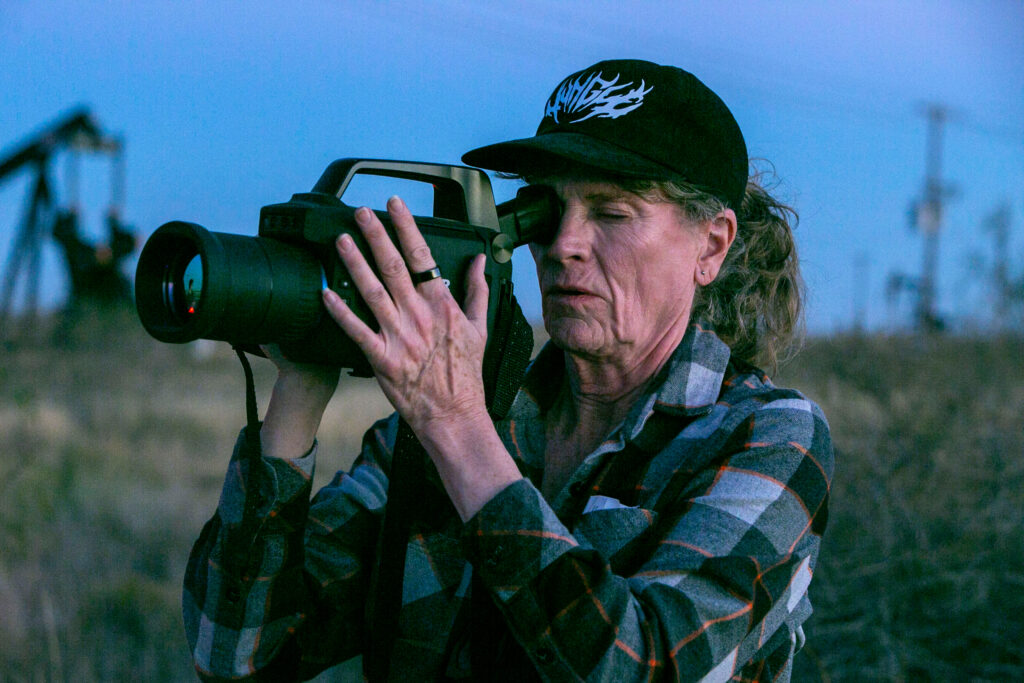
Methane gas emissions continue to pose significant environmental challenges in the Permian Basin of West Texas. The gas escapes from oil wells, pressure valves on pipelines, and processing plants, and rises in plumes during routine maintenance in the nation’s largest oilfield.
Efforts to control these emissions have been largely ineffective over the past decade. The Obama administration introduced methane standards in 2015, which were later rolled back by the first Trump administration. The Biden administration’s detailed rules were subsequently blocked by the second Trump administration.
The current Trump administration is set to release its own proposed methane regulations this month, as announced by Environmental Protection Agency Administrator Lee Zeldin.
Methane, a powerful greenhouse gas, continues to leak from the Permian Basin and other U.S. oilfields, coinciding with record-breaking global temperatures.
“Methane emissions are not slowing down,” said Sharon Wilson, a Texas activist who has documented oil and gas pollution for over 20 years. “It’s invisible, so people don’t realize it’s happening.”
Wilson uses an optical gas imaging camera, worth $50,000, to detect invisible gases. Methane, the main component of natural gas, emerges with oil and is often captured for energy or export as LNG. However, a significant amount is released as waste.
The founder of Oilfield Witness, Wilson documents gas releases from the vast oilfields in Texas. Large emissions often occur during blowouts at oil or gas wells, where equipment failures allow methane to escape uncontrolled.
“Methane emissions from fossil fuel operations show no signs of decreasing,” stated the International Energy Agency’s 2026 global methane tracker.
Wilson regularly captures emissions from malfunctioning flares—structures meant to burn off excess gas—and compressor stations relieving pipeline pressure. These emissions are seldom reported to regulators.
During disruptions like severe weather, entire systems may release methane through emergency valves, a process known as venting.
Gunnar Schade, an atmospheric scientist at Texas A&M University, noted, “Methane plumes are present at all times in the Permian Basin due to the high density of wells.”
A study published in May 2026 identified venting from oil and gas as the largest source of methane emissions.
A Potent Greenhouse Gas
Methane is the second-largest contributor to global warming after carbon dioxide. It absorbs over 80 times more heat than carbon dioxide over a 20-year period, making even small amounts impactful.
Scientists have long targeted methane as a priority to curb near-term global warming.
The U.N. Environment Program’s 2021 press release emphasized the urgent need for international collaboration to reduce methane emissions this decade.
Despite efforts, methane concentration in the atmosphere continues to rise alongside record levels of coal, oil, and gas production. The year 2026 is on track to be the warmest recorded.
The livestock industry and landfills are the largest sources of methane globally, according to a Global Methane Budget report by the European Geosciences Union. Natural emissions from wetlands are the second-largest source, with fossil fuels accounting for 20% of global emissions.
Another study in 2026 identified the Permian Basin as the top methane emitter among six major oil and gas basins.
A 2026 study in Environmental Science & Technology estimated Permian Basin emissions at 5.1 million metric tons annually, nearly 1% of global methane emissions.
In Texas, most releases go unreported, as noted in a March 2026 study by RMI.
The Texas Railroad Commission, the state’s oilfield regulator, “does not rigorously enforce reporting or test the validity of reported gas volumes,” the report stated.
For some companies, releasing methane is more financially viable than capturing it for sale. When gas prices rise, emissions decrease, according to RMI data.
Ten Years Making Rules
During his first week as president, Joe Biden issued an executive order to tackle climate change, leading to the EPA’s proposal of new regulations.
The regulations prohibited routine flaring or venting, mandated leak monitoring, set hardware standards, and imposed a fee on excessive methane emissions.
However, the second Trump administration blocked these rules. A planned 2025 methane emissions fee was delayed for a decade.
Zeldin issued exemptions to a Biden-era flaring prohibition at new wells just before it took effect in May 2026.
The Trump administration has proposed ending all requirements for companies to report greenhouse gas emissions, including methane.
The administration will soon release its proposed methane regulations for oil and gas, followed by a public comment period.
According to Wilson, enforcement is challenging due to the vast and sparsely populated oilfields. “Even with the best rules, we need more personnel to enforce them,” she said.
Julia Kane, a researcher at Fieldnotes, noted that unenforceable rules benefit companies, who prefer to maintain rules with significant loopholes rather than face repeal.
“Companies want to claim regulation without being truly regulated,” Kane explained.
Original Story at insideclimatenews.org