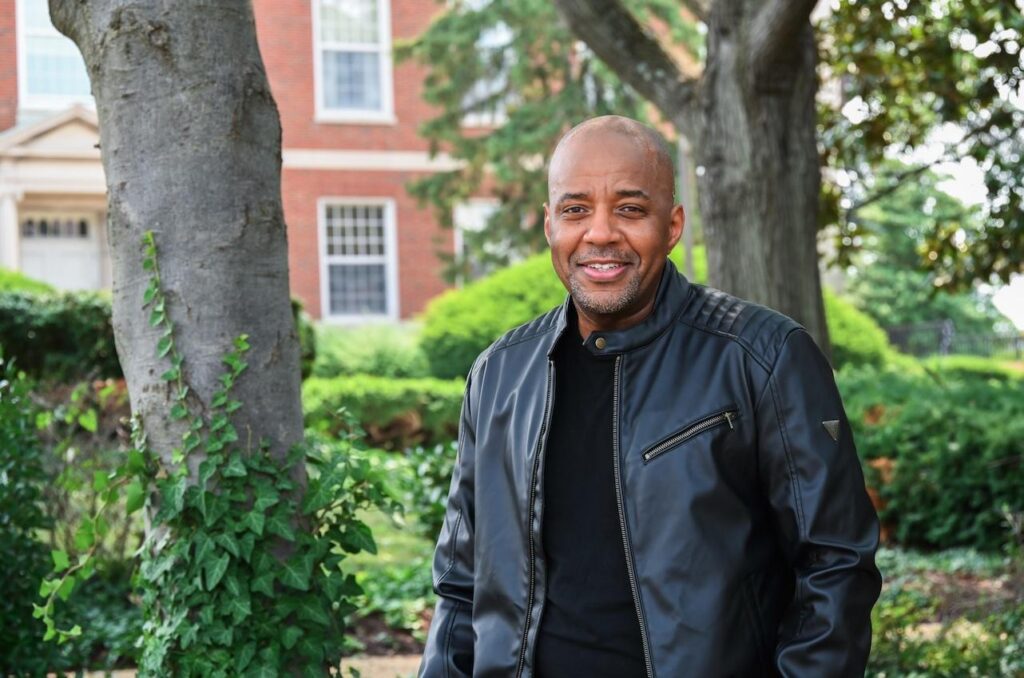
Exploring Systemic Solutions to the Environmental Crisis with Lemir Teron’s “Unlearn Power”
While the world often turns to solar panels and electric vehicles as solutions to climate change, Howard University scholar Lemir Teron argues for a broader conversation. He emphasizes the need for systemic solutions and collective action to address environmental justice.
Teron, an associate professor in the Department of Earth, Environment and Equity at Howard University, delves into these issues in his book “Unlearn Power: Strengthening Communities in the Age of Environmental Crisis.” The book investigates how climate change and urban planning disproportionately impact vulnerable communities.
“Unlearn power is about resistance,” Teron stated, emphasizing the importance of examining resistance across various communities, including urban, indigenous, and agricultural workers.
Teron’s book is the result of over a decade of research focusing on energy policy and environmental planning. With his academic background, including a Ph.D. in energy and environmental policy from the University of Delaware, Teron brings a wealth of knowledge to the discussion.
Before joining Howard University, Teron taught at SUNY’s College of Environmental Science and Forestry. His book utilizes case studies and analytical methods to explore environmental justice and climate policy. Topics include urban growth, the benefits of green spaces, and the need for equitable food systems.
The appendices of “Unlearn Power” include Teron’s congressional testimony and various writings, reinforcing the book’s argument for rethinking power dynamics in energy and politics.
Teron recently cited the D.C. region’s extreme summer heat as indicative of how environmental issues intersect with labor concerns. “If you’re delivering mail or working in a factory, you’re going to be exposed to temperatures probably well in excess of what that meteorologist says,” he noted, urging a focus on labor rights in climate discussions.
Howard University’s College of Arts and Sciences recently launched the Department of Earth, Environment and Equity, which is rapidly growing with over 100 students across three majors. Teron was among the first faculty members, describing the Howard teaching environment as “a magical place” enriched by a diverse student body.
He teaches courses on environmental justice, inequality, and policy, and encourages hands-on learning through field trips and practical projects. Teron believes that individual actions alone won’t solve climate issues, advocating for community-driven projects and policies.
“Not everybody’s going to have $20,000 to get solar panels,” Teron pointed out, stressing the importance of collective solutions like community solar initiatives and improved public transportation.
“Unlearn Power” explores how cities can balance growth with equity, and the role of urban green spaces in enhancing public health and community resilience. Teron also addresses urban heat islands and the need for better planning to mitigate their effects.
“We shouldn’t be resigned to catastrophic environmental impacts,” Teron argued. “The goal is a planet that’s not just a coherent place to live, but a place that is commensurate with human dignity.”
Original Story at thedig.howard.edu