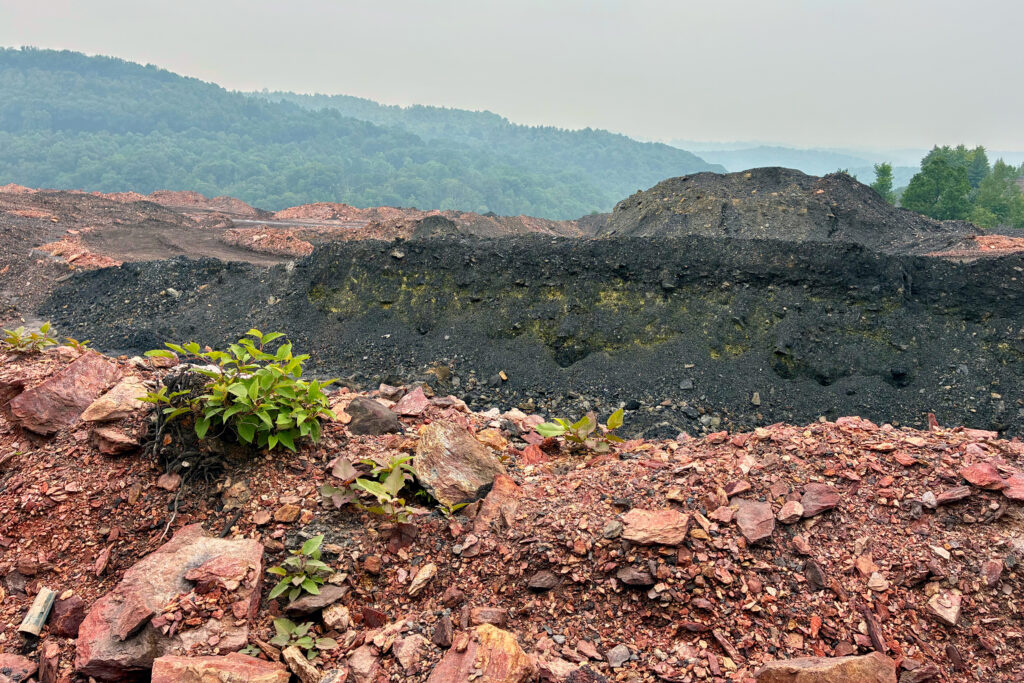
WINDBER, Pa. – On the banks of Paint Creek in western Pennsylvania, Jim Panaro highlighted the pollution’s visible signs. The orange stains are from iron, while milky-white pools indicate aluminum. Beneath the surface, other toxic metals like copper, cadmium, and arsenic pose risks to aquatic life and humans.
Behind Panaro lies Windber Mine 37’s coal waste pile, near Johnstown, one of many in Pennsylvania left from the coal industry’s peak. Known as waste coal or “gob,” this material is inefficient for fuel due to low carbon content and impurities.
Panaro, an executive at Robindale Energy, oversees waste coal combustion in specialized plants. A local resident and fly-fisherman, he noted positive changes in local waterways.
“I never thought I’d see streams I can now trout fish in,” Panaro remarked.
However, the cleanup is expensive and environmentally taxing. Pennsylvania’s waste coal industry is bolstered by public subsidies via the Alternative Energy Portfolio Standards (AEPS), requiring utilities to source energy from designated sectors. The industry also benefits from approximately $50 million annually in state tax breaks since 2016.
Waste coal combustion is more carbon-intensive than traditional coal. A 2025 study found it produces 7% to 118% more greenhouse gas emissions per energy unit. Critics argue these subsidies hinder Pennsylvania’s renewable energy progress. The state ranks 42nd nationally in renewable energy generation, with more energy from waste coal than solar, as reported by the Independent Fiscal Office.
Environmental advocates and lawmakers are pushing for policy change. Pennsylvania’s Republican-controlled Senate supports pro-fossil fuel policies, while some Democratic lawmakers also back subsidies for local waste coal interests. Greg Vitali, a Democrat, notes internal party reluctance to reform subsidies.
Introduced in the AEPS’s early days, waste coal was classified as an alternative energy source, purportedly to address legacy pollution. However, groups like PennFuture criticize this approach, labeling it as shifting pollution “from the land to the air.” Waste coal plants emit more pollution than renewable sources and require disposal of toxic coal ash.
Since 2020, regulations mandate that coal waste originate from within Pennsylvania, increasing costs significantly. Robert Routh of the NRDC states that subsidies for Tier II fuels, including waste coal, rose 13-fold, totaling $180 million in 2025. These costs impact ratepayers’ utility bills.
Routh and others argue that AEPS goals are unmet due to waste coal. The Pennsylvania House Bill 501 proposes revising standards to favor renewables, but faces resistance. Democrat State Rep. Danielle Friel Otten mentions policy focus has shifted to PJM Interconnection, delaying AEPS discussions.
Despite the push for renewable energy, waste coal remains supported locally. Paint Creek, once a picturesque site, is now heavily contaminated. Panaro emphasizes Robindale’s cleanup efforts, having removed over 72 million tons of waste.
The political landscape complicates waste coal policy. State Rep. Paul Takac, acknowledging the magnitude of waste coal piles, supports financial aid but also endorses revisions to elevate renewables. House Bill 501 passed committee in 2025, but awaits further action.
Industry leader Rob Altenburg argues cost spikes arise from accessing lower-quality coal farther from plants. ARIPPA’s Jaret Gibbons counters, citing border closure as vital for industry stability, which employs 2,200 people.
Otten’s PRESS Bill proposes increasing renewable energy targets while reducing waste coal dependency. Takac believes the legislation needs updates, as current standards are imbalanced.
Recent energy cost hikes present an opportunity to amend AEPS. Yet, disagreements over waste coal persist. Some lawmakers advocate for removing it from AEPS, suggesting separate state management with diverse oversight.
Katie Blume of Conservation Voters of Pennsylvania calls for a nonpartisan solution that balances environmental cleanup with job preservation.
Escalating costs may eventually propel policy change, predicts Tom Schuster of the Sierra Club. At Mine 37, Panaro and Gibbons caution against altering AEPS, fearing plant closures and halted cleanups.
Original Story at insideclimatenews.org