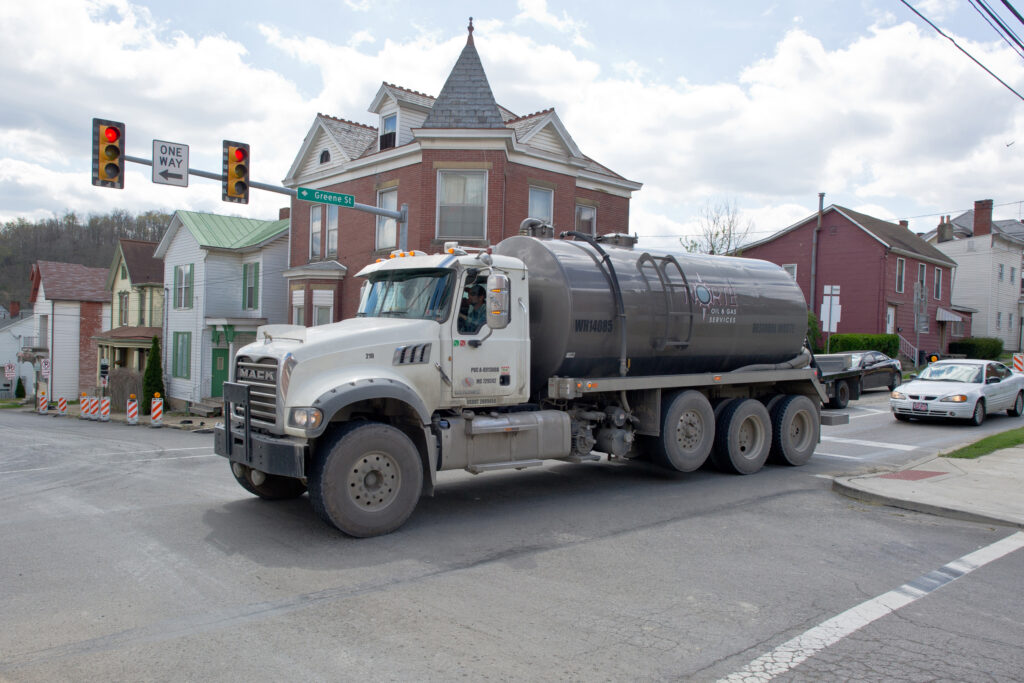
In rural Western Pennsylvania, communities regularly use brine from local oil and gas wells to control dust and ice on unpaved roads. This practice is enabled by a state law loophole, which critics argue poses environmental and health risks.
A significant legal challenge to this practice is currently before the state’s Environmental Hearing Board, following a 2018 case that led the Department of Environmental Protection (DEP) to halt formal approvals for “roadspreading” of oil and gas waste. Companies have since labeled these liquids as “coproducts,” claiming they match commercial products after testing for toxic metals and radioactive materials. The DEP deemed a company’s coproduct testing invalid, leading them to appeal to the board.
The outcome could have widespread ramifications, according to David Hess, former DEP secretary. Siri Lawson, a Warren County resident, has long opposed roadspreading, citing health concerns linked to industry pollutants. Lawson played a key role in the 2018 case that resulted in stricter DEP regulations, temporarily halting such approvals statewide.
Lawson feared a potential policy reversal during DEP’s settlement talks with BCD Properties, the appellant in the current case. The attorney for BCD Properties did not respond to requests for comment. The DEP opted not to comment on active litigation but moved to dismiss BCD’s appeal after settlement talks appeared unsuccessful.
The Pennsylvania Independent Oil & Gas Association, representing conventional well operators, defends roadspreading, citing its long-standing use to combat dust pollution in rural areas. They argue that municipal workers follow best practices, ensuring safety.
Concerns primarily focus on the wastewater’s content. A 2022 study by Pennsylvania State University indicated that brine runoff contains harmful levels of chlorides, sodium, and radium. The study also found brine no more effective than rainwater for dust control. However, industry representatives dispute the study’s findings, claiming it doesn’t reflect real-world conditions.
A Spreading Concern
The BCD appeal highlights ongoing debates about regulating drilling waste for roadspreading. Former DEP Secretary John Quigley noted that while fracking-derived roadspreading is banned, conventional oil and gas operations remain unregulated due to political pressures. This leaves the DEP with limited enforcement capabilities.
In its legal filings, BCD claims the DEP hasn’t established clear standards for permits, prompting them to pursue the coproduct route. The company compared its fluids to those of a competitor with a longstanding permit. However, in 2023, DEP deemed BCD’s analysis flawed, leading to the appeal.
What Happens Next
The case’s resolution remains uncertain. DEP’s April letter criticized BCD’s coproduct analysis for being insufficient, citing its limited consideration of potential pollutants. BCD’s analysis focused on only five constituents, while the DEP requires a broader evaluation.
Hess argues that BCD’s analysis did not adhere to state regulations. The DEP has contested the adequacy of BCD’s testing, impacting its ability to obtain a permit. The case may influence the regulatory framework governing roadspreading, with potential implications for environmental enforcement.
State Rep. Greg Vitali has repeatedly proposed legislation to ban roadspreading from conventional wells. Despite support from the current administration, the bill faces significant political hurdles. Local stakeholders continue exploring alternatives, such as using treatment technology to make wastewater safer for road use.
According to Lawson, industry players persistently seek loopholes to continue roadspreading.
Original Story at insideclimatenews.org