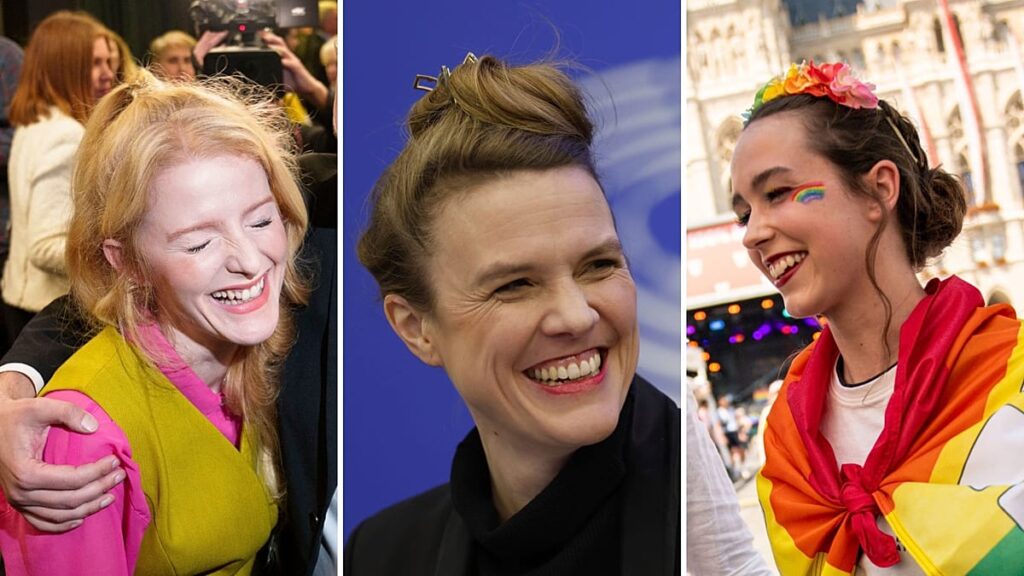
In a landmark shift in UK politics, Hannah Spencer has become the first Green Party MP elected in northern England. This achievement signals a potential turning point for the Green Party, which has traditionally struggled to appeal beyond its southern UK strongholds. Spencer, a plumber by trade who left school at 16, embodies a new kind of representative for green politics, attracting a demographic the party has long aimed to reach.
Spencer’s campaign resonated with promises to tackle everyday problems like the cost of living and introduce rent controls. Her pledge to address litter and fly tipping also struck a chord with voters. Despite her historic election, Spencer has faced skepticism about her working-class roots and unfounded rumors about her personal life.
“The right don’t like the idea of a young, working-class woman in politics,” Spencer remarked to the New Statesman, suggesting that Westminster is often seen as exclusive to those from privileged backgrounds. Indeed, a 2019 study revealed that only 7% of UK MPs have working-class backgrounds.
The Intersection of Sexism and Climate Politics
Spencer is not alone in facing backlash. Austrian Green MEP, Lena Schilling, who transitioned from being a Fridays for Future activist, also endures hostile attacks. “Sexist abuse, personal attacks and a loss of privacy are unfortunately part of the reality,” Schilling shared.
Research in the journal Climatic Change shows a link between sexism and climate denial, suggesting a defense of the socio-economic status quo. Online platforms amplify such harassment, with a German study by HateAid and the Technical University of Munich indicating that women face more frequent and severe online attacks. This environment discourages many women from political participation, as 22% have considered leaving politics due to digital violence.
Gender Parity in Green Politics
The European Green Party stands out with formal gender quotas, a strategy some view as positive discrimination. However, a 2024 King’s College London study confirms quotas as effective in promoting women’s leadership. Terry Reintke, Co-President of the Greens/EFA group, emphasizes, “Parity is in our Green DNA.”
Women hold 68% of leadership roles in the European Green Party, the highest among Europarties. Reintke, from Germany’s Ruhr region, stresses the importance of inclusive leadership in shaping policy and representation. Eleven EU states have gender quotas for elections, yet global progress remains uneven. At the COP30 climate summit, women comprised only 40% of national delegations.
The Greater Impact of Climate Change on Women
Studies show climate change disproportionately affects women and children, who are 14 times more likely to die from extreme weather events. Women also constitute four out of five climate-related displaced persons. However, increased female representation in politics correlates with stricter climate policies and reduced emissions. Schilling recalls Austrian Green minister Leonore Gewessler’s efforts to save the Nature Restoration Law as a pivotal moment illustrating the power of women in leadership roles.
Shaping the Political Landscape
Spencer’s vision goes beyond personal ambition. “I’m not here to be a career politician,” she stated, aspiring to pave the way for others with similar backgrounds. Schilling echoes this sentiment, emphasizing that politics extends beyond formal institutions to include grassroots movements and community initiatives. “When more women step forward into leadership, we do not just change politics – we change the future,” she concludes.
Original Story at www.euronews.com