The Shift in Global Energy Production Amid Fossil Fuel Crisis
As the closure of the Strait of Hormuz sparked a new wave of energy challenges, a remarkable shift is happening in global power generation. Despite initial concerns, the decline in fossil fuel use has been countered by a significant rise in renewable energy, particularly solar and wind, rather than a turn to coal.
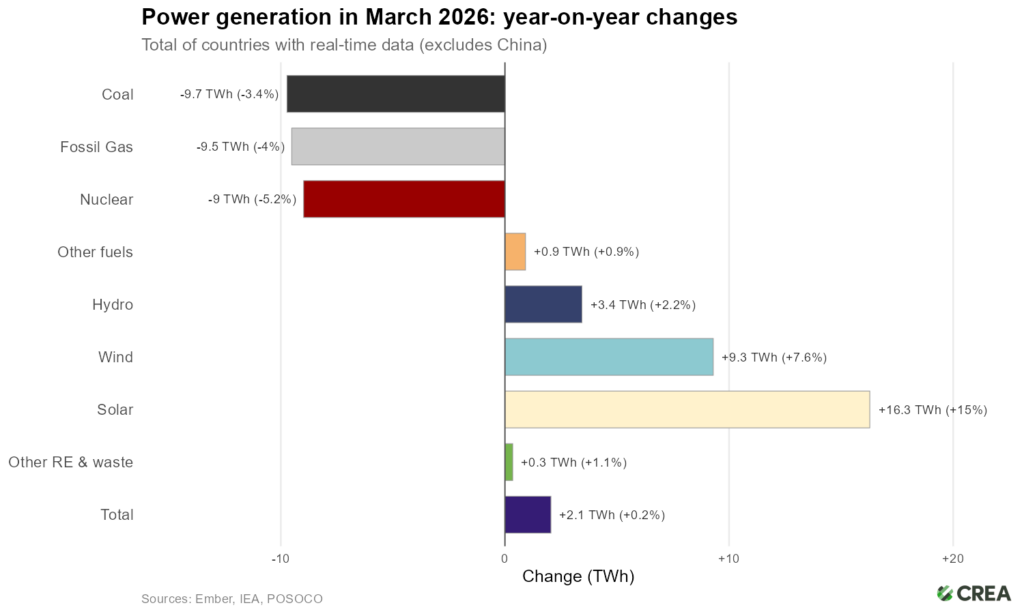
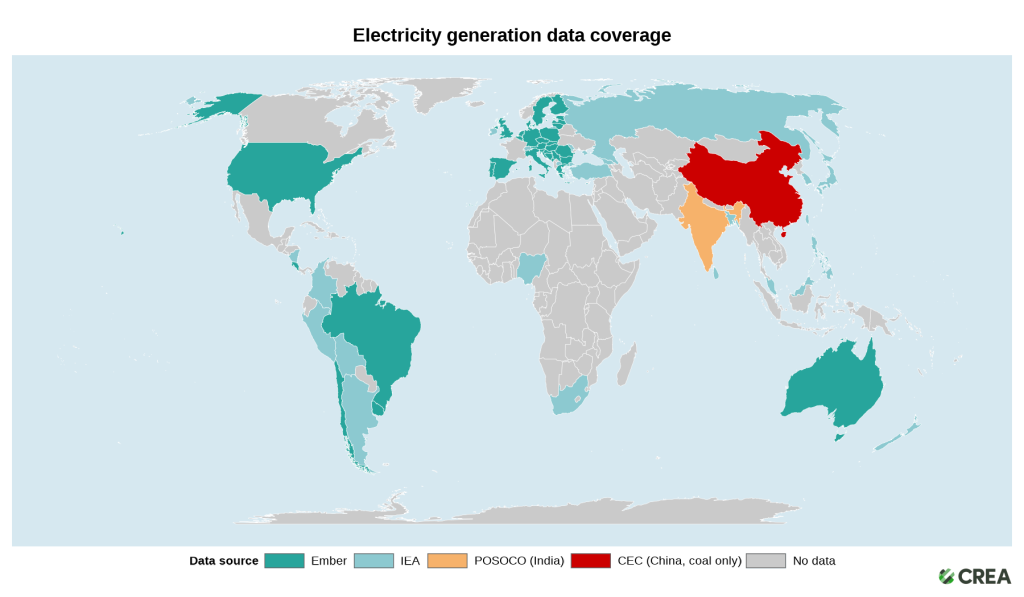
Data collected from countries providing near-real-time power generation statistics, covering 87% of global coal and over 60% of gas-fired power generation, shows a 1% reduction in total fossil fuel power generation year-on-year. While coal-fired generation remained stable, gas-fired power saw a 4% drop. This dataset includes major energy markets like China, the U.S., the EU, and India.
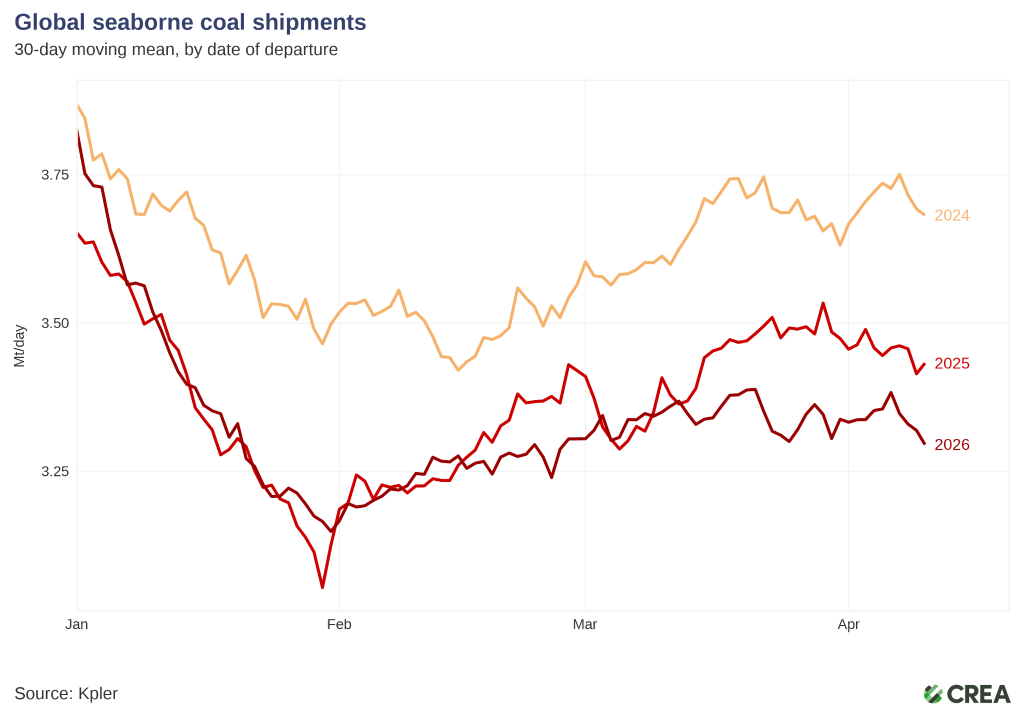
Seaborne coal transport volumes hit their lowest since 2021, decreasing by 3%, contradicting the assumption that coal usage would surge during the crisis. Instead, the expansion of solar and wind energy in 2025 has alleviated the dependency on fossil fuels.
Outside of China, countries with available real-time electricity data saw a 3.5% reduction in coal-fired and a 4% reduction in gas-fired power generation in March. This was offset by a 14% increase in solar and an 8% rise in wind power generation. Hydropower increased by 2%, though a decline in nuclear power generation offset this gain.
Coal-fired power generation declined in key regions such as the U.S., India, the EU, Turkey, and South Africa. Meanwhile, China reported a 2% increase in coal power generation in March as coastal regions switched from gas to coal due to high prices, though this was still below the levels seen in 2024.
The increase in solar and wind capacity added in 2025 alone is generating twice the electricity of the LNG previously transported through the Strait of Hormuz. Approximately 19% of the global LNG trade, amounting to 112 billion m3, passed through the Strait, which would equate to around 590 TWh of power generation.
Despite narratives suggesting a resurgence of coal due to the crisis, data indicates a continued shift towards clean energy solutions. With coal already being more cost-effective than gas before this crisis, no new coal capacity has been added, and coal plants have been operating at their maximum feasible rates.
Fossil fuel price spikes are likely to accelerate the adoption of clean energy technologies, such as solar panels, electric vehicles, and heat pumps. Despite the lack of media coverage, numerous nations have announced policies supporting renewable energy investment:
- The French government is planning to electrify key sectors to reduce fossil fuel reliance.
- Egypt aims to add 2,500 MW of renewable energy capacity to its grid.
- India’s Ministry of New & Renewable Energy has outlined a bidding trajectory for 50 GW of renewable energy procurement annually.
- Indonesia plans a significant solar energy rollout as part of a 100GW vision.
- Japan and South Korea are expanding offshore wind permits and renewable energy projects.
- Turkey has pledged an $80 billion investment in renewable energy by 2035.
- The UK and Vietnam are advancing clean energy policies and infrastructure.
These developments emphasize the global shift toward renewable energy, challenging the notion of a coal revival. The comprehensive dataset by CREA, sourced from POSOCO, Ember, and the IEA, highlights the ongoing transition in the global energy landscape.
Original Story at energyandcleanair.org