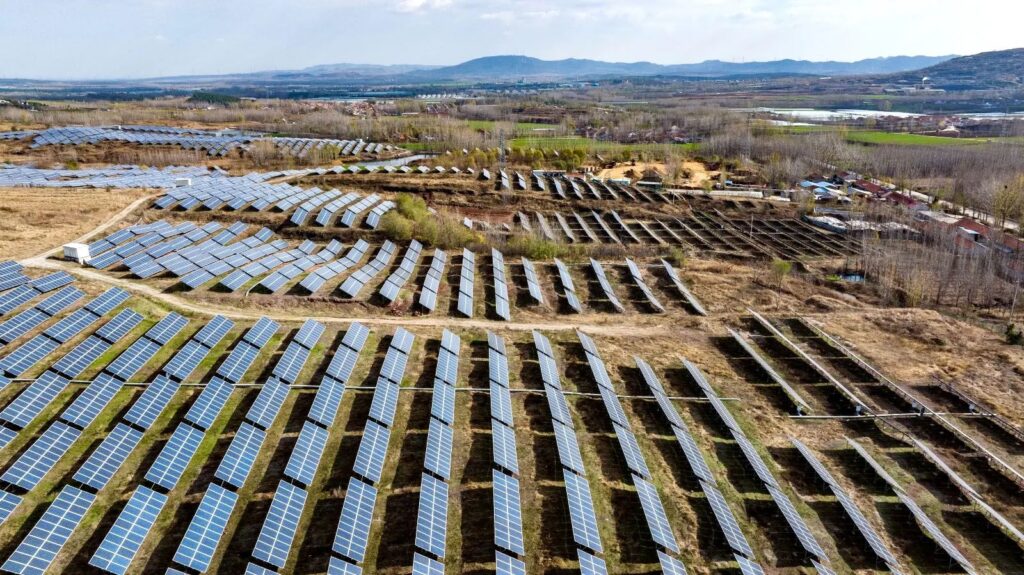
Renewable Energy Surges Globally Despite Challenges in the US
If recent developments have left you assuming that renewable energy is losing ground in the United States, the global landscape might surprise you. While US policy has taken a turn with the phasing out of tax credits for wind and solar energy and obstacles to individual projects, worldwide investment in renewables has hit unprecedented levels.
Amid rising electricity demand, wind and solar power are outpacing the growth of global energy needs. A recent report from Ember, an energy think tank, highlights that in the first half of this year, renewables outperformed coal for the first time in global power generation. The report, based on data from 88 countries covering over 90% of global electricity demand, notes a slight decline in fossil fuel use for electricity compared to last year.
According to Malgorzata Wiatros-Motyka, a senior electricity analyst at Ember, “Overall—we’re talking globally—renewables overtook coal.” This trend is expected to continue, marking a significant milestone in the transition to clean energy.
The International Energy Agency (IEA) projects a doubling of installed renewable power capacity by the end of the decade. This surge is largely driven by policy support for green technology and a dramatic fall in solar power costs, fueled by Chinese manufacturers who supply over 80% of global solar components.
Robert Brecha of Climate Analytics suggests that the IEA may be underestimating the growth rate of renewables. “I don’t see any reason to believe that renewables won’t double by 2030,” he remarked.
Solar power is leading the charge, contributing over 80% of new global energy demand in early 2025. China and India are spearheading this growth, with solar energy ramping up markedly and reducing dependence on coal.
Conversely, in the US and the EU, fossil fuel usage saw an uptick. In Europe, adverse weather conditions led to a 14% increase in gas-fired power, while in the US, coal-fired power generation rose by 17%.
The IEA has adjusted its expectations for US renewable capacity growth, halving its previous projections due to policy setbacks. This adjustment has, in turn, slightly lowered global growth projections by 5%. Despite these challenges, the IEA foresees accelerated renewable capacity growth from 2025 to 2030 compared to the previous five years.
Brecha commented on the US administration’s impact: “They can slow it down; they can do a lot more damage than I thought they could. But they can’t stop it.”
Original Story at thebulletin.org