Imagine a world map enriched with detailed data on plant species, revealing their functional traits and ecological roles across diverse ecosystems. A study published in Nature Communications in January 2026 has taken a significant step in this direction, synthesizing data from various sources to create a comprehensive map of plant life. However, the study also highlights considerable data gaps, particularly in tropical regions, posing challenges for global biodiversity research.
In an effort to understand plant functionality on a global scale, researchers have combined field surveys, satellite data, and millions of citizen-science observations. This ambitious project maps 31 plant traits—ranging from size and growth strategy to reproductive traits—enabling scientists to explore how plants adapt to different environmental stresses and contribute to ecosystem dynamics.
Sourcing Data: A Collaborative Effort
The global plant trait map was created by integrating various data sources, including detailed scientific field surveys, citizen science contributions, and satellite-derived environmental data. The researchers employed machine-learning models to link these plant traits with environmental conditions, allowing them to predict traits in regions lacking direct measurements. This innovative approach involved three data integration methods: scientific surveys alone, citizen science data alone, and a combination of both.
Bringing together these diverse datasets was challenging. Study author Daniel Lusk highlights the difficulties of “scale and integration,” explaining that the team worked with approximately 340 million citizen science observations, 2.5 million vegetation survey plots, and trait data for over 74,000 species. The process required significant data engineering and computational resources to ensure the models could generalize to new regions. “Spatial cross-validation at global scale is also computationally demanding,” Lusk notes.
The Impact of Citizen Science
Citizen science played a crucial role in filling gaps within the plant map. When combined with traditional scientific methods, citizen science data improved model reliability, particularly in under-sampled regions. The study demonstrated that citizen science observations, when integrated with expert vegetation plots and functional trait databases, could generate accurate global maps for many plant traits. Shyam S. Phartyal, a co-author of the study, highlights this achievement, noting that “the resulting maps outperform previous ones, filling critical gaps in under-sampled ecosystems.”
Despite the promising results, the study also revealed limitations. The data, both from scientific surveys and citizen science, was concentrated in temperate regions, leaving tropical areas underrepresented. This disparity highlights the need for more data from regions with complex biodiversity.

India’s Role and Potential
India’s contribution to global biodiversity data is notably low, despite its rich biodiversity. The country offers only a fraction of the data compared to regions like Europe and North America. According to Lusk, India’s participation in global databases remains limited, although there is significant potential to enhance its role. By tapping into existing but underutilized vegetation surveys and integrating them with citizen science data, India could strengthen its conservation and climate strategies.
Moreover, the country’s growing base of citizen scientists presents an opportunity to boost its contributions to global biodiversity research. Phartyal suggests expanding expert networks for data validation and increasing the number of researchers in relevant fields to fully leverage India’s ecological potential. As Lusk observes, “India’s megadiversity is a real scientific treasure trove,” and further data collection and analysis could have a significant global impact.

As more data continues to be collected, the global plant trait map will evolve, offering a more complete representation of plant biodiversity. Each contribution, whether from scientists or citizen observers, plays a crucial role in enhancing this global understanding.
Read more: From diversity to monotony, ecological communities are homogenising
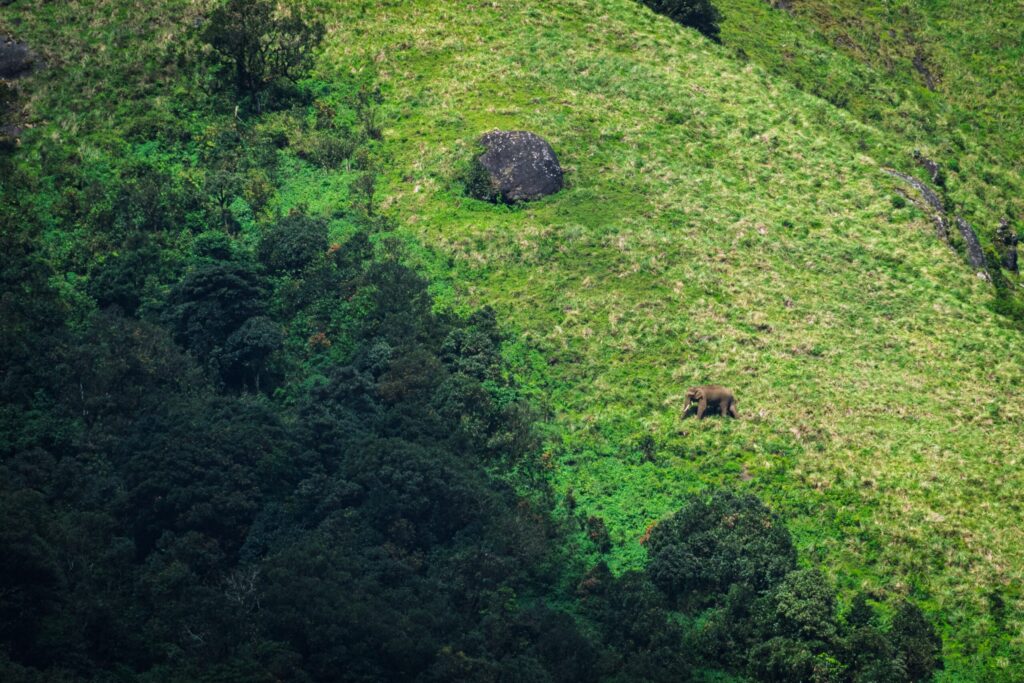
Banner image: A solitary elephant moves through the forests of Nelliyampathy in the Western Ghats. Image by Thangaraj Kumaravel via Flickr (CC BY-NC-ND 4.0).
Original Story at india.mongabay.com