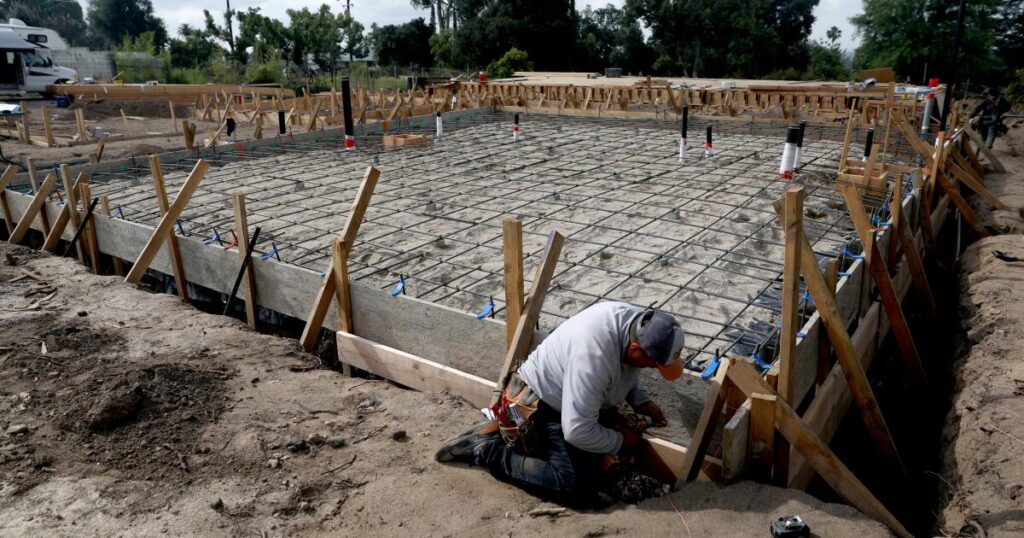
In the aftermath of devastating fires in Altadena and Pacific Palisades, many residents are choosing to rebuild their homes with all-electric systems. Their motivations range from health benefits and cost efficiency to environmental concerns.
In California, burning gas and propane for heating and cooking contributes to 10% of the state’s greenhouse gas emissions, while also releasing indoor pollutants. Consequently, state policies have increasingly favored electrification. By 2024, about 39% of new homes in California were built without gas lines, compared to only 8% of all homes in 2020.
Despite these trends, policy changes after last year’s fires allowed for more lenient building standards. Governor Gavin Newsom suspended a 2025 building code encouraging electric heat pumps, and Los Angeles waived its all-electric requirement for new homes. Climate experts viewed these rollbacks as a missed opportunity. Already, 1,300 residents have applied for gas reconnections through SoCalGas.
Nevertheless, some residents are determined to proceed with all-electric homes. Here are some of their stories and motivations:
Neighbors building passive homes in Altadena
In Altadena, a group of about 10 Eaton fire survivors, including Leo Cheng, is collaborating to construct passive homes. These homes are airtight and highly insulated to minimize the need for heating and cooling. Cheng, who previously used gas appliances, sees the benefits of passive homes in improving indoor air quality and reducing fire risks.
Cheng, who had to evacuate during the fire without turning off the gas, appreciates the safety of all-electric homes. He joined a local passive house group after a tour led by Jaime Rodriguez. Now, Cheng is becoming a passive house consultant, driven by concerns about climate change and fossil fuel use.
Companies building all-electric catalog homes
For those seeking a straightforward approach to rebuilding, the Foothill Catalog Foundation offers pre-approved all-electric home designs. Founded by architects Cynthia Sigler and Alex Athenson, the foundation draws inspiration from early 20th-century Sears catalogs. They are working with numerous families to construct these homes.
Athenson highlights the health and cost benefits of all-electric designs, particularly the elimination of dual utility hookups. According to the Building Decarbonization Coalition, all-electric homes in Los Angeles can cost $3,000 to $10,000 less than mixed-fuel homes. Electric heat pumps reduce utility costs, especially during cooling seasons.
Genesis Builders LA also offers catalog homes with both all-electric and gas options. Builder Devang Shah notes that while some clients prefer gas, all-electric models are popular due to the efficiency and incentives available.
An incentive program for all-electric rebuilds
A $22-million incentive program launched in April supports residents rebuilding all-electric homes in disaster areas. Qualifying homeowners can receive $7,000 to $10,000, with additional subsidies for low-income residents and specific home features. Within the first ten days, 116 Altadena residents applied.
The Los Angeles Department of Water and Power offers rebates for electric rebuilds, while SoCalGas provides incentives for efficient gas appliances. Despite these options, many residents, like Kari Weaver from Resilient Palisades, are opting for all-electric homes with solar systems for resilience during outages.
Original Story at www.latimes.com