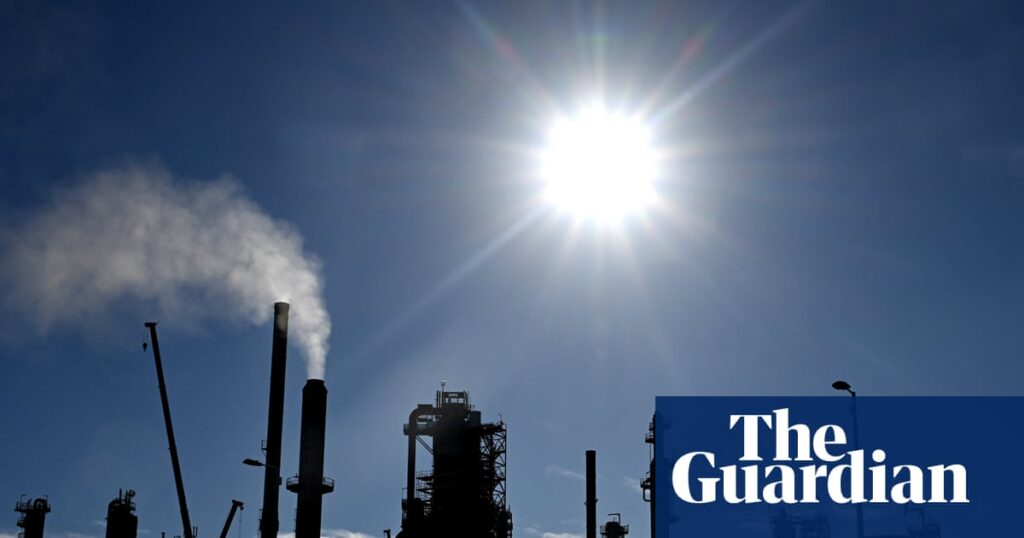
As Australia grapples with the future of its energy security, a proposed oil refinery in Western Australia has ignited debate among climate policy experts. This plan, which involves a $4 million feasibility study by the Albanese government in collaboration with the WA government, is seen by many as a step back into outdated technology.
Leading climate voices argue that this investment represents “dinosaur technology,” with little potential to address the country’s fuel security concerns. Instead, they suggest that resources would be better allocated towards renewable energy solutions to decrease reliance on fossil fuels.
Economic Viability Concerns
Greg Bourne, a member of the Climate Council and former BP regional president, expressed skepticism about the financial sustainability of a new refinery. “From a commercial point of view, you’ve got to be able to make sure you’re going to get a profitable return over the next 20, 30 years,” Bourne commented. He emphasized Australia’s growing shift towards renewable energy, suggesting that reliance on oil and gas will diminish over the next two decades.
Professor Frank Jotzo, head of the Centre for Climate and Energy Policy at Australian National University, voiced his concerns at the Clean Energy Summit in Sydney. He noted that investing in an oil refinery sends “a big signal against the clean energy transition” and suggested that government subsidies would be necessary for the refinery to compete with larger operations in Singapore and South Asia.
Fuel Security and Import Dependency
Australia’s domestic crude oil production is rapidly declining, with projections indicating cessation within seven years unless new discoveries are made, according to Geoscience Australia’s 2025 commodity resource report. Baethan Mullen, CEO of the Superpower Institute, highlighted that a new refinery would likely process imported crude oil, doing little to enhance Australia’s sovereign capability.
Mullen emphasized, “Diesel products are the main product we need, particularly in WA in the mining sector and in agriculture.” However, a refinery in close proximity to the North West Shelf would still require imported crude oil to produce diesel, which would not improve Australia’s current fuel security situation.
Historical Context and Future Outlook
Since 2003, six of Australia’s eight oil refineries have shuttered, a trend driven by the unfeasible economics of smaller-scale production compared to larger Asian refineries. Mullen pointed out that rebuilding refining capacity in Australia is unlikely to be a viable solution.
Both Jotzo and Mullen advocate for focusing on renewable technologies. Jotzo stated, “If you want to subsidise anything, then subsidise the next generation of technologies that is there to produce zero emissions liquid fuels.” They argue that government support should prioritize innovations in green energy over traditional fossil fuel infrastructure.
For more details, read the full article on The Guardian.
Original Story at www.theguardian.com