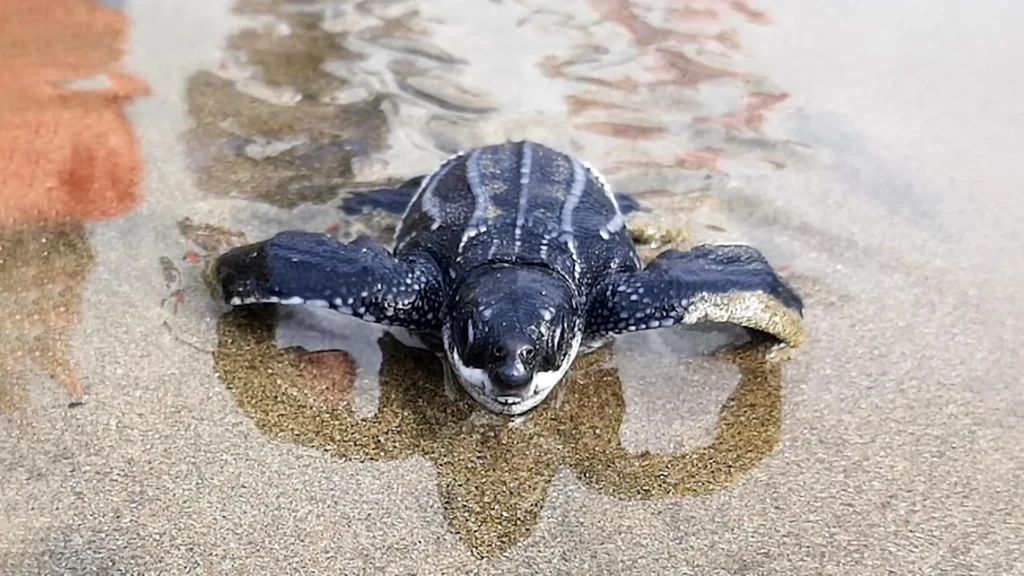
The Resilient Leatherback Turtles: A New Hope on Ecuador’s Shores
The pristine beaches of Ecuador are becoming a sanctuary for the critically endangered eastern Pacific leatherback turtles, marking a significant shift in their nesting habits. This development poses intriguing questions about the adaptability of these majestic creatures in the face of climate change.
During the 2025-2026 nesting season, researchers recorded a remarkable increase in leatherback turtle nests along Ecuadorian coastlines, over 1,000 miles away from their traditional nesting areas in Mexico and Costa Rica. This unprecedented movement suggests a possible adaptation to rising ocean temperatures, as leatherbacks appear to be seeking cooler nesting environments.
Juan José Alava, a marine ecotoxicologist at Simon Fraser University, highlights this behavioral shift, stating, “Historically, observing female Eastern Pacific leatherbacks on Ecuador’s beaches was a rare or unusual event, but our findings suggest they are adapting their reproductive cycle to thrive and survive in coastal Ecuador.” This adaptability offers a glimmer of hope for a subspecies of leatherbacks that might otherwise face extinction within 60 years in the eastern Pacific.
Cooler Waters May Offer a Survival Advantage
A study published in Chelonian Conservation and Biology draws on over 45 years of historical data from Ecuador’s coastline, examining sightings of mature females, nesting attempts, and turtle strandings. The research found a correlation between increased leatherback activity and La Niña events, which bring cooler sea surface temperatures to the southeastern tropical Pacific.
Interestingly, the data revealed that the number of eggs laid per nest and the hatching success rates in Ecuador are comparable to those further north. In some cases, Ecuadorian nests even outperformed traditional nesting sites in terms of hatchling production.
Unique among sea turtles, the eastern Pacific leatherbacks can thrive in both warm and cold waters. They undertake long migrations between tropical nesting beaches and subpolar feeding areas, with frequent sightings off Canada’s west coast, particularly in British Columbia.
A Population Facing Extinction
Since the 1980s, the eastern Pacific leatherback population has experienced a staggering decline of over 90%, exacerbated by climate change and human activities like fishing, pollution, and habitat destruction. Alava stresses the importance of ongoing monitoring, conservation efforts, and community involvement to ensure the species’ survival, advocating for “coastal, community-grounded interventions.”
Bella’s Remarkable Nesting Success
A notable mention is Bella, a female leatherback turtle observed on a moonlit night in January 2026 at Playa de Crucita, Ecuador. Initially disoriented by artificial lights, Bella returned to the ocean without laying her eggs. However, she succeeded on a subsequent attempt, laying 47 eggs, with 44 hatchlings eventually making their way to the sea.
Fitted with a tracking tag, Bella was monitored throughout the season, revealing multiple nesting attempts. Her efforts culminated in a hatching success rate of 91.8%, underscoring the potential for leatherbacks to adapt and thrive in new environments.
Original Story at www.sciencedaily.com