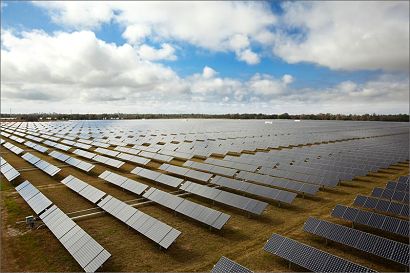
Community solar initiatives are revolutionizing the way renters and low- to moderate-income households engage with clean energy solutions, offering a pathway to equitable participation in the renewable energy landscape.
Exploring the Community Solar Framework
Community solar programs provide a solution for individuals unable to install solar panels on their homes due to rental agreements or unsuitable housing structures. These initiatives involve shared photovoltaic systems that serve multiple subscribers within a utility’s service area.
The programs utilize virtual net metering to credit the electricity generated to subscribers’ utility bills, regardless of their physical proximity to the solar installation. This system allows participants to benefit from renewable energy credits without needing to install or maintain equipment on their property.
Approximately 50% of homes and businesses face barriers to adopting rooftop solar systems, making community solar a critical alternative.
In the first quarter of 2024, the community solar sector successfully installed 279 megawatts of direct current, contributing significantly to the broader solar industry’s 75% share of new electricity generation capacity additions.
Feasibility and Site Selection
Successful community solar projects begin with careful site selection and feasibility studies, balancing technical feasibility, regulatory compliance, and land acquisition costs.
Initial steps include solar resource mapping to ensure optimal sunlight exposure and grid capacity assessments to confirm that existing infrastructure can handle the additional power load without requiring expensive upgrades.
Transforming marginal lands like brownfields or capped landfills into solar gardens offers unique opportunities for renewable energy development. Ohio, for instance, has the potential to generate 500 megawatts of alternating capacity from brownfield sites alone.
Zoning approvals and utility interconnection processes can extend project timelines, especially in areas without supportive solar policies. Environmental impact assessments are also crucial for ground-mounted arrays on undeveloped land.
Financial Models and Subscriber Options
Community solar programs eliminate high credit score and property ownership requirements, thus expanding access for renters and low-income households typically excluded from rooftop solar benefits.
The model encourages resource sharing over individual consumption, distributing environmental advantages more equitably. Common subscription pricing structures include fixed discounts, escalating rates, or flat kWh rates.
Fixed discount models, which offer 5% to 20% savings, are popular. Subscribers can purchase shares in the system, but they generally cannot relocate or sell these shares.
Complex subscriber agreements can obscure true costs, with terms like annual escalators potentially reducing savings. Subscribers often cannot access federal tax incentives, which benefit project owners, and moving can incur termination fees if subscriptions are non-transferable.
Policy and Regulatory Considerations
The success of community solar initiatives relies heavily on state-level policies and federal incentives. Various state grants, renewable energy credits, and tax incentives make these projects economically viable, especially for subsidized populations. Federal investment tax credits also help lower capital costs, translating into reduced rates for consumers.
State laws significantly impact participation rates; for example, Massachusetts’ program offers a 20% bill discount for low-income participants. However, policy changes, such as the cancellation of federal Solar for All funding, highlight the volatility that can affect these projects.
Inconsistent state policies lead to a fragmented regulatory environment, with some states lacking frameworks for third-party electricity sales or virtual net metering, complicating multi-state project expansions.
Operational Practices and Performance Metrics
Long-term project success depends on effective operations and maintenance, ensuring subscribers gain the expected savings and projects achieve investor targets. Participants benefit from professional maintenance without equipment responsibilities on their properties.
Maintenance quality is crucial, as issues like accumulated dust can cause efficiency losses of 25%, affecting subscriber credits and savings.
Case Studies: Community Solar in Action
Grand Valley Power Cooperative
In collaboration with Grid Alternatives, Grand Valley Power Cooperative developed a low-income solar farm where participants receive shares equivalent to 3.5 kWh of capacity, saving households around $600 annually. The cooperative model allows nonprofit involvement, reducing costs and enabling greater subsidies.
Brixton Energy Solar
As the UK’s first inner-city solar cooperative, Brixton Energy Solar features a 37-kW-peak installation on Elmore House’s roof. This cooperative allows urban residents to invest in solar generation, addressing limited individual rooftop access.
Original Story at www.renewableenergymagazine.com