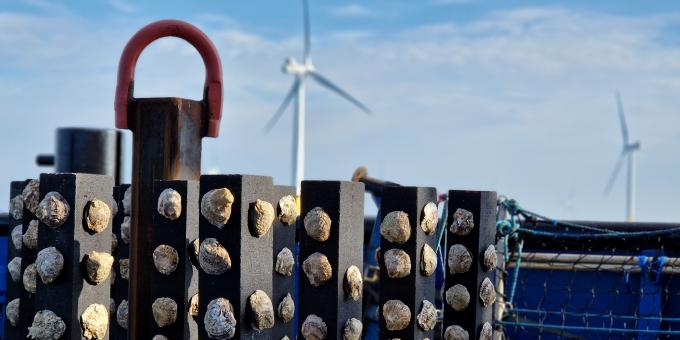
Three organizations focused on nature conservation have launched a collaborative project to enhance the large-scale development of native oyster reefs at offshore wind farms in the North Sea.
The initiative, named TOPPING (The Oystrification Program for Practical Integrated Nature Gain), includes The Rich North Sea from the Netherlands, Germany-based Native Oyster Restoration Alliance (NORA), and the US-based The Nature Conservancy (TNC). Their goal is to develop standardized methods for deploying native oyster larvae at offshore wind sites.
Reefs are established at offshore wind foundations and cable crossings, where rocks used for oyster reef development are installed as scour protection. By adding oyster larvae to these materials before installation, offshore wind structures can support the reestablishment of self-sustaining oyster reefs with minimal additional cost or construction complexity, according to the organizations.
YOU MIGHT ALSO LIKE
The primary aim of the TOPPING project is to create a practical roadmap for the offshore wind sector, uniting developers, supply chain companies, policymakers, and conservation groups. The project seeks to integrate oyster reef restoration as a nature-positive design standard in offshore wind development, from planning and tendering through construction and operation.
Project partners emphasize that the initiative addresses the near-total loss of native oyster reefs in the North Sea, which scientists classify as a collapsed ecosystem due to overfishing, pollution, and habitat destruction.
With offshore wind expanding rapidly in the area, the partners see an opportunity to restore these ecosystems on a large scale by integrating conservation directly into renewable energy infrastructure.
“Integrating oyster reef development into offshore wind infrastructure offers a unique opportunity to deliver biodiversity gains and strengthen marine ecosystem functioning at an unprecedented scale. Realizing this potential requires close collaboration between regulators, the scientific and nature community, and offshore wind industry partners across the value chain,” said Boze Hancock, Senior Marine Scientist at The Nature Conservancy.
Reach the offshore wind industry in one go!
offshoreWIND.biz is read by thousands of offshore wind professionals every day.
—
Increase your visibility with banners, tell your story with a branded article, and showcase your expertise with a full-page company profile in our offshore wind business directory.
Follow offshoreWIND.biz on:
Original Story at www.offshorewind.biz