Coachella Valley’s Water Dilemma: An Unsustainable Illusion of Abundance
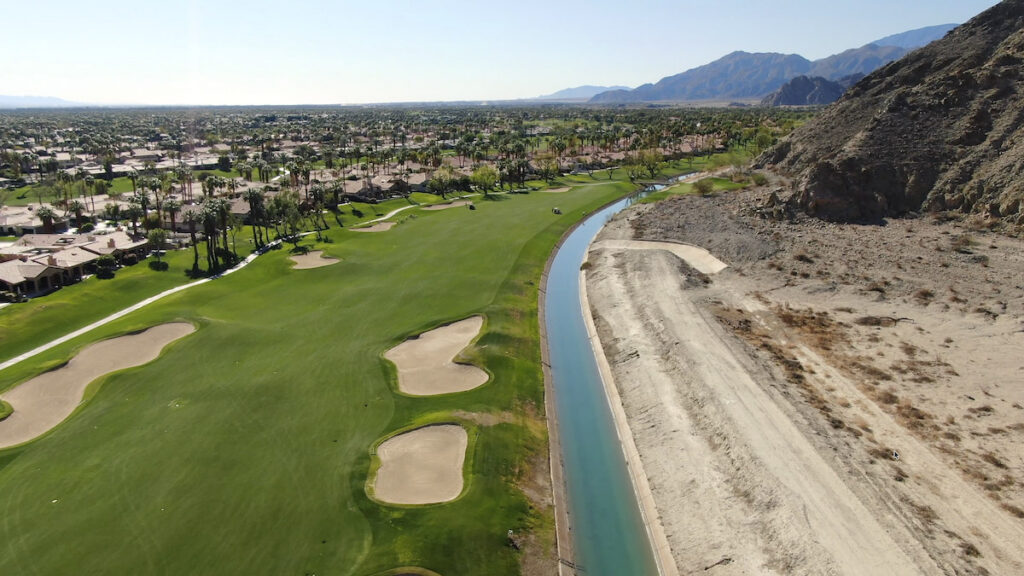
Southern California’s Coachella Valley stands as a striking example of how perceptions can differ starkly from reality. While it appears lush with its commercial farms and golf courses, this desert region’s water use paints a different picture. While most Southwestern areas are curbing their water usage, the Coachella Valley’s consumption is set to rise due to population growth and expanded irrigation needs. This increase comes despite the region’s reliance on water sources that are becoming increasingly unreliable.
Water for the area’s farms and golf courses is sourced from the Colorado River, diverted at the Imperial Dam, and funneled through the All-American and Coachella Canals. Meanwhile, municipal water is extracted from the Coachella Valley Groundwater Basin, which once held an estimated 39.2 million acre-feet of water in its upper layers.
Challenge #1 – Maintaining Groundwater Levels
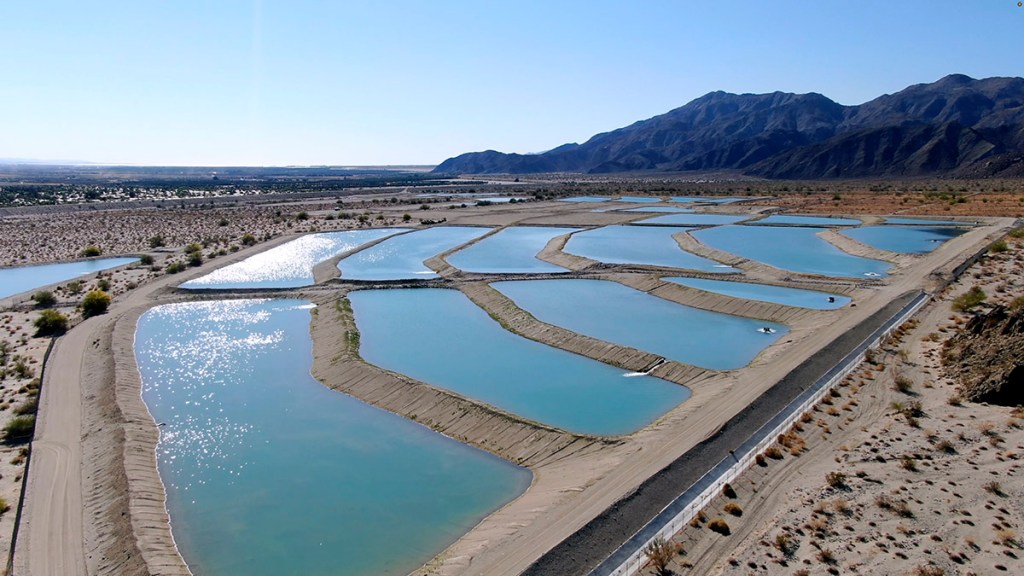
Efforts by the Coachella Valley Water District and other agencies focus on groundwater replenishment to address past overdrafts and future sustainability. By injecting 165,000 acre-feet of imported water annually into the ground, they have managed to stabilize groundwater levels. However, climate change poses a severe threat to their primary water sources, the Colorado River and the State Water Project, necessitating a future dependence solely on groundwater resources.
Challenge #2 – Convincing Residents to Use Less Water
Residents in different parts of the valley exhibit varying water consumption patterns. Myoma Dunes Water District residents consume 217 gallons per day on average, while those in Rancho Mirage and neighboring areas use 188 gallons, and Desert Water Agency customers consume 178 gallons daily. This contrasts sharply with other Southwestern cities that have adopted advanced purification systems, recycling all wastewater into drinking supplies and other uses, highlighting potential areas for improvement in Coachella Valley’s water management strategies.
Challenge #3 – Preparing for “Day Zero”
The prospect of a “Day Zero,” when imported water ceases to flow into the valley, is a looming threat. This scenario could unfold if prolonged droughts deplete reservoirs like Lake Powell and Lake Mead, cutting off river water supplies. The valley would then have to rely entirely on its underground aquifer, which would quickly deplete given the minimal average annual rainfall of only 3 inches.
Without external water sources, the valley’s supply would be halved, likely leading to strict water rationing, bans on ornamental landscaping, and a significant reduction in local agriculture. Such measures would be essential to prevent the aquifer from drying up, underscoring the urgent need for sustainable water management in the region.
Original Story at coyotegulch.blog