In the shadows of England’s Industrial Revolution, climatic shifts possibly influenced the health of the populace, particularly in children. Recent research highlights how climate factors, alongside known societal issues, might have contributed to widespread vitamin D deficiency during that transformative period. A team of scientists delved into historical records and physical evidence from a Quaker cemetery to uncover the climate’s role in shaping human health.
During the Industrial Revolution, which spanned approximately from 1760 to 1840, England experienced a significant transformation from a rural agrarian society to an industrialized nation. This shift brought about challenging conditions such as pollution, crowded living spaces, and restricted sunlight, all contributing to health issues like rickets in children. While urbanization and socioeconomic factors have been well-documented, the influence of climate has not been thoroughly examined until now.
A study published in Frontiers in Environmental Archaeology re-evaluates dental remains from a former cemetery in Coach Lane, North Shields, to investigate if climate variations contributed to vitamin D deficiencies in children during this era.
“Most people buried at Coach Lane lived during periods affected by environmental differences in UV light availability, which may explain the high rates of rickets and defects in tooth dentin, and suggest a major problem with vitamin D deficiency,” said first author Dr. Ellen Kendall, an archeological researcher at Durham University. “Realizing that burial registers would allow us to reconsider the climatic chronology of this population felt like a new approach to understanding historical childhood vitamin D deficiency.”
Evidence from the Past
The Little Ice Age, a cooling period from the 13th to the 19th centuries, brought about limited ultraviolet exposure due to increased volcanic and decreased solar activity. The extent to which these climatic conditions affected human health during the Industrial Revolution has not been extensively studied.
“Human bioarchaeologists’ primary area of expertise is understanding health from the human skeleton. To do that, we have to consider a wide range of issues: political, environmental, dietary, social, and more,” said Kendall. “The complex range of interacting factors may have put climate off the radar of many human bioarcheologists.”
The Quaker cemetery, used from 1711 to 1829, provided a unique opportunity to explore these factors. During this time, North Shields transitioned from a fishing village to an industrial hub. In 2010, an excavation unearthed 236 burials, which offered valuable insights.
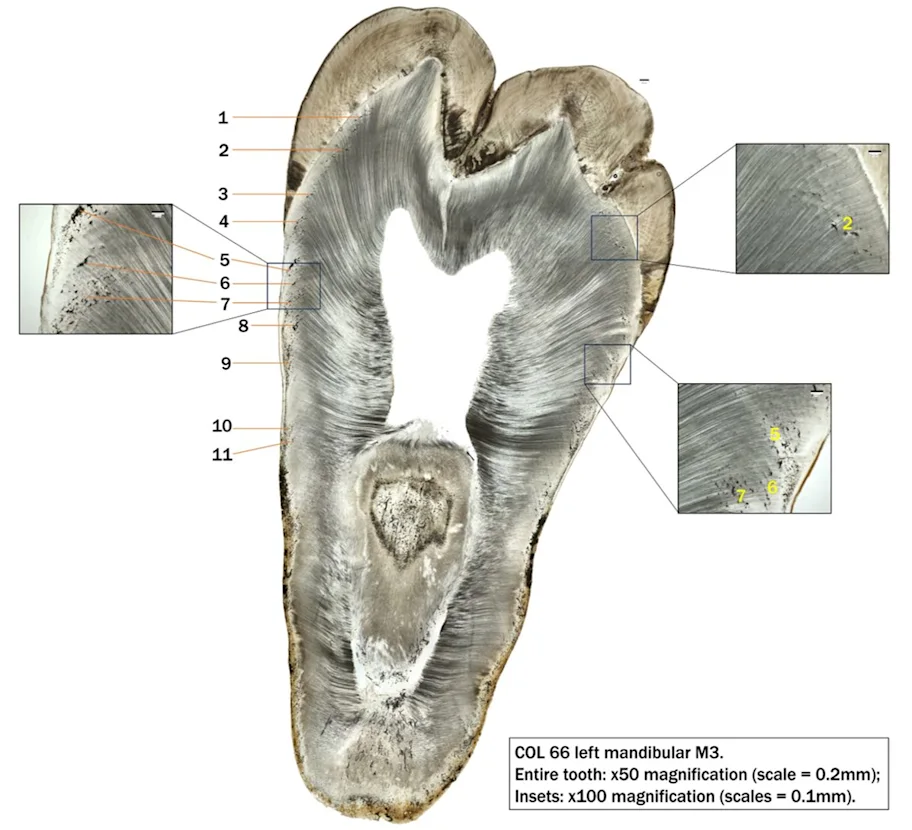
Researchers analyzed 30 teeth from 21 unidentified individuals to identify mineralization failures in dentin, indicative of vitamin D deficiency. These failures often occur during tooth growth but become concerning when they appear regularly, separated by normally mineralized dentin. By understanding when these failures occurred, scientists could infer the ages during which deficiencies were likely prevalent, primarily in infancy and childhood.
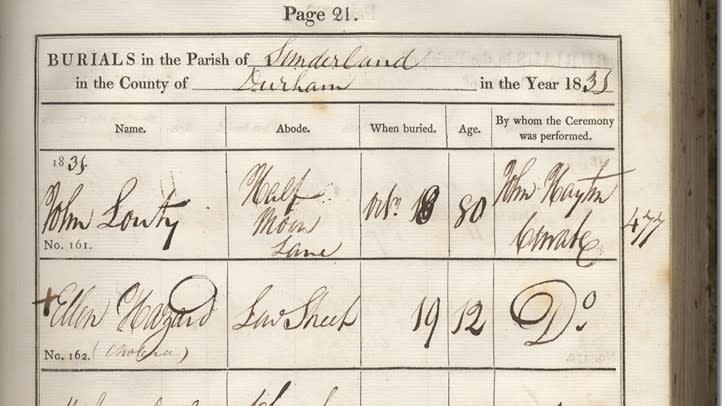
To determine the specific years these deficiencies occurred, the researchers utilized the burial register from Coach Lane. This register, documenting ages and years of death, helped estimate birth years for 109 individuals. Among them, 91 were born within a decade following significant volcanic eruptions, and 41 during periods of low solar output coupled with volcanic activity.
“The Quakers were known to keep precise records, which makes them an important source of information about themselves, but also about the north-east of England, where they were very prominent in local history,” explained Kendall. “That they carefully recorded names, years of death, and ages at death provided us a window into what was going on with the environment when most of the people buried at Coach Lane were growing up and forming teeth.”
Understanding the Human Condition
Incorporating climate among the myriad factors affecting health during the Industrial Revolution provides a more comprehensive understanding of historical challenges.
“Humans are incredibly complicated. We’re physical creatures defined by our biology. We’re cultural creatures defined by beliefs and the systems they reinforce. And we’re products of our environment,” said Kendall. “No part overrides another; they all interact. When we assess one aspect of human biology – vitamin D deficiency during the Industrial period – it’s going to be in the context of needing to grapple with the full dynamics of the human experience.”
“We think of climate instability as a modern challenge, but it’s really nothing new as human problems go,” Kendall concluded. “Whether it’s pandemics, economic crises, or climate change, it’s important to understand the ways that people have adapted to similar issues in the past and use that information to help people thrive in the future.”
REPUBLISHING GUIDELINES: Open access and sharing research is part of Frontiers’ mission. Unless otherwise noted, you can republish articles posted in the Frontiers news site — as long as you include a link back to the original research. Selling the articles is not allowed.
Original Story at www.frontiersin.org