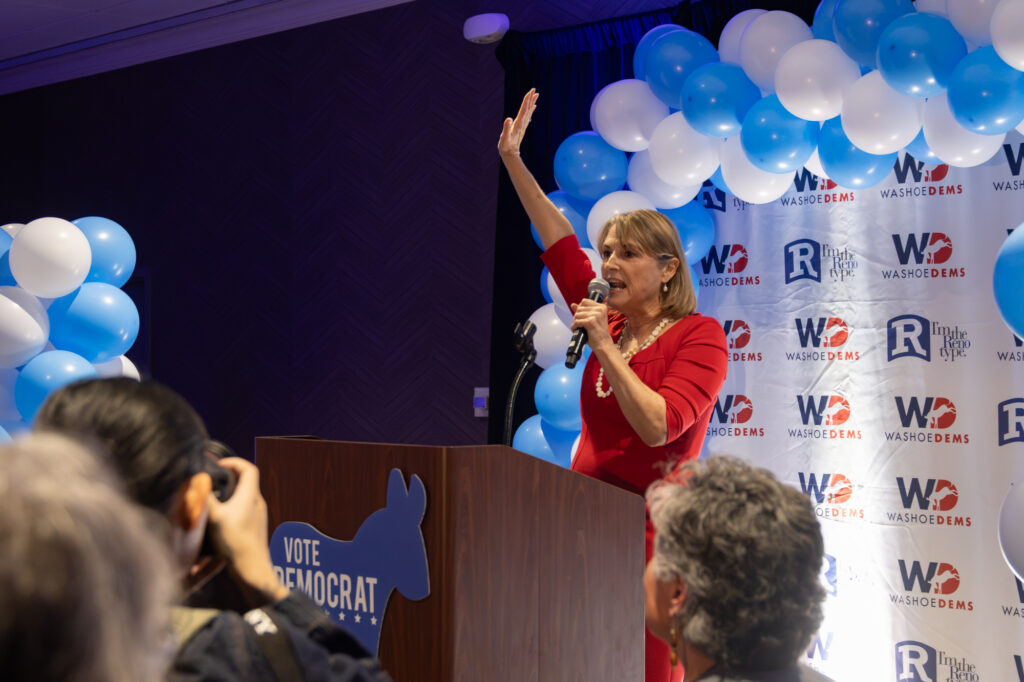
When a county commission changes hands, the consequences reach far beyond politics — they land directly in the doctor’s office, the mental health clinic, and the monthly budgets of families trying to stay afloat. In Northern Nevada, Democrats appear poised to control the Washoe County Commission for the first time in the county’s history, and the shift carries real stakes for the residents who depend on county-funded health and human services.
Counties are often the quiet backbone of American healthcare access. In Nevada, county commissions directly oversee or fund Medicaid-linked mental health services, senior home care programs that keep elderly residents out of costly nursing facilities, and rural infrastructure — including the well water systems and septic networks that, when they fail, create direct health burdens for families with nowhere else to turn. A change in who controls that commission is not just a political story. It is a healthcare story.
Democrats led in all three contested Washoe County Commission races on election night, putting the party on track for a 4-1 majority when new commissioners are sworn in this January. The county says it does not believe Democrats have ever controlled the commission before. Commission Chair Alexis Hill, a Democrat, retains her District 1 seat through 2028, while Clara Andriola of District 4 will remain the board’s lone Republican.
A New Majority and What It Means for County Services
Incumbent Democratic Commissioner Mariluz Garcia won a second term in District 3, and she was direct about what she hopes the new Democratic majority will prioritize. Even in victory, Garcia emphasized she wants the commission to remain focused on the nonpartisan work that touches families most directly.
“My hope is that things don’t get political, that we just continue to focus on the good work that we need to do, to deliver those essential services,” she said.
Garcia specifically named mental health, senior services, and infrastructure — three areas where county funding decisions directly shape whether families can access affordable care. County-level mental health programs frequently serve as the safety net for residents who lack private insurance or whose Medicaid coverage doesn’t extend to the providers they need. Senior services funded at the county level often include home health programs that allow elderly residents to age in place, avoiding the financial catastrophe of nursing facility costs that can quickly erase a family’s savings.
Garcia described the election results as a broad public message:
“I think what happened last night, I mean, historic on so many measures, but it was a cry from the public saying, ‘Enough is enough, and we’re ready for a change.'”
Rural Communities and the Health Costs of Infrastructure Neglect
One of the most striking results of the night came in District 5, which covers approximately 89 percent of Washoe County’s land — a vast rural expanse that has been represented by Republicans for at least two decades. Former Pyramid Lake Paiute Tribal Council member Brian Wadsworth defeated Republican Rob Pierce despite being dramatically outspent. Pierce raised nearly $147,500 this year — roughly five times Wadsworth’s approximately $27,000.
“I think it shows that you don’t need to raise hundreds of thousands of dollars to run a successful campaign,” Wadsworth said. “It doesn’t take a ton of money to get out there and get in your car and drive to the communities, talk to the community members.”
What Wadsworth found when he drove those rural roads was something healthcare advocates have long understood: infrastructure failures are health failures. Contaminated or failing well water systems expose families — especially children and elderly residents — to serious illness. Faulty septic systems create sanitation hazards. Power outages interrupt medication refrigeration and home medical equipment. These are not abstract concerns for rural Nevada families; they are recurring, costly realities.
Wadsworth said some rural voters initially worried he would focus exclusively on tribal issues, but conversations about shared problems — septic systems, wells, power reliability, and growth pressures — built bridges across community lines.
“When I was out there talking to people in the rural communities, I think that we realized that we have a lot more in common than we may have differences,” he said.
In District 2, where registered Republicans outnumbered Democrats by nearly 10 percentage points as of September, former Reno police officer Marie Rodriguez holds a narrow lead over Republican Jon Killoran in a race still too close to call. Rodriguez raised just over $9,000 through September 30 — compared to Killoran’s nearly $100,000 raised and almost $121,000 spent. Killoran had ousted Commissioner Mike Clark in the June Republican primary.
Election Integrity and the Future of Local Trust
The incoming board will also be free of the commission’s two most prominent election skeptics. Jeanne Herman, who had pushed for hand-counting paper ballots, and Mike Clark both consistently voted against certifying election results. In July 2024, the commission voted 3-2 against certifying a primary recount before reversing course a week later. Herman is term-limited, and Clark lost his seat in the June primary. Rodriguez, Garcia, and Wadsworth all stated before the election that they would certify results regardless of outcome — a commitment that matters for community trust in the institutions that govern healthcare funding, public health programs, and social services.
Reno and Sparks: Voters Sent a Message on Investment and Accountability
The wave that reshaped the county commission also swept through Reno city races. Former Nevada Treasurer and Lt. Governor Kate Marshall won the mayor’s race, and UNR employee Matt Johnson won the Ward 2 City Council seat — both despite raising considerably less money than their opponents in the final stretch before Election Day.
Marshall said the results reflected something she heard consistently from residents: they want their government to work for them. Asked about the national political environment’s influence, she said that people in Reno and across the country
“have made clear that they want the government to invest in them.”
“What is special about Reno is starting to slip away,” Marshall said. “People felt like the council has not been responsive.”
Johnson said he thinks he “benefited to some extent” from the Democratic enthusiasm, but described the race as fundamentally local — driven by residents’ concerns about the city council’s relationship with developers. His opponent, Summer Pellett, is the co-founder of a local construction company who received substantial financial support from the development and construction industries.
“There’s just been a lack of trust in the city council and the mayor lately,” Johnson said. “People felt perhaps that there was too much monetary influence on her side.”
Data center development became a defining issue for both Marshall and Johnson, who opposed new data centers within city limits. First-time midterm voter Rashonda Stubblefield, a 40-year-old small business owner, said the data center question was what finally drove her to the polls.
“I’m not an AI or data center fan … especially on public land,” she said. “I love Nevada and it’s beautiful, and I don’t think [data centers] should be taking up our resources. Put them somewhere else.”
In Sparks, the anti-incumbent mood was equally strong. Jamie O’Connell, a registered Democrat who works at a medical billing company, raised only about $1,400 through the first nine months of the year — yet she was leading incumbent Dian VanderWell, who had raised nearly $74,000. VanderWell conceded, saying in a statement, “I am proud of the accomplishments I made and the policies I helped direct.” Sparks Mayor Ed Lawson remained in a race too close to call against Wendi Rawson, a winery owner who raised nearly six times less money but earned the endorsement of the Washoe County Republican Party.
Taken together, the results across Washoe County reflect something beyond a single election night. Voters — in rural districts and urban wards, in Republican-leaning precincts and Democratic strongholds — signaled that they want local government to focus on what actually affects their daily lives: reliable infrastructure, trustworthy institutions, and services that keep families healthy and financially stable. For the families who rely on county-funded mental health programs, senior care, and rural health infrastructure, the composition of the Washoe County Commission is anything but a minor political footnote. It is the difference between services that are there when they’re needed — and ones that aren’t. You can follow ongoing election coverage and learn more about supporting independent journalism that keeps communities informed.