Amidst rising global temperatures, a new study from Stanford University offers a sobering look at how climate change could dramatically alter the landscape of household water bills in the United States. As water remains the least expensive utility, the potential for prices to double by mid-century is a wake-up call for many, especially those already struggling with affordability.
Published on July 8, 2026, in the journal Nature Sustainability, this research provides a comprehensive analysis of how climate-induced changes could impact water costs. Led by Jennifer Skerker from Stanford’s Doerr School of Sustainability, the study models the city of Santa Cruz, California, to illustrate potential future scenarios.
A Potential Surge in Water Bills
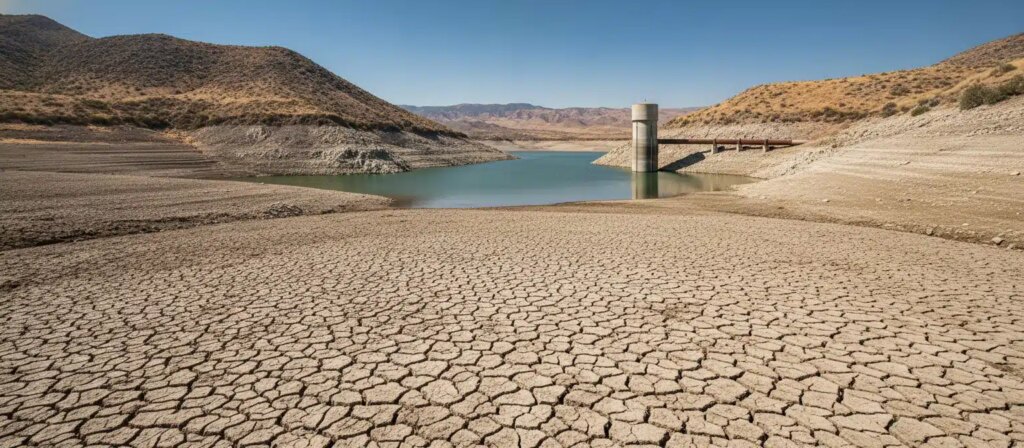
Santa Cruz, a city heavily reliant on local surface water and a single reservoir, faces a precarious situation. The study utilized climate models and water supply projections to simulate future conditions. Results indicated a significant rise in water bills, with the median monthly cost potentially escalating from $64 to $120 under hotter and drier conditions.
For wealthier households, those in the 80th percentile, bills could soar from $100 to $204. Meanwhile, low-income households, defined as earning under approximately $39,900 annually, might see their median bills rise from $60 to $111, with some paying up to $186 monthly.
Affordability at Risk
The U.S. Environmental Protection Agency suggests that no more than 2.5% of household income should go towards water costs. Currently, 19% of Santa Cruz households exceed this threshold. As the climate warms, this figure could climb to 35% under severe conditions. This translates to an additional 7% to 16% of households facing unaffordable water expenses due to climate change.
Low-income families are particularly vulnerable, as their water cost burden could rise from 3.9% to 7.3% of income in the worst-case scenario. “If you’re already struggling to pay your water bill, and now it’s going to be double what it was before because of climate change, you’re going to really have a problem making ends meet,” noted Fletcher in an accompanying video.
The Economics of Drought
Santa Cruz’s challenge lies in its limited water storage, necessitating expensive infrastructure projects like seawater desalination when reservoir levels drop. In a dry climate scenario, this could mean millions of dollars in additional monthly costs, directly impacting household bills.
The study revealed that the primary driver of increased costs is declining precipitation, with temperature playing a secondary role in amplifying demand through evapotranspiration. The expense of expanding water supply infrastructure in response to these changes further exacerbates the issue.
A Broader National Concern
While Santa Cruz serves as a specific case study, water affordability pressures are felt nationwide. Household water and sewer bills have been increasing, with a 5.1% rise in 2025 alone. Factors such as aging infrastructure and new treatment requirements also contribute to this trend.
Climate change compounds these issues by introducing new cost drivers that conventional projections often overlook. The Stanford research highlights the need to incorporate these factors into future planning to ensure both affordability and reliability.
Strategies for Cities and Policymakers
Policymakers face a dilemma between maintaining affordable water rates and ensuring reliable supply. The study suggests several approaches, including increased public financing, regulatory reforms, and targeted assistance programs funded outside of water rates.
- Increased public funding for infrastructure adaptation
- Regulatory changes to permit income-based pricing
- Assistance programs that don’t impact utility revenue
- Regular affordability assessments in climate planning
Addressing these issues requires balancing structural changes with immediate household-level actions, such as utilizing utility assistance programs, understanding rate structures, investing in efficiency, and participating in public infrastructure planning discussions.
Original Story at www.intelligentliving.co