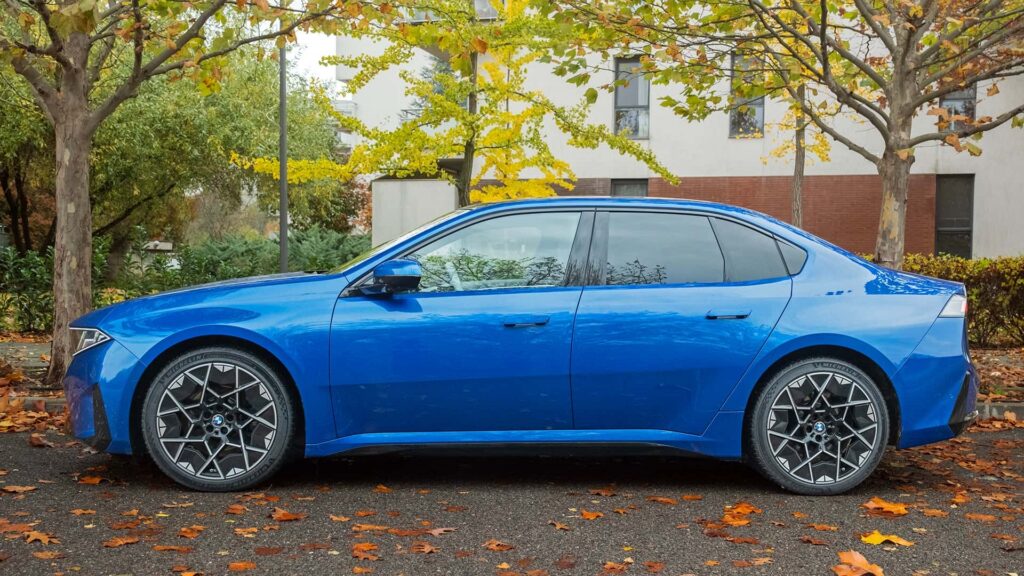
The Challenge of Rear Comfort in Electric Sedans
Electric sedans are celebrated for their sleek designs and performance, yet they often leave back-seat passengers in discomfort due to high floor levels. This conundrum stems from the popular “skateboard” design, which places the vehicle’s battery beneath the floor. While this arrangement benefits handling and stability, it raises the floor, forcing passengers into awkward seating positions.
Despite ample legroom, shoulder space, and headroom, the elevated floor can leave passengers’ thighs unsupported and knees awkwardly raised. This issue is less pronounced in SUVs, where designers have more freedom to adjust seat height without compromising the vehicle’s sleek profile. However, for sedans, raising the seat height can lead to headroom constraints.
The underlying issue lies in the battery architecture. Positioned underfoot, the battery’s thickness is dictated by its cells, housing, and cooling systems. As a result, designers face a challenge in optimizing passenger comfort while maintaining the desired sedan silhouette.
Porsche addressed this issue with the Taycan by incorporating “foot garages,” or recessed areas in the battery, to provide more space for rear passengers’ feet. Michael Mauer, Porsche’s design chief, noted that achieving this balance was “the greatest challenge” in maintaining the Taycan’s low profile while ensuring passenger comfort. The Audi E-Tron GT follows a similar approach.
Photo by: Andrei Nedelea
The increased height of electric sedans compared to their combustion-engine counterparts can be attributed to the battery’s positioning. This is evident in models like the Polestar 2, which retains the traditional sedan form but with a slightly taller body.
However, not all manufacturers stick to the taller design. The Lucid Air Pure and Touring models have reconfigured battery layouts, removing modules from the rear footwell area, thus preserving rear passenger comfort without compromising the sedan’s design. Similarly, Jaguar’s new Type-01 moves battery modules to the front, leveraging its long hood to maintain capacity and comfort.
Other brands, like Volvo with its SPA3 platform, offer the potential for a lower electric wagon by excluding battery modules beneath the passenger area. This approach could pave the way for more ergonomically friendly electric vehicles.
Ultimately, while the current design may affect rear-seat comfort, the trade-off often results in reduced overall battery capacity. As electric vehicle designs evolve, achieving a balance between style, performance, and passenger comfort remains a key challenge for automakers.
Original Story at insideevs.com