This report was supported by a grant from the Fund for Investigative Journalism.
TOM GREEN COUNTY, Texas—While some Texas oil wells produce hundreds of barrels daily, many, like those on Jackie Chesnutt’s West Texas ranch, yield just a few barrels monthly.
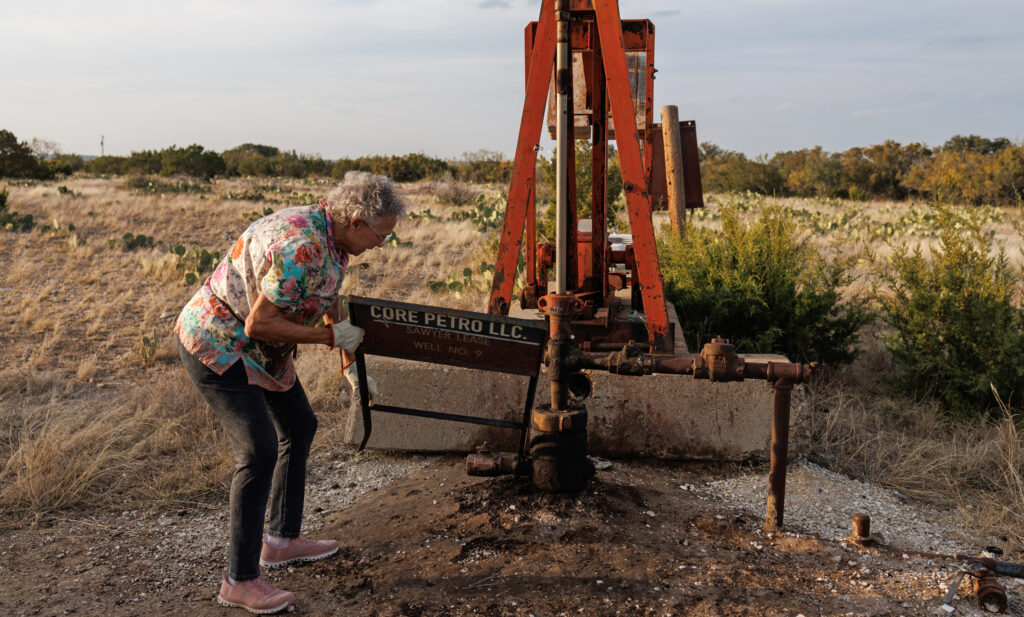
Chesnutt, a retired engineer, argues that the five wells on her ranch violate state regulations and should be closed. CORE Petro, the company operating the wells, contends they comply with rules but struggle financially to plug them.
Thousands of Texas oil wells are low-producing, like Chesnutt’s, operated by companies on tight budgets. About two-thirds of active oil wells in Texas, or 99,000 wells, produce under ten barrels daily, according to state regulators. Wells must produce at least five barrels for three consecutive months or one barrel for 12 months to stay active.
Companies often maintain minimal oil production to avoid the costly process of plugging wells, which landowners argue leads to pollution and unwanted equipment on their property.
Oil industry analysts and environmental advocates suggest companies report minimal production to evade plugging responsibilities.
“The wells on the lease are all producing,” stated Bryce Dubee from the Railroad Commission.
Advocates call for stricter regulations to ensure timely well plugging and cost assumption by companies, preventing the burden from falling on the state.

A 2022 report by Commission Shift on Texas’ orphan wells suggested companies shouldn’t indefinitely produce minimal amounts to sidestep decommissioning costs.
Texas has over 159,000 inactive wells. If operators go out of business, these wells become orphans. Currently, Texas has a backlog of more than 11,000 orphan wells.
Chesnutt is actively opposing this system. She and her late husband acquired their 375-acre property near San Angelo in 1998. After retiring, she manages goats and sheep on the ranch.
Despite complaints to the Railroad Commission, which regulates oil and gas, Chesnutt claims they have gone unanswered. She has cut power to CORE Petro’s wells, arguing noncompliance with production rules. CORE Petro claims she is breaking the law by doing so, stating they need electricity to produce oil.
“We’re in a difficult position,” said Cassie Ohlhausen, who operates CORE Petro with her husband, Kent. “We can’t afford to plug multiple wells. Our business is producing oil, not plugging wells.”
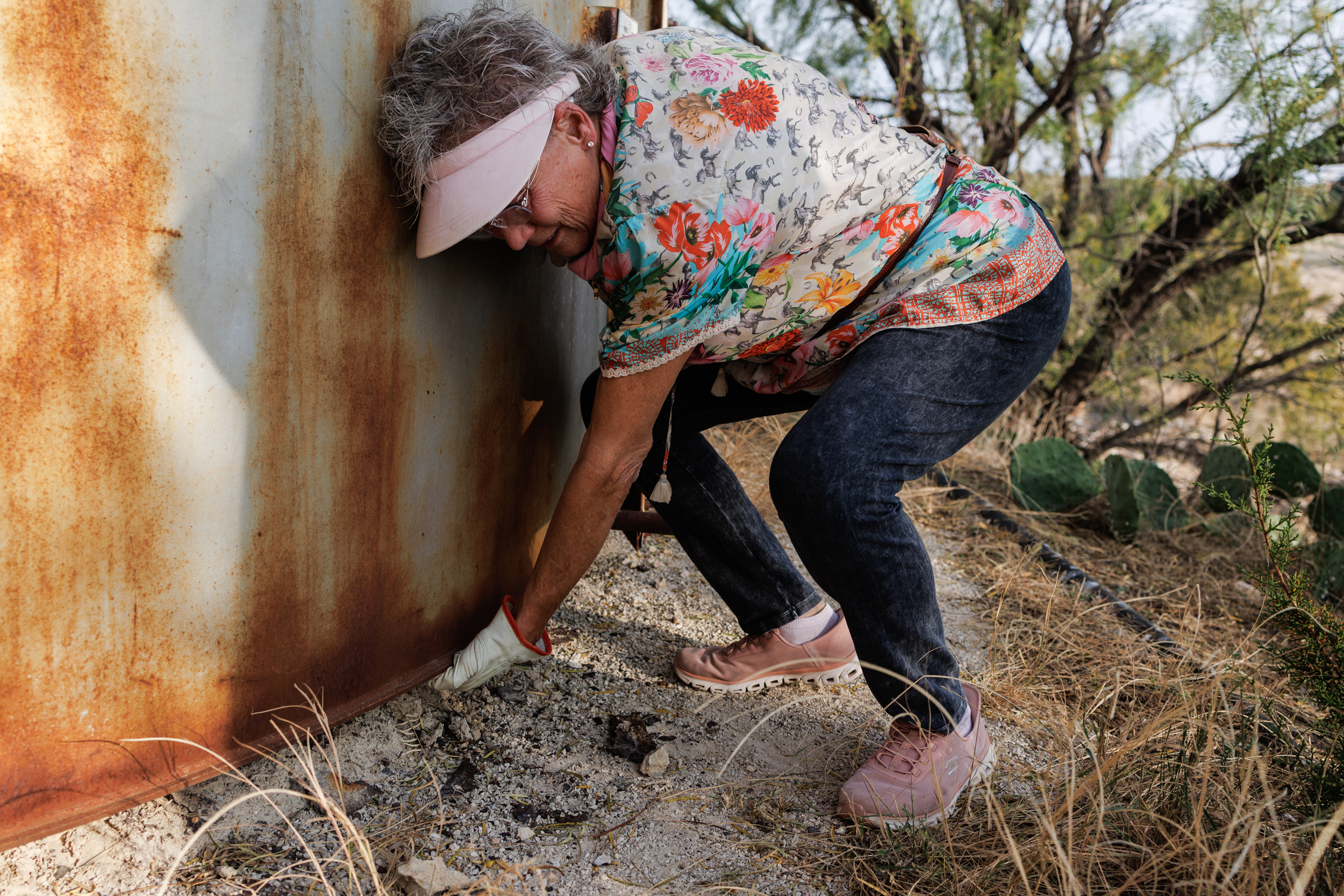
Chesnutt’s frustrations have led to disputes with CORE Petro and commission staff. The Railroad Commission accuses Chesnutt of assaulting staff and driving recklessly. The agency has restricted her to written communication to prevent further incidents. CORE Petro owners allege she threatened them with a gun, which Chesnutt denies.
The Railroad Commission hasn’t issued any fines to CORE Petro; instead, commission staff referenced a letter detailing altercations with Chesnutt. The Commission declined to discuss the oil lease on her ranch further.
Jackie’s Ranch
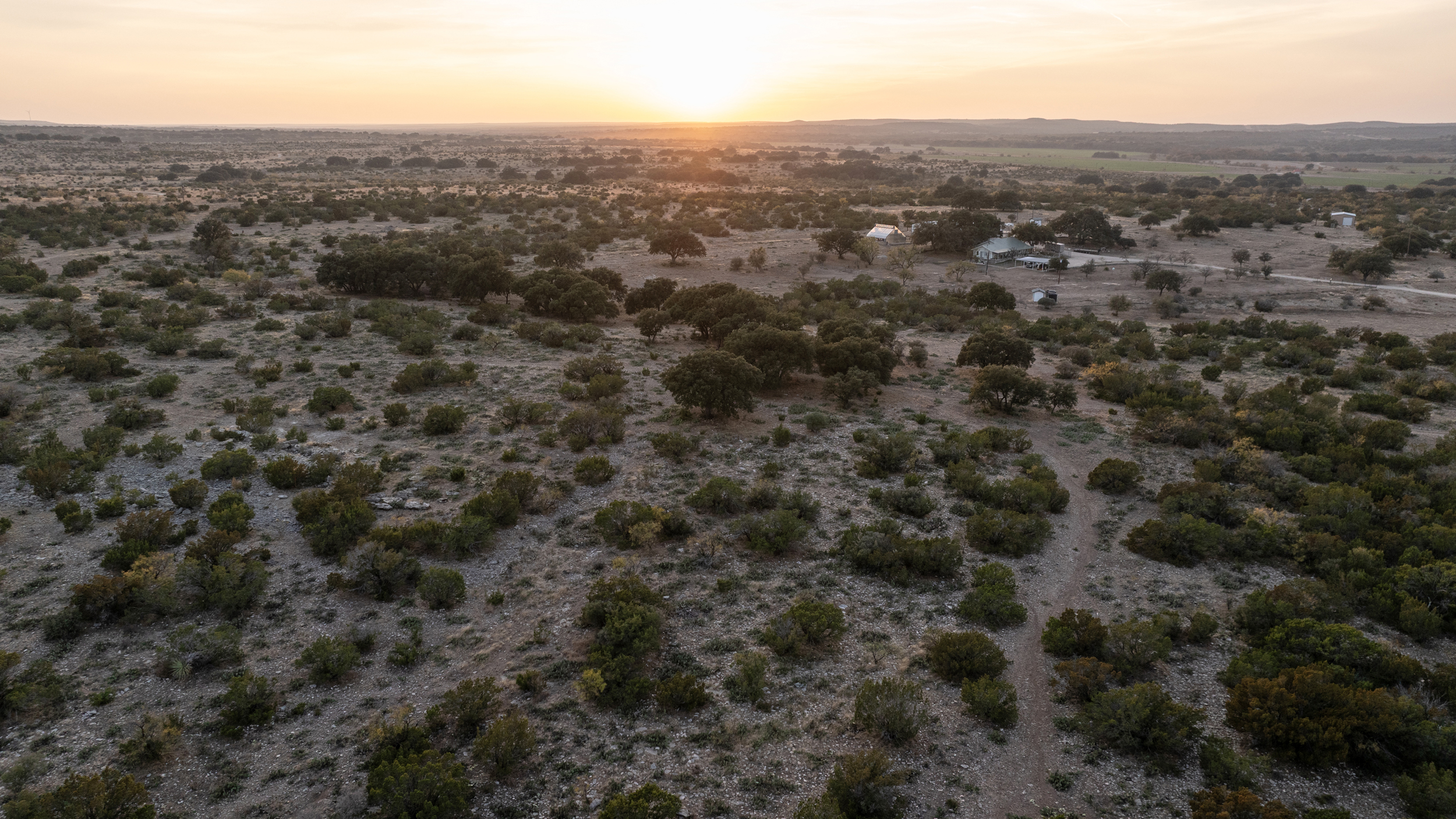
Chesnutt’s 375-acre ranch is a microcosm of Texas’ broader issue with aging oil assets. Inadequate financial mechanisms leave the responsibility of retiring low-producing wells to landowners or the state.
Persimmon Creek Ranch, located where the Trans Pecos region meets the Texas Hill Country, is named after the native persimmons Chesnutt uses to make preserves.
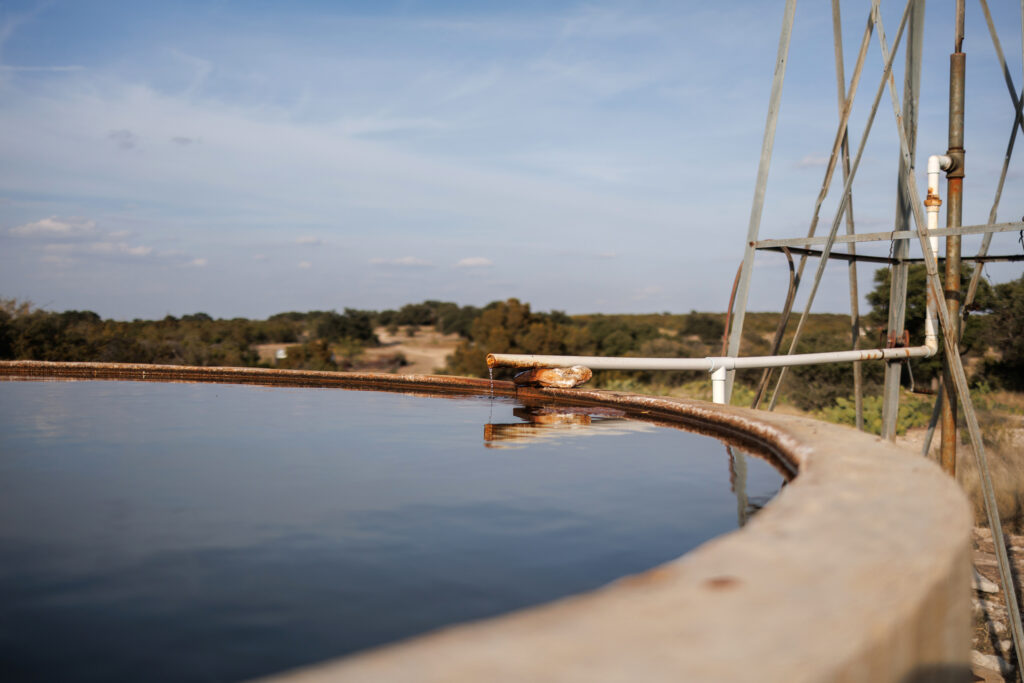
“A significant focus here has been water,” said Chesnutt. Widowed, she relies on a windmill-operated well to supply water for her residence and animals.
Chesnutt, holding half the mineral rights on her property, receives a portion of the wells’ profits—amounting to only a few hundred dollars every few months. Despite this, she maintains the wells are not worth the issues they cause.
While previously operated by Amor Petroleum, Well #10 was shut down for lack of production, leaving four active wells. CORE Petro took over the lease in 2021, which Chesnutt claims led to problems.
Once a well is inactive, operators have 12 months to plug it or apply for an extension. CORE Petro reported minimal production at Well #10 to reactivate it.
Chesnutt said the company’s efforts to restart oil flow caused several spills. She fears contamination and has tested her water multiple times.
“We’ve worked hard to make this place beautiful,” she said. “I refuse to let this happen to someone else.”
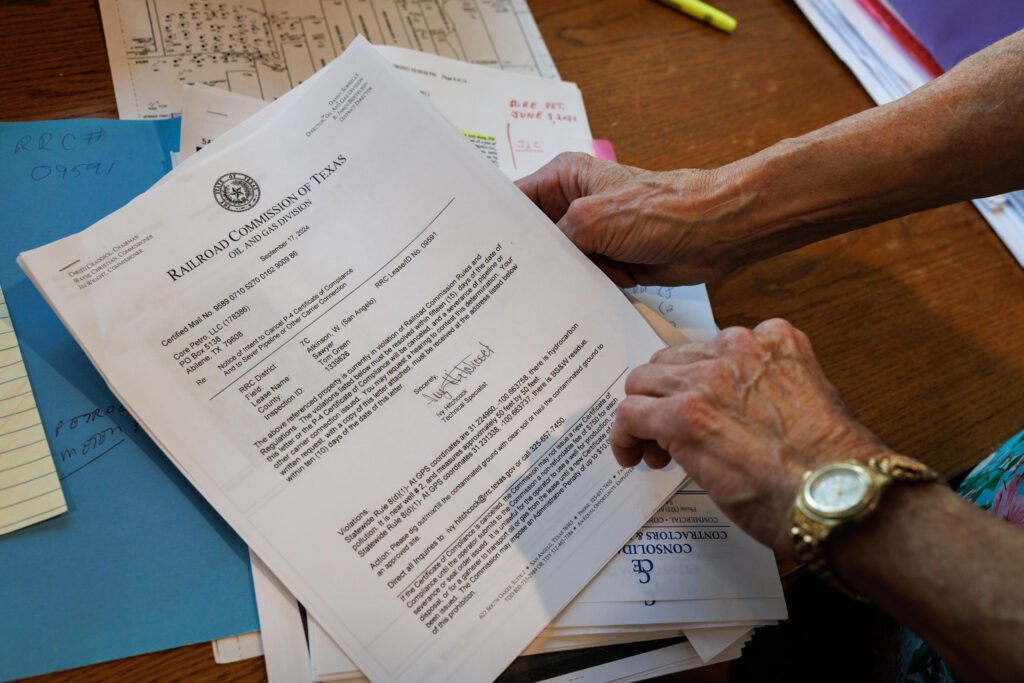
The Railroad Commission cited CORE Petro for several pollution violations, but each was resolved without fines.
“RRC records indicate four pollution violations for this lease,” Dubee stated. “The operator was notified, and after reinspection, all violations were fixed.”
CORE’s Ohlhausen acknowledged some spillage but stated they always clean up the spills.
“Industry follows one set of rules, but oil companies can operate as they wish,” Chesnutt said.
By her account, only one well has produced oil recently, but CORE Petro reports production at all active wells. Well testing in 2025 showed each well producing less than one barrel daily.
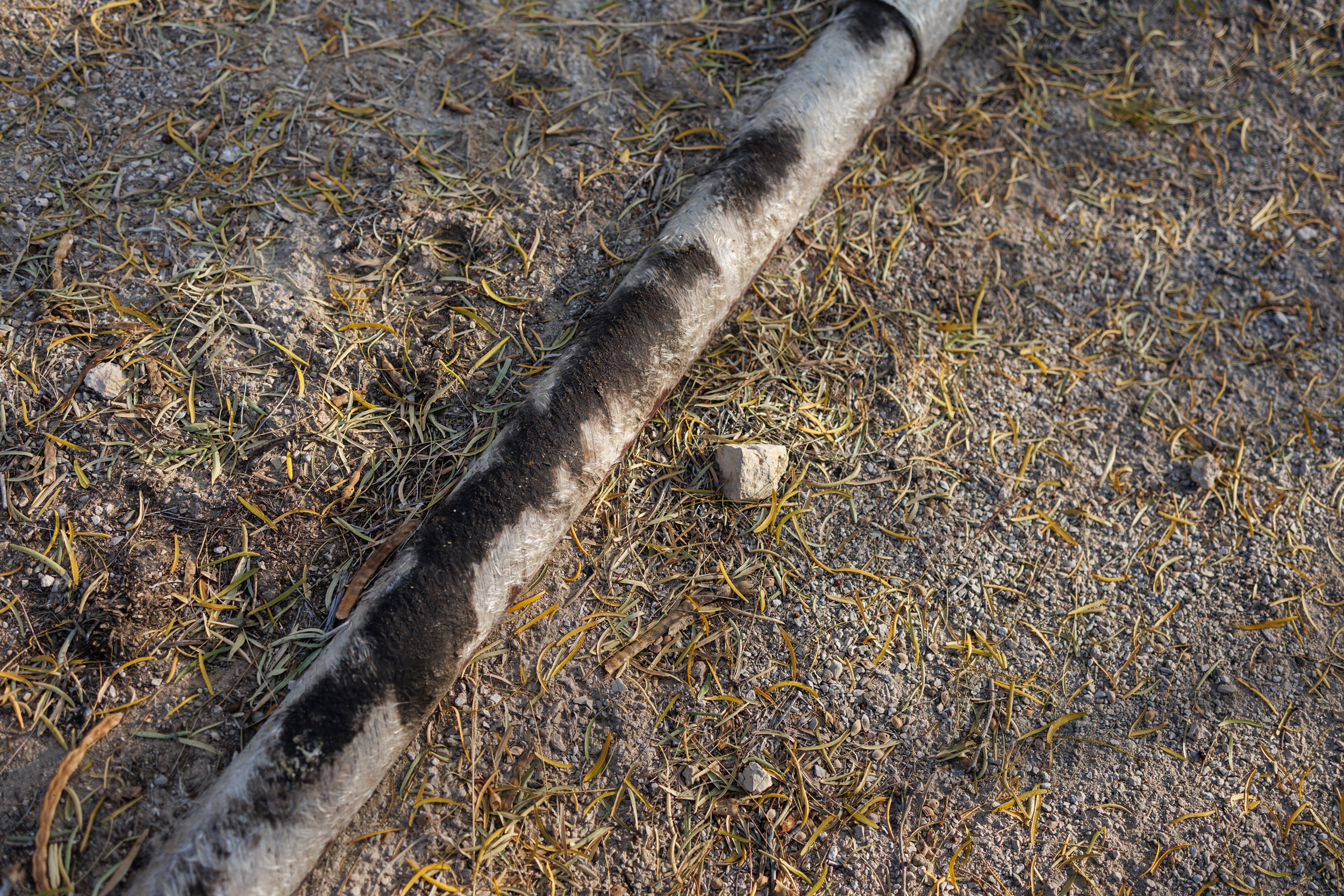
Chesnutt accused the company of falsifying production data to keep wells active, which the company denies.
“Operators can enter any information they choose unchecked,” she said. “It’s unacceptable.”
Operators report monthly production for each lease, not individual wells. Inside Climate News identified inconsistencies between public records and lease inspections.
On July 2, 2025, a truck collected oil from the ranch and recorded the remaining oil level. By the next commission inspection on September 16, the oil level hadn’t changed, despite CORE reporting 10 barrels in July and 15 in August. The discrepancy remains uninvestigated.
Ohlhausen explained the company uses an auxiliary tank for oil collection before transferring it to the main tank, which explains no change.
“Production reporting is accurate and managed by a third-party service,” she said.
Inside Climate News observed only one auxiliary tank, requiring oil from other wells to go directly to the main tank.
Additional discrepancies were noted. On February 7, 2025, the Railroad Commission cited CORE Petro, stating Well #9 was “inactive unplugged.” Later, it was deemed compliant. The Commission did not comment further.

Property owners have little recourse other than reporting to the Railroad Commission, which Chesnutt says ignores her complaints about CORE Petro.
“Not one acknowledgment that [the wells] should be plugged,” Chesnutt said of her interactions. “I faced resistance even on spill cleanup.”
The Commission’s staff expressed concern over Chesnutt’s behavior, prompting a letter from their attorney on October 31, 2024, citing her “verbal threats, physical assaults, and reckless driving.” Chesnutt disputes the characterizations, saying, “I’ve never assaulted anyone.”
The Tom Green County Sheriff’s Office responded to several incidents at the ranch. The Railroad Commission requested the sheriff’s presence during site visits due to Chesnutt turning off power to wells she claims are fire hazards.
Electricity disconnection is required at inactive wells. In 2024, oil well power lines were blamed for wildfires in the Texas Panhandle.
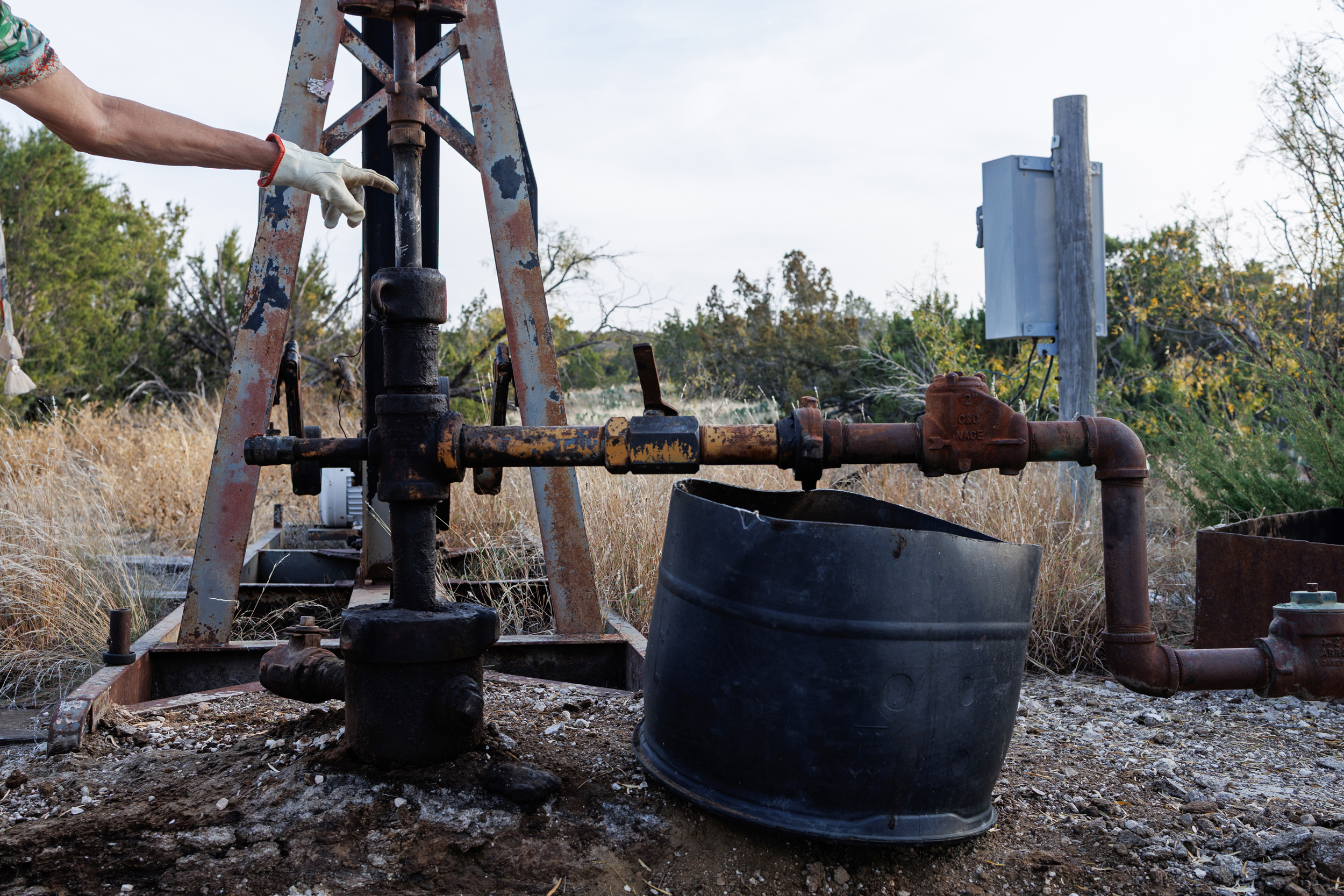
Responding to the regulator’s reckless driving claims, Chesnutt explained an encounter in October where she flagged down a Railroad Commission truck on her property road to inquire about an inspection visit.
Ohlhausen stated Chesnutt has threatened their staff multiple times.
“All wells produce until she turns them off,” she said. “We have the right to involve law enforcement if she continues.”
“The Oil Well Undertaker”
CORE Petro specializes in managing aging, low-output wells. Ohlhausen’s husband, Kent, is nicknamed “the Oil Well Undertaker” for dealing with “end-of-life wells.”
“We handle stripper wells stripped of most oil, producing just enough to sustain operations,” she said.
Kent Ohlhausen owns other oil companies meeting the minimum production requirement of one barrel monthly for 12 consecutive months. For instance, the Ohlhausen Oil Company’s W.T. lease reported one barrel each month from April 2023 to April 2024, and the Barker C.P. lease reported one barrel from December 2023 to January 2025.
“We work daily, just eking out a bit of money, and that’s fine,” Ohlhausen said.
The company paid a $50,000 bond to Texas for plugging costs if it goes out of business. Ohlhausen admits they lack funds to plug all wells.
“Funds are sometimes unavailable,” she said. “We don’t have investors; it’s just Kent and Cassie.”
Complaints Reflect Broader Problems
Texas is allocating more funds to plug orphan wells, yet their number continues to rise. Low-producing wells that lack plugging funds eventually become orphans.
“Operators often minimally produce to avoid inactive status,” said Adam Peltz of the Environmental Defense Fund. “This is widely abused.”
Peltz argues that proper identification of inactive wells offers an “early warning system” for regulators.
“Every marginal well eventually becomes inactive and many become orphans,” Peltz said. “The public shouldn’t bear the risk.”
New Mexico is reforming its bonding system, proposing rules to classify wells producing less than 90 barrels annually as “no beneficial use” and requiring plugging.
Peltz said these reforms would prevent the state from bearing plugging costs.
The Railroad Commission is developing new rules following Senate Bill 1150, mandating the plugging of wells over 25 years old and inactive for 15 years, with certain exemptions.
The Inflation Reduction Act launched a $350 million fund to plug marginal wells, reducing methane emissions. The Texas Commission on Environmental Quality (TCEQ) received $134 million, the program’s largest grant, to prioritize and select wells for plugging. TCEQ plans to rely on operators volunteering wells for plugging.
The program may assist companies like CORE Petro in plugging wells that could otherwise become orphans.
“If grants for plugging were available, we’d plug wells all day,” Ohlhausen said. “We know some of our wells will never be viable.”
Original Story at insideclimatenews.org