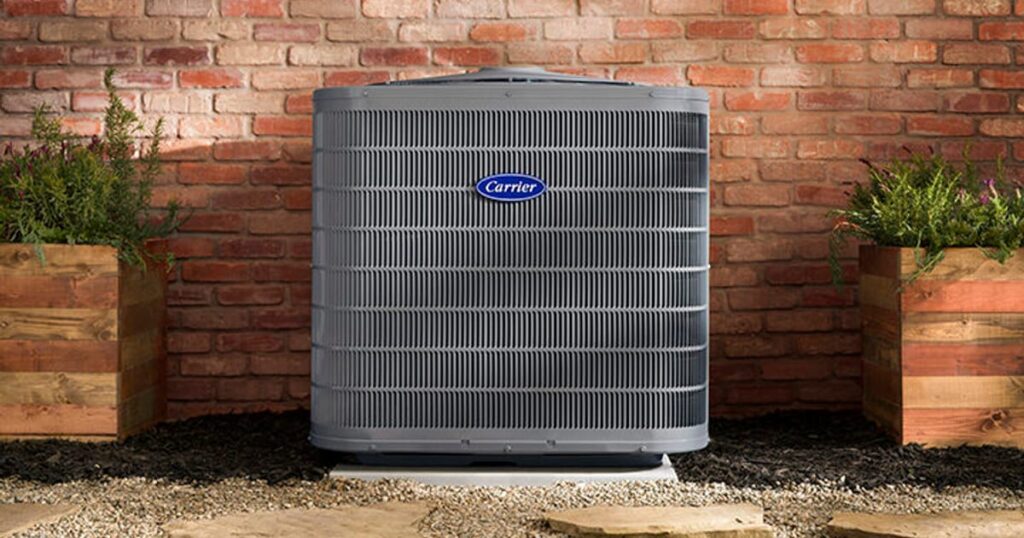
Carrier’s Innovative Approach to Energy Efficiency: Partnering with Utilities for a Brighter Future
Carrier is aiming to revolutionize home energy solutions by collaborating with utilities across the nation. The company’s strategy involves leveraging its scale to make its energy solutions more accessible to consumers. “Carrier has a scale that can really make this a much more viable solution for consumers, but it will require the right channels and the right partners to make it happen,” said Kalanki. “It has to be a collaborative effort between utilities and manufacturers and also consumers.”
To achieve this, Carrier has initiated testing with the Electric Power Research Institute (EPRI) to ensure their hardware and controls meet industry standards. An advisory board of utilities, covering some of the nation’s most congested grids, has been established to explore various approaches for battery dispatch, including both day-ahead signals and real-time toggling.
Carrier’s vision extends to assisting utilities in gaining regulatory approval to fund these batteries for all their customers. Historically, regulators have approved funds for utilities to make investments in energy efficiency or demand reduction, benefiting consumers on a larger scale.
Unlocking the Potential of HVAC Batteries
These HVAC batteries hold the promise of delivering benefits similar to those proposed by distributed-energy startups. They can potentially defer or eliminate the need for costly grid upgrades, reduce reliance on fossil-fueled peaker plants, enhance the use of renewable energy by shifting surplus, and provide valuable peak capacity for data centers and factories.
Despite appearing to challenge traditional utility business models, these customer-sited energy devices may actually aid utilities in meeting rising demand during the AI era. “We want this technology to work for the utilities so that they can provide more affordable and reliable power to homeowners and industrial growth companies,” Yilmaz said. “It’s a win-win for everyone.”
Enhancing Consumer Experience and Energy Savings
Consumers currently have options to reduce peak demand using smart devices, but these often come with inconveniences. Kalanki highlights the importance of ensuring comfort while addressing energy efficiency. “People tend to think about energy efficiency in isolation and don’t think that cooling is a people-centric issue,” Kalanki noted. “HVAC systems are enabling people to feel comfortable on the hot, humid days of the year.”
Carrier plans to utilize its acquisition of Viessmann Climate Solutions to develop software that optimizes battery control in the U.S. This aligns with the significant scale of home air-conditioning adoption, which far surpasses residential battery installations.
Yilmaz pointed out that air conditioners are often a significant investment for households, second only to homes and vehicles. “We have such a big investment from the homeowner, and when they need it the most, the hottest day of the year, you ask them to [dial it back],” he said. “It is very counterintuitive. We think we can do better.”
Challenges and Opportunities in Implementation
The U.S. residential battery market, led by brands like Tesla and Enphase, continues to grow, yet the adoption of home air-conditioning systems is much larger. With two-thirds of U.S. households using central air conditioning, around 7 million HVAC units are replaced annually, with Carrier selling about 2.5 million of those.
If Carrier succeeds in integrating batteries with just 16% of its U.S. HVAC unit sales, it could equate to the current national rate of home battery deployment. Achieving this would require collaboration with major utilities and their regulators.
Consumer participation is crucial, even if the batteries are offered at no cost. Domitrovic from EPRI noted that Carrier batteries have “limited” or “potentially undetectable” impacts on consumers while offering benefits like bill savings and improved grid reliability.
Bill savings can be significant, particularly in areas with time-of-use rates. Carrier envisions these batteries charging during off-peak times when rates are lower, thereby reducing consumption during peak hours. While some energy is lost in the process, Yilmaz mentioned that utilities could compensate consumers to avoid negative impacts.
Participating in the HVAC battery program may also reduce the risk of outages during extreme weather. Carrier is exploring various incentives to encourage consumer participation. Finding the right strategy will be key to the plan’s success.
Original Story at www.canarymedia.com