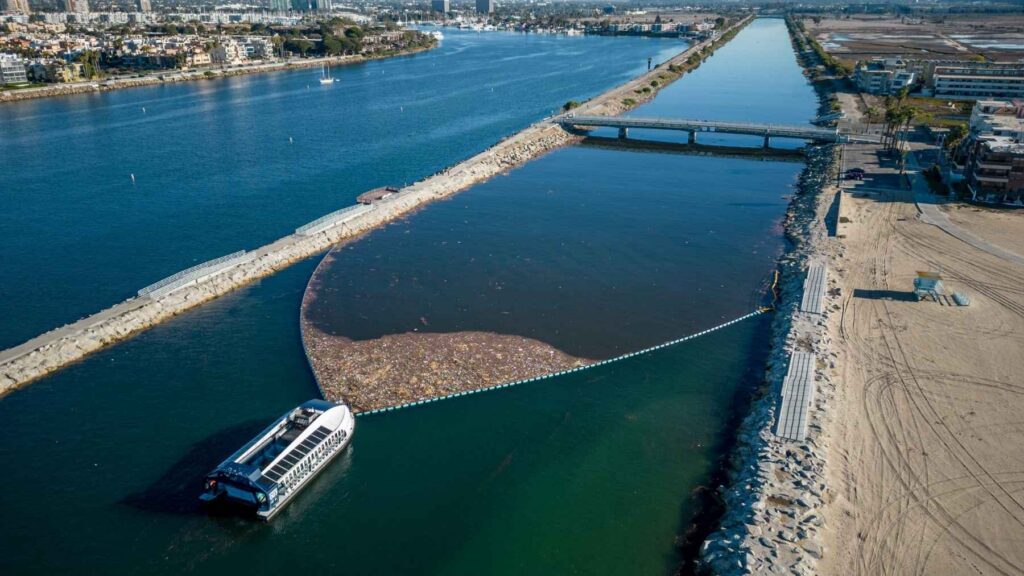
In an innovative approach to combat ocean pollution, a solar-powered machine strategically placed at the mouth of Ballona Creek in Los Angeles has demonstrated remarkable efficiency. This machine, which prevents plastic waste from reaching the Pacific Ocean, collected a staggering 143,710 pounds of trash over the course of a year, far surpassing initial expectations.
Innovative Approach at Ballona Creek
Most oceanic plastic does not originate far out at sea. It often travels downstream from inland waterways, such as creeks and rivers, before reaching the ocean. Recognizing this, a Dutch nonprofit organization, The Ocean Cleanup, deployed a solar-powered machine at the point where Ballona Creek meets Santa Monica Bay, aiming to intercept trash before it enters the ocean.
This interceptor, known as Interceptor 007, was launched as a pilot project in October 2022 in collaboration with LA County Public Works. Its performance exceeded expectations, managing to keep over 250,000 pounds of debris out of the ocean during the test phase, which was twice the amount predicted based on historical data. Consequently, in October 2024, it was decided to permanently continue its operation.
Functionality and Design of the Interceptor
The machine employs a simple yet effective design. A floating barrier in the shape of a V guides debris towards a conveyor belt, which lifts it from the water. The waste is then deposited into dumpsters, with the entire process powered by solar panels. Each dumpster can hold approximately ten tons of trash, equivalent to the capacity of a dump truck.
James Patterson, who manages the Ballona Creek system, emphasizes the engineering sophistication behind the seemingly simple design. The barriers form the V only during rain forecasts, which is when the creek becomes a significant trash conveyor. At other times, the channel remains open for aquatic life and recreational activities.
Effectiveness of River-Based Solutions
The Ocean Cleanup, founded by Dutch inventor Boyan Slat in 2013, initially focused on developing technology to clean the Great Pacific Garbage Patch. However, recent research by the organization indicates that targeting rivers could be more effective. Their studies reveal that about 1,000 rivers, representing just 1% of the world’s waterways, are responsible for approximately 80% of the ocean’s plastic pollution. By addressing these key areas, significant progress can be made without the need to chase microplastics across the open ocean.
Patterson highlights the importance of this approach by stating, “You have to turn the faucet off before we can scoop the ocean,” emphasizing the need to prevent waste from reaching the ocean in the first place.
Financial and Environmental Impact
The operation of the Interceptor is funded entirely by The Ocean Cleanup, alleviating the financial burden from local taxpayers. While the cost of deploying and operating the machine is substantial, it results in savings for local municipalities, as less trash reaches the beaches, reducing the need for extensive cleanup efforts.
Future Expansion Plans
The success of the Ballona Creek interceptor has paved the way for further installations. The Ocean Cleanup has plans to deploy similar machines on the LA River and the San Gabriel River, aligning with preparations for the 2028 LA Olympics. This expansion is supported by Kia, The Ocean Cleanup’s partner since 2022.
Globally, The Ocean Cleanup operates interceptors in 10 countries, targeting the 30 most polluted urban watersheds. In 2026, the organization secured $121 million from The Audacious Project, marking the largest funding commitment for their 30 Cities Program, which aims to significantly reduce global plastic pollution.
Challenges and Considerations
While the interceptor’s success is promising, Patterson cautions against overestimating the impact of a single machine. Each new deployment requires consideration of local environmental, regulatory, and political factors, making each site unique. Nevertheless, the significant amount of waste intercepted at Ballona Creek serves as a compelling example of the potential benefits of this innovative approach.
Original Story at www.autonocion.com