Wildfire Smoke Clears Just in Time for World Cup Final Amid U.S.-Canada Tensions
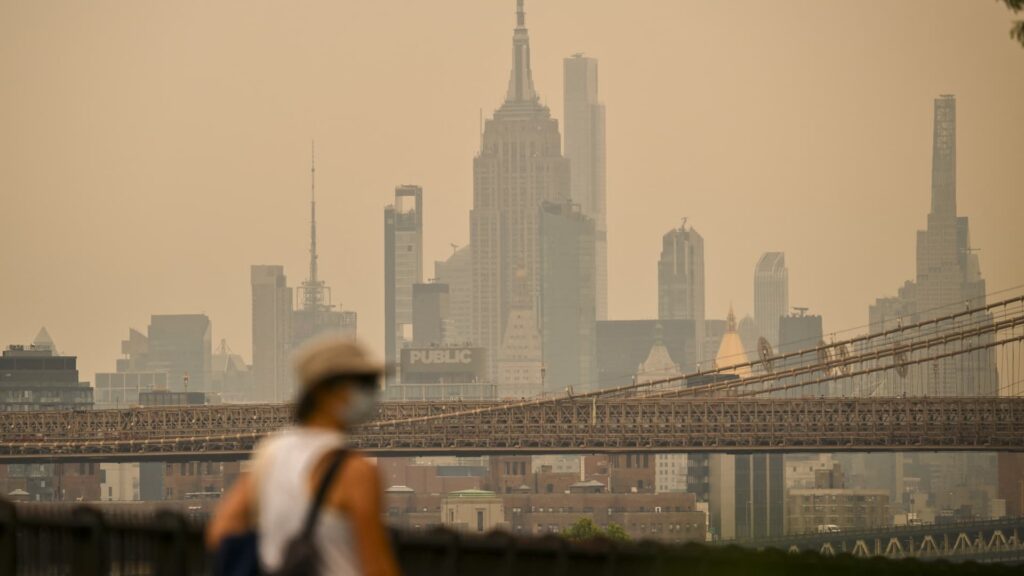
As the World Cup final approaches, smoke from Canadian wildfires that had engulfed the Northeast is expected to dissipate, providing relief to millions affected by poor air quality. Thunderstorm activity is anticipated to clear the skies over New Jersey, where the final will take place, according to meteorologists.
Despite the improved forecast, air quality warnings remain in effect across a significant portion of the U.S. President Donald Trump has criticized Canada for the smoke drifting across the border and suggested imposing tariffs. Ontario Premier Doug Ford responded by calling such measures “unacceptable and shortsighted.”
At MetLife Stadium, renamed the New York/New Jersey Stadium for the World Cup, the sky remained gray, even after thunderstorms caused disruptions, including halting the Spanish national team’s training session. Yet, tourists like Joost Timpers from the Netherlands seemed unfazed, stating, “We’re not experts in air quality, of course, but we are experiencing the quality now.”
Weather to Improve Air Quality
According to Tyler Roys from AccuWeather, the storm front will help clear out most of the smoke in the Northeast. “There could be some lingering smoke that would make things hazy, but very faint,” he noted. Expert Jeff Berardelli of WFLA-TV added that the storms would largely “sweep the atmosphere clean.”
Air quality is expected to improve from hazardous levels to “moderate,” posing little to no risk for the general public. Meteorologist Rob Shackelford advises those sensitive to air conditions to monitor the air quality index, which shows improvement following the rain.
David Lu, CEO of Clarity Movement, stated that air quality at the stadium is monitored every 10 minutes, with conditions improving substantially after the thunderstorms. Sunday’s temperatures are predicted to be around 80°F (27°C) with favorable conditions for the final match.
U.S.-Canada Relations Strained Over Smoke
President Trump has expressed dissatisfaction with the air quality situation, saying on social media that the U.S. is “being unnecessarily invaded by filthy, polluted, and unhealthy air.” Meanwhile, Canadian Prime Minister Mark Carney emphasized the global responsibility to combat climate change, including by the U.S.
Doug Ford highlighted past Canadian assistance to the U.S. during natural disasters, stating, “that’s what neighbors do.” Ford deemed the president’s rhetoric as “absolutely unacceptable” amid ongoing efforts to manage the fire crisis.
Wildfire Outbreaks Intensify Across Canada
Canada faces an unprecedented wildfire season, with hundreds of active fires burning across Ontario, British Columbia, and other regions. Meteorologist Jeff Berardelli linked the intensity and duration of these fires to climate change.
In Ontario alone, nearly 200 wildfires have already exceeded the land burned last year. Thunder Bay’s Fire Chief Dave Tarini called the current season unprecedented in his 35-year career. In British Columbia, lightning strikes have sparked a dramatic increase in wildfires, challenging local firefighting efforts.
Evacuations have been necessary in multiple areas, including Nova Scotia and northwestern Ontario, where some of the most severe fires are located. Canadian and provincial crews continue to battle these blazes amid challenging conditions.
Original Story at www.cnbc.com