The Rise of Chinese Electric Vehicles and Their Impact on the Global Market
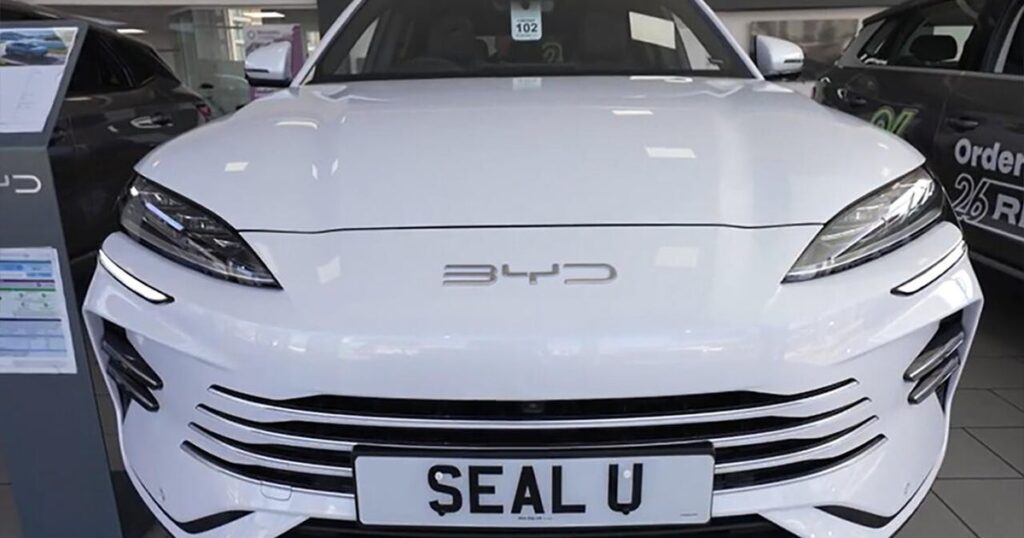
With electric vehicles (EVs) becoming more mainstream, car enthusiasts are witnessing a significant shift in the automotive landscape. One such enthusiast, Justin Watson, recently traded his Lexus for a vehicle from BYD, short for “Build Your Dreams,” a Chinese automaker. Watson remarked, “The ride, the drive, the suspension, the comfort, the level of technology is far superior than anything I’ve had before.”
BYD is a brand that’s gaining traction worldwide, despite being relatively unknown in the United States. The company surpassed Tesla last year to become the leading global seller of fully-electric vehicles, and it maintains its lead over Tesla when hybrids are included. Watson mentioned that the stigma around purchasing a Chinese car has diminished, noting, “I think long are the days where you bought cheap from China and it didn’t last long. They’re putting a lot of emphasis in quality.”
In London, the Alan Day Motor Group, which has been selling Volkswagens for over 50 years, is now seeing excellent sales with BYD. Paul Tanner, the managing director, expressed his surprise at the success of Chinese cars, stating, “When you see the growth and the quality of the product, it’s phenomenal.”
BYD’s marketing strategy heavily relies on social media, showcasing its vehicles that boast features such as water traversal, 360-degree rotation, extended battery life, and a soon-to-be-available five-minute charge. According to Ben Nelmes, executive director of the U.K. think tank New Automotive, “China is miles ahead of the rest of the world.” He attributes BYD’s success to its origins as a battery company, allowing it to control the entire supply chain and produce affordable batteries for export worldwide.
Despite its global reach, BYD faces significant challenges in the U.S. market. In 2024, President Biden imposed a 100 percent tariff on Chinese EVs, declaring, “I’m determined that the future of electric vehicles be made in America by union workers. Period.” This tariff effectively doubles the cost of Chinese cars, making it nearly impossible for companies like BYD to penetrate the U.S. market, according to Nelmes. “It effectively closes the market to the import of those vehicles,” he said.
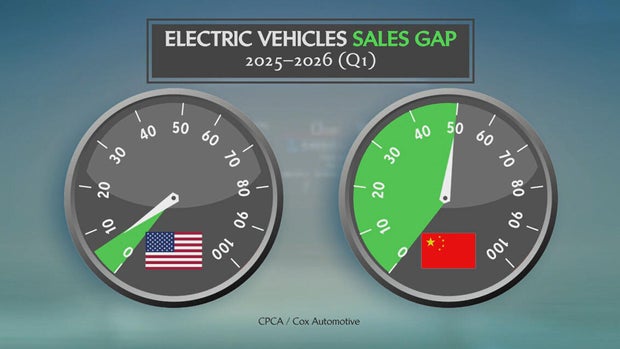
President Trump maintained these tariffs while also relaxing auto emissions standards and removing tax incentives for EV purchases. In contrast, tariffs on Chinese vehicles are lower in Europe, where countries like Norway see 97 percent of new car sales as electric. China leads the global market, with EVs making up nearly half of new car sales, compared to less than 10 percent in the U.S.
While the tariff may temporarily protect U.S. jobs, its long-term effects are uncertain. Nelmes explained, “If the future of all car-making is electric car manufacturing, then you might simply be preventing American carmakers from making that journey,” potentially exposing them to future global competition.
As gas prices surge due to ongoing conflicts, such as the war in Iran, consumers like Watson see financial benefits in owning a Chinese EV. Watson shared, “I’ve got family in America. They’re actually jealous!”
Original Story at www.cbsnews.com