BMW’s Strategic Shift: Expanding LFP Battery Use Beyond China
BMW is making strides in the electric vehicle (EV) market by extending the use of lithium iron phosphate (LFP) batteries beyond China. This move could significantly lower the cost of EVs in Europe and possibly other regions, offering a more affordable entry point for electric mobility. The decision was confirmed by Joachim Post, BMW’s development chief, indicating a broader rollout of this battery technology.
In an interview with BimmerToday during the launch of the new i3 in Aix-en-Provence, France, Post announced plans to expand the LFP battery lineup. Referring to the China-specific iX3 30L, he stated, “We will continue rolling out LFP batteries and offer them not only in China.”
Although BMW has yet to disclose which markets will first receive the LFP technology, the initiative suggests future availability in more economical EV models such as the i3 and iX3.
LFP Vs NMC: Advantages And Disadvantages
Currently, BMW’s Neue Klasse vehicles employ sixth-generation (Gen6) nickel-manganese-cobalt (NMC) battery cells, known for their high energy density and extended range capabilities. However, LFP batteries present a cost-effective alternative, albeit with reduced energy density that translates to shorter driving ranges.
LFP batteries offer several benefits: they are durable, handle more charge cycles without significant degradation, and have better thermal stability. Furthermore, their composition avoids the use of nickel and cobalt, mitigating price volatility and supply chain issues. These batteries can also be charged to 100% consistently, unlike NMC batteries, which suffer from long-term degradation when fully charged frequently.
Nevertheless, LFP batteries have limitations, particularly their reduced efficiency in cold climates and lower energy density compared to NMC cells. The choice between these chemistries often depends on whether cost, durability, or range is prioritized.
The Long-Wheelbase iX3 Gets Its First
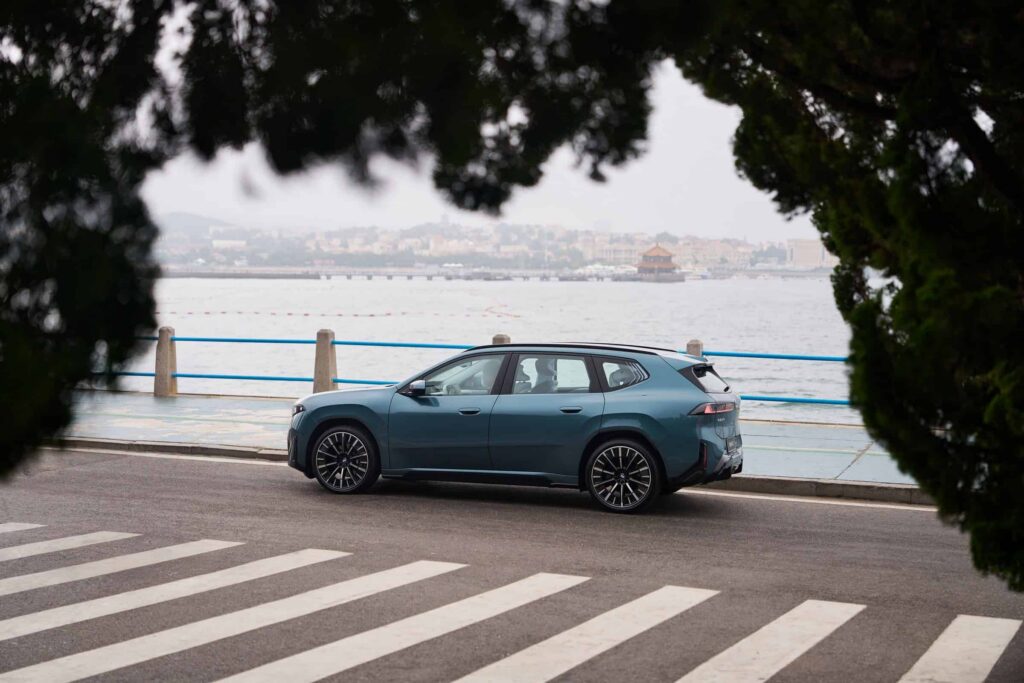
BMW CEO Milan Nedeljković discussed the integration of LFP batteries during a recent earnings call, emphasizing that the company will selectively apply this technology within their Neue Klasse lineup. The China-exclusive iX3 30L, equipped with a 77-kWh LFP battery offering 391 miles on the CLTC cycle, serves as a prototype for potential global offerings, although WLTP figures may be lower.
The Chinese i3 sedan could also see an LFP-equipped, entry-level variant upon its release, showcasing BMW’s commitment to introducing cost-effective electric solutions globally.
Will The BMW i1 Have An LFP Battery?
Looking to the future, LFP technology might play a crucial role in reducing the price of BMW’s planned entry-level compact EV set for Europe in 2028. While details about the model, possibly named the i1, remain speculative, an affordable battery solution aligns with the needs of smaller EVs where range is less critical.
Though the choice of battery chemistry for this model is still undecided, adopting LFP batteries could make electric mobility more accessible, a goal also shared by MINI.
Source: BimmerToday
Original Story at www.bmwblog.com