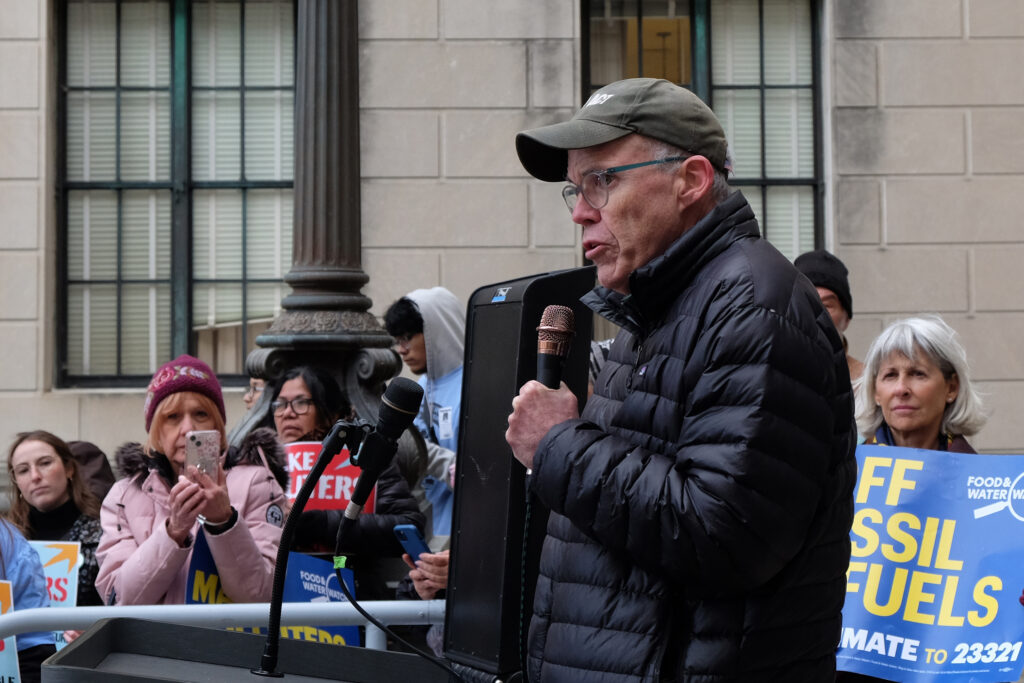
TRENTON, N.J.—On Monday, a group of over 100 activists, faith leaders, and politicians gathered outside the New Jersey State House to advocate for a new bill that would impose fees on fossil fuel companies for the environmental damage their pollution has caused in New Jersey. The event featured a large balloon with the words: “Make Polluters Pay!”
The Climate Superfund Act aims to raise an estimated $50 billion over 20 years to fund disaster relief and climate resilience projects in the state. The bill, opposed by the fossil fuel industry, is being pushed to a vote before the legislative session ends on January 13. Read more about the opposition to the bill.
Bill McKibben, founder of 350.org, attended the rally. McKibben, a key figure behind Vermont’s 2023 Climate Superfund Act, also contributed to the passage of New York’s Superfund Act. Both laws have faced lawsuits from the Trump administration, which claims they breach federal law.
New Jersey, like Vermont, experiences significant flooding and severe storms due to climate change, resulting in high energy bills for residents. “Our communities pay with our pockets, or pay with our lives,” stated Viri Martinez from the Alliance for Immigrant Justice.
The bill targets major oil companies, such as Exxon and Shell, which have emitted over a billion tons of greenhouse gases since 1995. Funds collected would mainly support overburdened communities.
“We know who’s responsible,” McKibben told the gathering. “It’s time to hold [oil companies] accountable by charging them for the damage they’ve caused.” Exxon and Shell did not comment.
Speaking about the importance of the bill, McKibben highlighted its potential as a template for other states. He noted, “We’re at a moment where affordability is crucial. This should be an easy decision for legislators—it doesn’t cost anything and generates revenue.”
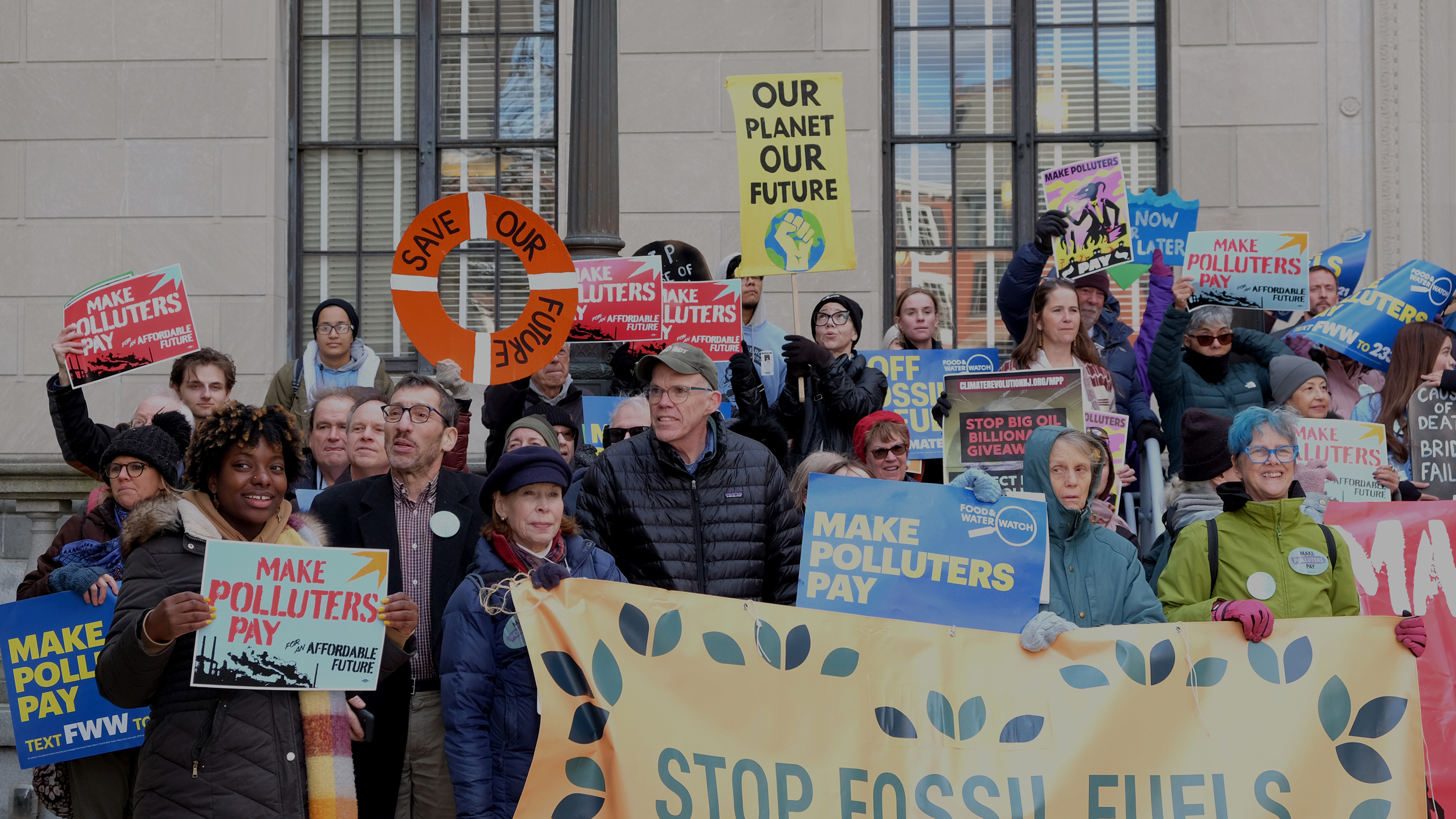
The bill has grassroots support but awaits a legislative vote. McKibben emphasized, “Without organizing, the status quo wins. But when we mobilize, we triumph. I expect success here.”
In response to concerns about increased energy costs, McKibben explained that oil prices are globally determined, and breaking the fossil fuel industry’s power could eventually lower costs.
The potential $50 billion funding is crucial for infrastructure upgrades and flood prevention in New Jersey, McKibben stated, arguing the choice is between taxpayers or the fossil fuel companies footing the bill.
If passed, the bill could influence other states and send a strong message to larger entities like California. With federal climate action stalled, state-level initiatives become vital.
Original Story at insideclimatenews.org