
On a crisp autumn evening in 2021, the Daimler Warehouse in Coventry became a hub of creativity and activism as young minds gathered for the inaugural session of a ten-part series. This initiative, part of the With One Breath project, aimed to use the arts as a lens to examine and communicate the climate crisis. Highly Sprung Physical Performance hosted the event, where theatre, photography, and creative writing were the tools of choice.
Becky Warnock, a socially engaged artist, led a thought-provoking exercise that gauged the participants’ feelings about climate change. By positioning themselves along a continuum in response to various statements, the young attendees revealed their informed perspectives on the issue. However, when asked about their agency in climate change discussions, most expressed a sense of disenfranchisement.
The climate crisis has a communications problem. How do we tell stories that move people – not just to fear the future, but to imagine and build a better one? This article is part of Climate Storytelling, a series exploring how arts and science can join forces to spark understanding, hope and action.
Exploring the intersection of art and community engagement, my research delves into the impact of collaborative artistic endeavors. Since 2019, I have partnered with Rachel Turner-King across a multitude of environments, from schools to parks, in places like Coventry, Kampala, and Nairobi.
We coined our initiative Acting on Climate, focusing on engaging youth in meaningful discussions and encouraging them to explore and narrate their local environments. The goal was to highlight the global impact of the climate crisis and amplify underrepresented voices, especially those of young people who are often excluded from decision-making processes despite being the most affected. With One Breath aimed to bridge this gap by fostering cross-cultural collaboration.
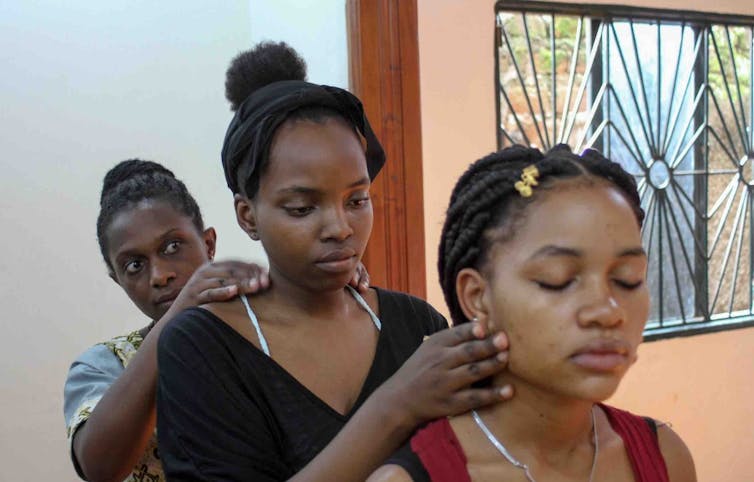
Author provided (no reuse)
Borrowing from Augusto Boal’s Theatre of the Oppressed, our project utilized drama-based games and exercises to inspire young people to reflect on their surroundings through photography and film. They identified three major themes: power and responsibility, globalization, and envisioning positive future alternatives.
This initiative sparked fruitful exchanges between participants from different backgrounds. While young individuals in the UK often viewed the climate crisis as a distant issue, their counterparts in Uganda shared firsthand experiences of its immediate effects, creating a richer understanding of global disparities.
Our findings revealed that young people frequently feel powerless to drive change, despite being portrayed as symbols of hope. This perception places undue burden on them to solve a crisis they did not instigate. Additionally, young Ugandans faced dual marginalization due to their age and geographic location, highlighting the need for more inclusive dialogues.
Complexity and collaboration
The scope of my research expanded through Fair Play Kenya 2025, a festival at Nairobi’s National Theatre during the British Council’s Kenya 2025 season. This event explored the intersections of climate crisis, conflict, and land justice by connecting young groups from Nairobi, Derry/Londonderry, and Birmingham via online and in-person workshops.
The collaboration brought together diverse partners: Amani People’s Theatre and ZamaleoACT in Kenya, The Gap Arts Project in Birmingham, and Northern Ireland’s The Playhouse. The young participants engaged in exchanging ideas and documenting their findings in a short film.
In Derry/Londonderry, the focus was on cultural heritage and nature rights, with attention drawn to the challenges facing Lough Neagh. Birmingham’s youth were concerned with access to nature, while Nairobi’s participants reflected on land justice and the implications of Carbon Credit deals affecting local communities.
Projects like Fair Play demonstrate that creative international collaboration is inherently complex and multifaceted. While individual efforts are crucial, systemic changes are necessary to address the broader environmental issues exacerbated by historical industrialization and colonial exploitation.
Our research in Uganda also underscored how climate change drives migration and conflict, reinforcing the need for creative projects that illuminate these interconnected challenges. By engaging with the arts, young people—and researchers alike—can make these issues tangible and relatable, fostering a deeper connection to both history and the ongoing climate crisis.
Original Story at theconversation.com