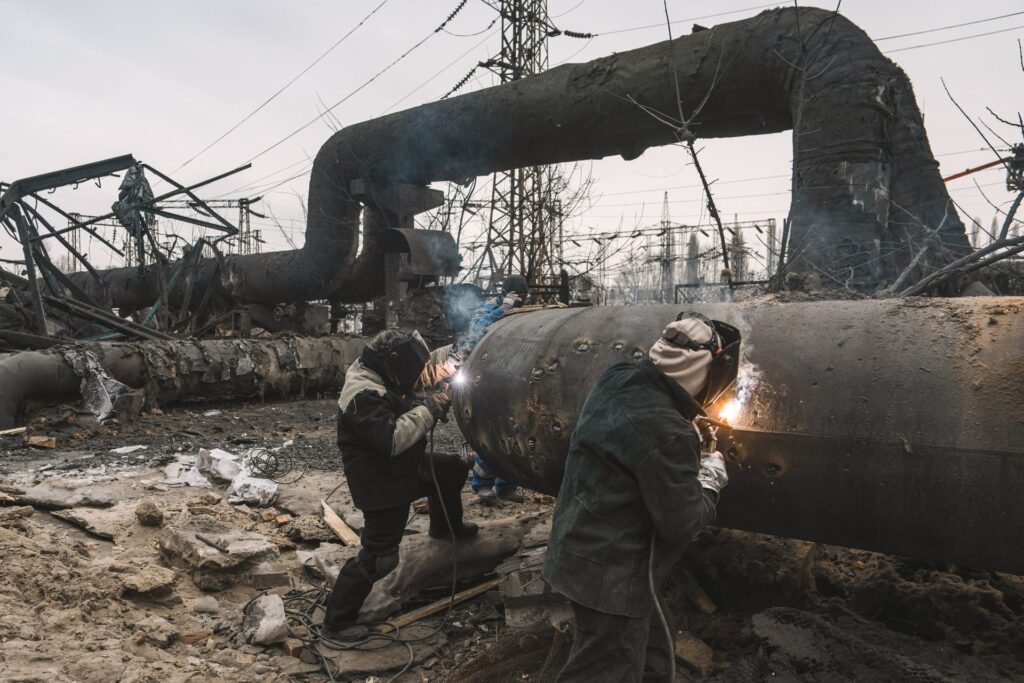
As Europe grapples with the realities of energy security, recent developments in Ukraine present a stark reminder of the vulnerabilities inherent in traditional energy systems. The challenges faced by Ukraine underscore the need for a strategic shift towards decentralized renewable energy solutions.
Ukraine’s Energy Infrastructure Under Siege
On February 3, Russian missiles targeted Ukraine’s Darnytsia thermal power plant, plunging Kyiv into darkness during a harsh winter. This attack is part of a broader pattern in Russia’s ongoing conflict with Ukraine, where centralized energy facilities have become strategic targets. Ukraine’s Energy Minister highlighted the severity of the situation, stating that “there is not a single power plant in Ukraine that has not been hit.”
This vulnerability is not exclusive to Ukraine but reflects a broader European issue where centralized energy infrastructure is mistakenly seen as synonymous with security. Ukraine’s experiences offer a hard-learned lesson in the potential dangers of relying solely on centralized systems.
Investing in Local Renewables: A Strategic Necessity
The Stockholm Environment Institute Tallinn Centre collaborated with a Ukrainian municipal water station, exploring how local renewable energy systems can enhance resilience even when the central grid faces disruptions. Their analysis concluded that solar and wind energy systems, complemented by battery storage, could offer reliable power alternatives for municipalities.
For instance, a wind energy system installed over an area comparable to a football field could produce 58.5 GWh annually, meeting the electricity needs of approximately 17,000 households. The projected total lifetime cost for such a system is 46.2 million euros ($54.8 million), with an upfront investment of 30.2 million euros ($35.9 million). This translates into a cost-effective energy solution, with a levelized cost of electricity at 0.131 euros ($0.16) per kWh, which is lower than the average EU household electricity price of around 0.19 euros ($0.23) per kWh.
Broader Implications for Europe’s Energy Strategy
Across Europe, decentralized renewable systems have been integral to climate action and energy affordability. Ukraine’s situation adds a new dimension, illustrating how these systems can also bolster security and resilience. By integrating renewable energy at critical infrastructure sites and empowering municipalities to manage local green energy systems, Europe can align its climate initiatives with security objectives.
However, the financial burden of such projects is significant. This is where international financial support becomes crucial. Entities like the European Bank for Reconstruction and Development, the European Investment Bank, and the World Bank are pivotal in offering financial assistance to municipalities, aiding the transition towards resilient and sustainable local energy systems.
As Europe’s focus shifts to resilience in the face of geopolitical and climate challenges, investing in local renewable energy systems emerges as a pragmatic approach to safeguarding essential infrastructure. Ukraine’s experience vividly demonstrates that centralized systems alone do not guarantee security. A move towards decentralized energy generation, integrating hybrid renewables, and storage solutions is essential for enduring stability.
Ultimately, sustainability and security are not mutually exclusive. Europe now has the opportunity to redefine its energy landscape, ensuring it not only meets decarbonization goals but also withstands emerging threats.
Original Story at kyivindependent.com