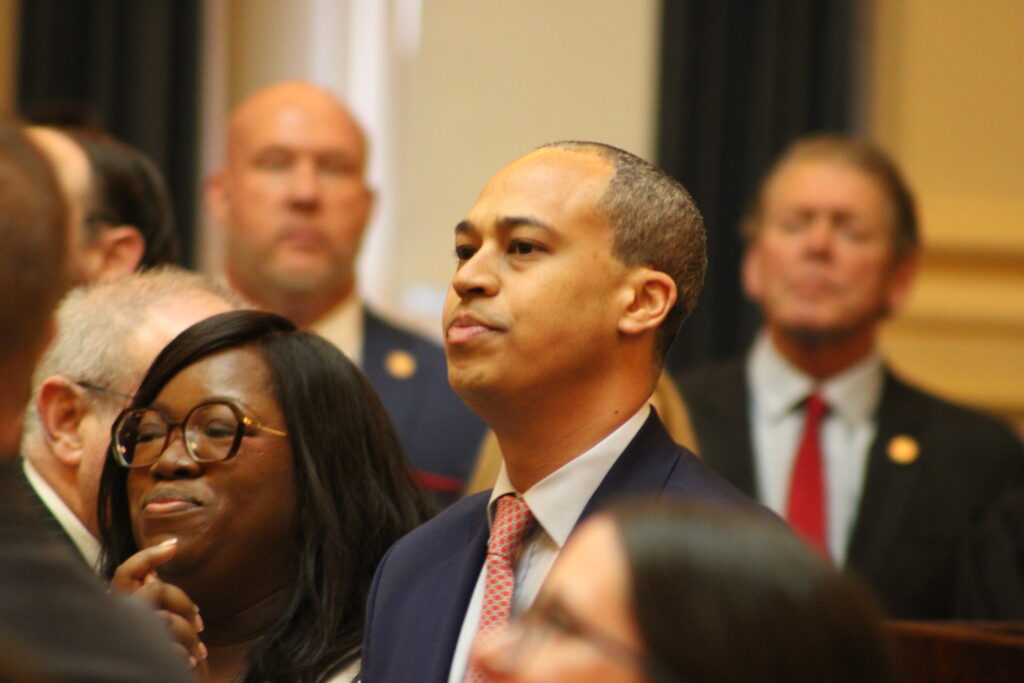
RICHMOND, Va.— Virginia’s Democratic Attorney General Jay Jones initiated actions on Thursday to facilitate the state’s re-entry into the Regional Greenhouse Gas Initiative (RGGI) carbon market.
In November 2024, Floyd County Circuit Court ordered Virginia to rejoin RGGI after its previous withdrawal by then-Governor Glenn Youngkin. This ruling is paused due to a March 2025 appeal by former Attorney General Jason Miyares.
Jones filed a motion with environmental groups to potentially settle or dismiss Miyares’ appeal. This is part of broader Democratic efforts in Virginia to rejoin the carbon market.
“The Commonwealth has reopened the door to RGGI, which reduces costs for vulnerable Virginians and pushes industries to cleaner energy,” said Jones. “I’m proud to steer Virginia back to affordability and resilience.”
The initiative aligns with Governor Abigail Spanberger’s agenda, expressed in her State of the Commonwealth address, for rejoining RGGI. Spanberger, who won the governorship by 15 points, advocates for affordability.
Spanberger stated that leaving RGGI raised energy costs and called for rectification.
RGGI, a 10-state compact, mandates electricity producers buy allowances for emissions exceeding set limits, with a goal to reach zero by 2050. Revenues from these allowances, totaling about $830 million since 2021, are utilized in Virginia for energy efficiency and flood preparedness.
The previous administration labeled RGGI a “regressive tax” and withdrew from the initiative in 2023. Environmental advocates contested this, arguing any withdrawal required legislative changes.
Judge Randall Lowe noted that only the General Assembly could repeal RGGI, as it’s mandated by law, deeming the withdrawal illegal.
Virginia Democrats are advancing legislation to reinforce state involvement in RGGI. Delegate Charniele Herring’s legislation has gained subcommittee approval.
Environmental attorney Nate Benforado emphasized RGGI’s importance in reducing emissions and transitioning to renewable energy, affecting independent producers excluded from Virginia’s Clean Energy Act.
Opposition from business groups highlights potential cost burdens on companies. Republicans argue RGGI increases energy bills, advocating for natural gas as a cheaper alternative.
Herring argues RGGI supports energy efficiency and flood mitigation, benefiting communities and lowering costs. An analysis shows that flood mitigation investments yield substantial economic benefits.
Herring remains focused on funding energy efficiency and flood programs. William Shobe from the University of Virginia suggests offering rebates from RGGI revenues to benefit low-income households.
Delegate Jackie Glass and Senator Addam Ebbin express interest in measures to prevent cost transfers to consumers, considering shifting more costs to energy producers.
Herring’s budget amendment aims to secure RGGI participation, targeting a June auction for emissions allowances.
Original Story at insideclimatenews.org