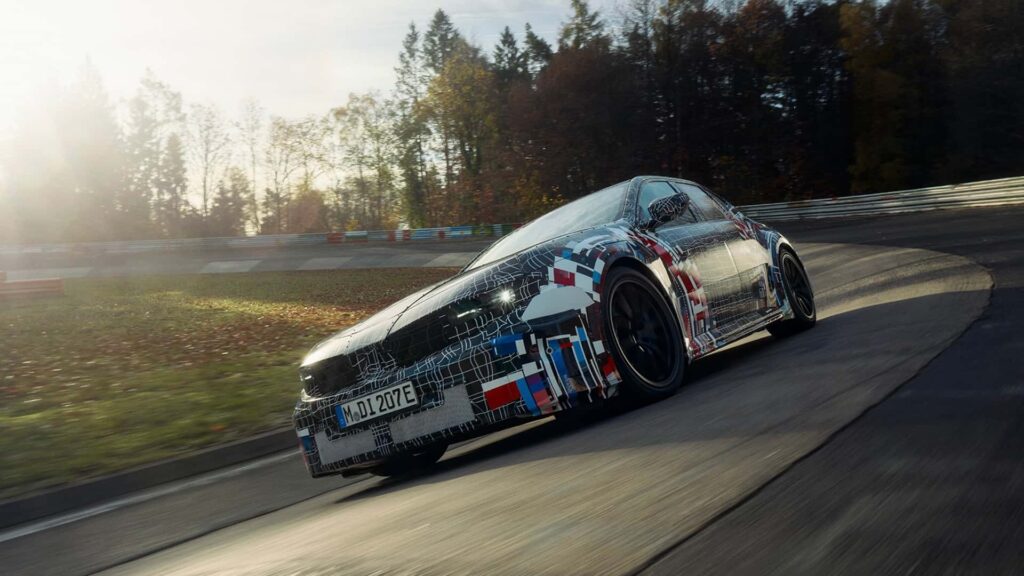
BMW Embraces Iconic Engine Sounds for Electric M3
In a bid to preserve the driving sensation of its traditional performance vehicles, BMW has recorded the engine sounds of three legendary models to incorporate into its upcoming electric M3. The E63 M6, F82 M4, and E90 M3 were chosen for their distinctive engine notes, offering an authentic auditory experience despite the M3’s electric powertrain.
Electric vehicles are often criticized for their lack of engine noise, which can detract from the overall driving experience. To counter this, many EVs now include synthesized acceleration sounds. BMW’s electric M3 stands out by utilizing real engine recordings, enhancing the sense of connection for drivers.
An earlier video from BMW Motorsport revealed the sound of an electric M3 prototype. The familiar growl of a turbocharged inline-six was identified as the S55 engine from the previous-generation M4.
Recent footage features additional iconic engine sounds, such as the naturally aspirated V8 of the E90 M3 and the unmistakable V10 of the E63 M6. This suggests that the electric M3 might offer multiple switchable sound profiles for a customizable driving experience.
While some drivers remain skeptical of artificial engine sounds, BMW roots this feature in its heritage. The latest video shows a distinct sound from the initial prototype, pointing to the possibility of selectable engine audio.
In addition to engine sounds, the electric M3 will allow drivers to shift pretend gears, mimicking the tactile feel of driving a combustion engine vehicle. Hyundai’s Ioniq 5 N introduced this feature to the market, and while it may reduce acceleration slightly, it increases driver engagement.
Mercedes-AMG is also following suit with its first dedicated EV, codenamed C590, which simulates the sound and feel of a V8 engine, complete with vibrating seats to replicate overrun crackles.
The Genesis GV60 Magma, the first EV from the brand’s performance line, emulates the sound of a turbocharged V6, further demonstrating the growing trend of simulated engine noises in electric vehicles.
Simulated engine sounds have been around longer than many realize, with early examples like the Renault Clio RS offering a playful variety of engine profiles. Today, even combustion performance cars often use sound augmentation, and EVs, lacking traditional engines, naturally adopt this feature.
BMW’s move towards full electrification is underscored by its commitment to the electric M3, aiming to deliver the same thrill as its combustion counterparts. This model will feature a quad-motor setup with advanced torque vectoring, promising dynamic handling capabilities.
The i3 sedan is set to debut this year, with the high-performance version likely following soon. The i4 M50, now M60, has already proven popular, indicating strong demand for electric M models.
Original Story at insideevs.com