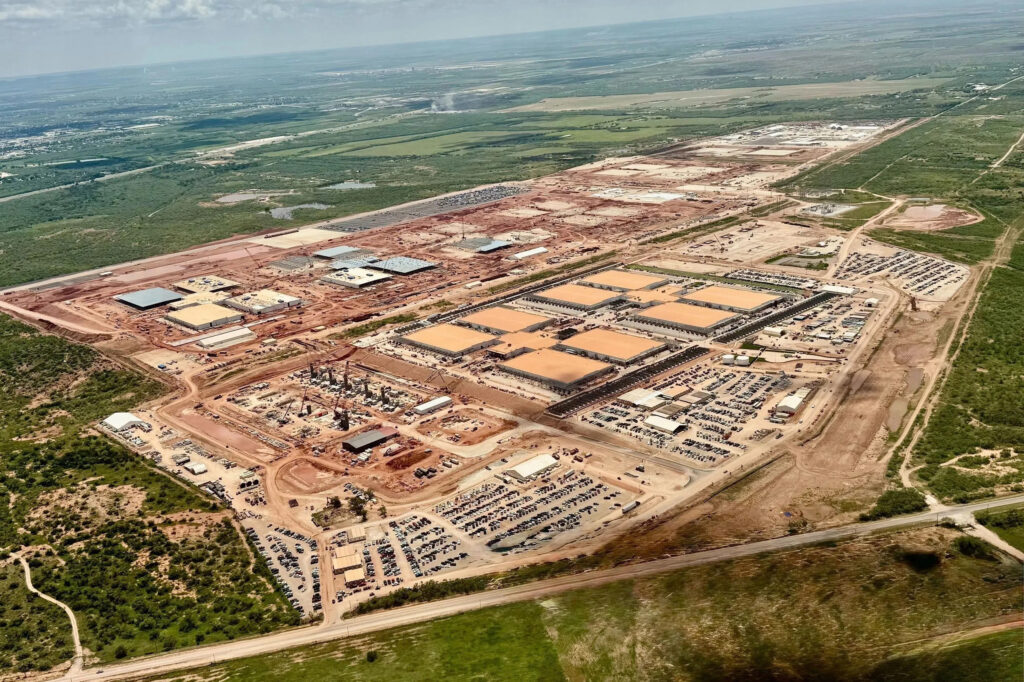
Wyoming is set to become a major player in artificial intelligence after Laramie County commissioners approved the construction of a 1.8 gigawatt data center, expected to scale up to 10 gigawatts, making it the largest AI campus in the U.S. Laramie County commissioners.
The facility will feature the Project Jade data center campus built by AI infrastructure company Crusoe, alongside BFC Power and Cheyenne Power Hub by Tallgrass Energy Partners, which will provide on-site power using natural gas turbines. Crusoe’s chief real estate officer, Matt Field, highlighted the potential for future CO2 sequestration.
Crusoe and Tallgrass announced in July that the data center’s proximity to an existing Tallgrass CO2 hub will enable long-term carbon capture options. Future stages might incorporate solar power to complement the gas turbines, according to the Wyoming Energy Authority.
The companies have not disclosed which tech firms will utilize the Jade data center, but Crusoe spokesperson Andrew Schmitt indicated it will cater to hyperscale cloud providers and AI industry leaders.
Construction of the interconnected projects is underway in the Switch Grass Industrial Park, approximately 8 miles south of Cheyenne. Construction of the first buildings is anticipated to finish by 2027.
The Hyndman Homesites Homeowners Association raised concerns about the project’s potential impact on local wells, traffic, noise, and wildlife migration, urging compliance with environmental regulations.
The AI campus will initially operate with 1.8 gigawatts, far exceeding the power usage of Wyoming homes, with plans to expand to 10 gigawatts. According to the U.S. Department of Energy, one gigawatt can power 750,000 to one million homes.
The Associated Press reported that the center’s initial phase could double Wyoming’s current energy generation. The Jade Project might set a global energy record if expanded to 10 gigawatts, according to a Brightlio report on the world’s largest data centers.
Crusoe co-founder Chase Lochmiller emphasized the project’s scale, aiming to help the U.S. lead the AI race, in a July press release.
Jumping Into the AI Race
Wyoming officials highlight the benefits of becoming an AI hub, including job creation and economic growth. The construction phase is expected to employ around 5,000 workers, while the completed data center will create 400 permanent jobs.
U.S. Sen. John Barrasso praised the project’s potential to bring high-paying jobs to the state, aligning with Wyoming’s pro-business stance.
The state is also considering nuclear energy to meet AI industry demands. TerraPower and Meta are evaluating Cheyenne for a Natrium power plant, with completion as early as 2032.
Wyoming Energy Authority’s Rob Creager noted the importance of staying competitive in AI technology. However, Greenpeace USA’s Johanna Fornberg urged caution, advocating for a focus on renewable energy and addressing potential risks of AI projects.
Fornberg cautioned against the rapid expansion of AI data centers like Crusoe and Tallgrass, which are expected to use significant energy.
AI’s Opportunities and Challenges for Wyoming Energy
Wyoming’s energy resources position it to benefit from AI developments, according to Creager. Crusoe plans to blend its electricity supply with solar power, potentially reducing gas demand.
AI data centers, such as Microsoft’s in Cheyenne, use a mix of fossil fuels and renewables, and efficient energy management remains a challenge.
Crusoe intends to source energy from natural gas rigs with carbon capture technology to limit emissions. However, Fornberg criticized carbon capture as energy-intensive and less effective than fully transitioning to clean energy.
An August Goldman Sachs analysis predicts rising carbon emissions from U.S. data centers by 2030, as fossil fuels will meet a significant portion of their energy demands.
Crusoe and Tallgrass have not specified the solar power’s role in the energy mix.
Thirsty Technology in a Water-Stressed State
Data centers consume large amounts of water for cooling, which poses a challenge in arid Wyoming. Crusoe plans to use closed-loop systems to recycle water, but some water loss is inevitable, said Jonathan Brant, a University of Wyoming environmental engineering professor.
Brant emphasized the importance of understanding aquifer connections before using groundwater, as improper management could affect potable water supplies. Wastewater disposal poses further challenges, with potential contamination risks.
A Lack of Regulation
Laramie County residents voiced concerns during the Jade project site plan hearing, questioning the adequacy of water regulation.
The Wyoming Outdoor Council released recommendations for data center regulations, emphasizing public reporting on energy and water use. The state has yet to establish laws to track AI centers’ environmental impacts.
Greenpeace USA and over 230 environmental groups have called for a moratorium on new data-center construction until regulations address associated concerns.
Original Story at insideclimatenews.org