Australia’s Path to Halving Household Energy Bills by 2050
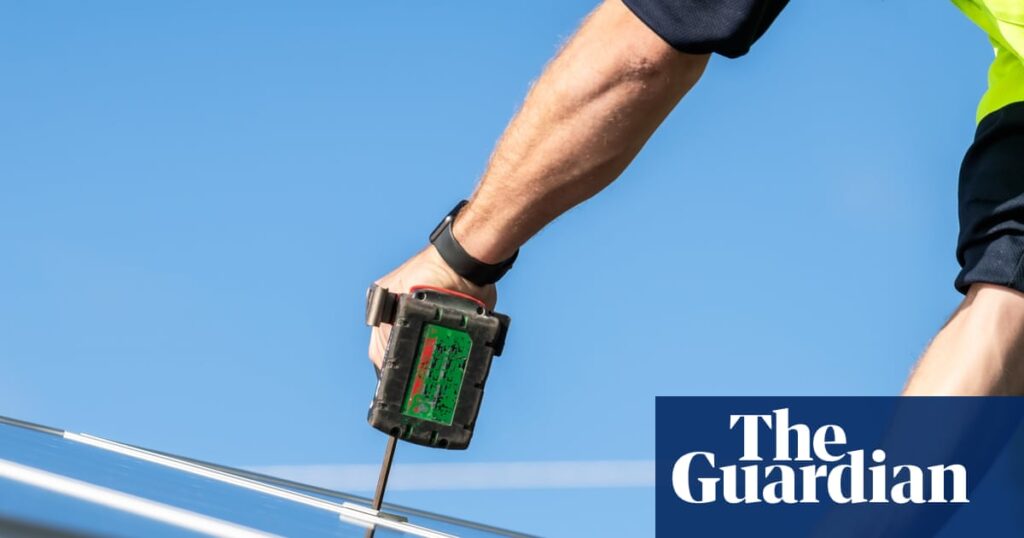
Australia is on the brink of a significant shift in household energy consumption, with the potential for energy bills to be reduced by half by 2050. This transformation is driven by the widespread adoption of solar panels, batteries, and electric vehicles, promising to alleviate living costs and facilitate further climate actions, according to a recent study by the Grattan Institute.
The think tank’s research indicates a substantial decrease in average household energy costs, projecting a drop from the current $5,800 to approximately $3,000 by mid-century. This change aligns with Australia’s commitment to achieving net zero emissions by 2050, primarily by cutting greenhouse gas emissions from electricity generation.
Under existing policies, households are expected to shift from gas and petrol to cleaner energy sources, yielding the most significant savings in gas-reliant regions like Victoria. There, annual expenses on petrol, gas, and electricity could fall from $6,036 to $2,767, as reported by the study. Learn more about Victoria’s energy savings.
However, the report warns that the current pace of emission reductions in the power sector is insufficient to meet the mid-century net zero target. It suggests expanding the existing safeguard mechanism, which regulates major industrial polluters, to include power plants. While this could slightly limit household energy savings by about 3%, it would ensure more substantial pollution cuts.
Alison Reeve, the Grattan Institute’s energy and climate change program director, remarked, “For too long, federal governments of both political colours have avoided pricing carbon because they fear higher electricity prices. Our report shows that the source of that fear is becoming outdated.” This sentiment reflects a shift in the political landscape surrounding carbon pricing, a concept the Labor government has been hesitant to revisit since its abolition in 2014 by the Coalition government under Tony Abbott. Reeve argues that the politics around carbon pricing should evolve as energy usage changes.
The safeguard mechanism, initially introduced by the Coalition and revamped by Labor in 2023, mandates about 200 industrial facilities emitting over 100,000 tonnes of carbon dioxide annually to decrease their emission intensity by 4.9% each year until 2030. These reductions can be achieved on-site or through purchasing carbon offsets, with compliant companies receiving credits to sell to non-compliant polluters.
Despite a nearly 2% reduction in direct pollution from facilities under the safeguard mechanism in its first year, critiques highlight its allowance for unlimited offsets, which some studies suggest are not delivering the intended outcomes. Read more about the offset critiques.
Reeve emphasized that the Grattan Institute’s model assumes electricity companies will make direct emission reductions without relying on Australian carbon credits. She commented, “Neither of those horses are in the race at the moment. You can only bet on the horses that are in the race,” referring to the lack of a comprehensive carbon tax or emissions trading scheme in current policy discussions.
Labor’s government faces scrutiny for delays in solar and windfarm projects, crucial for achieving its target of 82% renewable energy in electricity by 2030. While household renewable energy has grown due to battery subsidies, large-scale windfarm investments have slowed, partly due to planning and supply chain challenges.
Federal climate change and energy minister Chris Bowen stated the government’s commitment to existing initiatives, such as the capacity investment scheme, the $20 billion “rewiring the nation” program, and battery subsidies. While exploring post-2030 strategies, the government has no immediate plans to integrate electricity into the safeguard mechanism.
Renewable sources accounted for 42% of electricity in Australia’s primary power grid over the last year, setting a promising stage for the country’s energy transition.
Original Story at www.theguardian.com