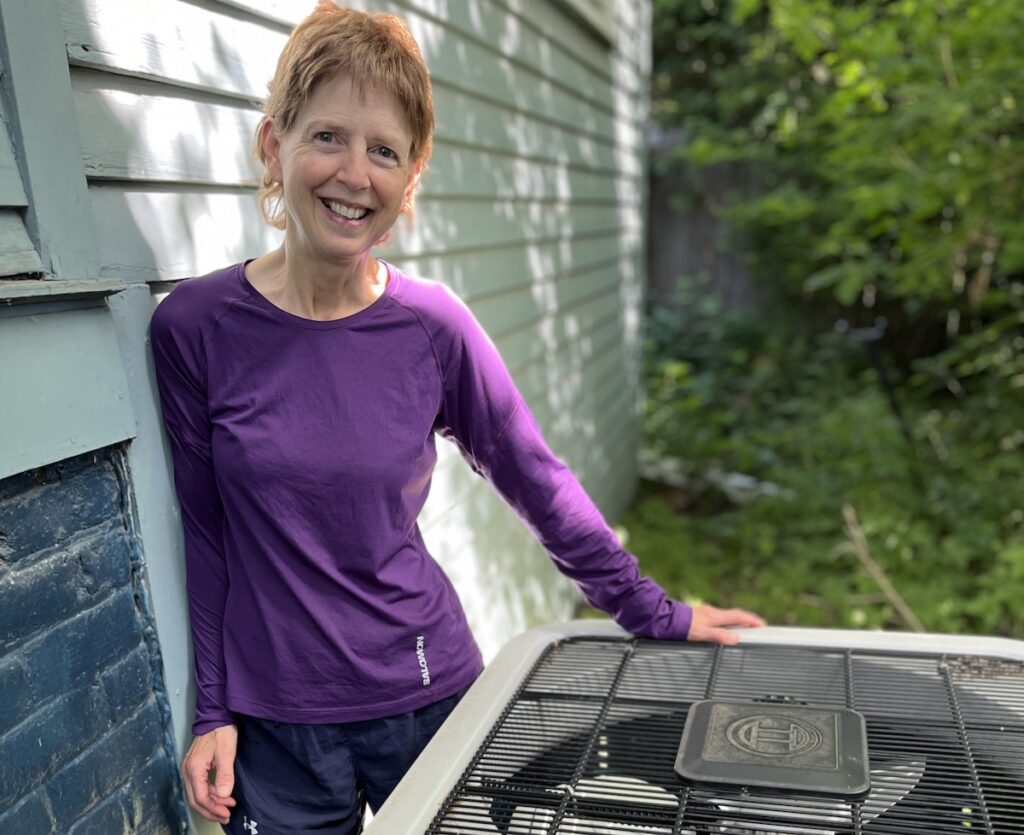
As temperatures rise and climate solutions become more pressing, many are exploring innovative ways to stay cool while minimizing environmental impact. In Evanston, Kelly Fidei, an active member of Climate Action Evanston, offers a practical suggestion: consider installing a heat pump.
Despite their name, heat pumps are not just for heating. These versatile devices function as reversible air conditioners, transferring heat rather than generating it. In winter, they draw heat from the outside air to warm interiors, and in summer, they expel heat to cool indoor spaces.
Fidei, who has lived in her Evanston home for 25 years, was initially unaware of the dual functionality of heat pumps. Her brother introduced her to the idea during a particularly hot day, noting her interest in climate-friendly solutions. “I didn’t know at the time it could also function as an air conditioner,” Fidei recalls.
Increasing Popularity
Heat pumps have been popular in southern states for providing efficient heating in mild winters and cooling in summer. South Carolina leads with 46% of households using heat pumps (source). Now, advanced models function effectively even in subzero temperatures, making them viable for northern regions too. In 2024, Americans purchased 37% more air-source heat pumps than gas furnaces (source).
Summer Relief
Fidei was initially focused on replacing her noisy, inefficient window AC units. With guidance from local contractors and her brother’s suggestion, she opted for a Bosch air-source unit, which was integrated into her existing ductwork. This system, managed by a smart thermometer, provided relief from summer heat and eliminated the need for window units.
This shift aligns with a broader trend, as heat pumps now account for 44% of the residential cooling market, up from 34% a decade ago (source).
While heat pumps use electricity like conventional ACs, they are more efficient, using 29% less electricity during peak demand periods (source). As demand for AC rises due to global warming, transitioning to heat pumps could alleviate grid stress (source).
Adapting to a Greener Future
Fidei continues to use her gas furnace on the coldest days, but the heat pump has significantly reduced her gas usage. By relying more on electricity, she benefits from an increasingly green grid powered by solar and wind energy. She emphasizes that transitioning to efficient heating and cooling systems is a personal choice, with various options available to suit different needs and budgets.
Fidei’s journey with her heat pump is not just about personal benefits but reflects a collective effort toward a sustainable future. “Every time I look at my heat pump, I think of my daughter, nieces and nephews, and the world they’ll inherit,” she writes. “Together, we can create a ripple effect of change, one home at a time.”
Original Story at evanstonroundtable.com