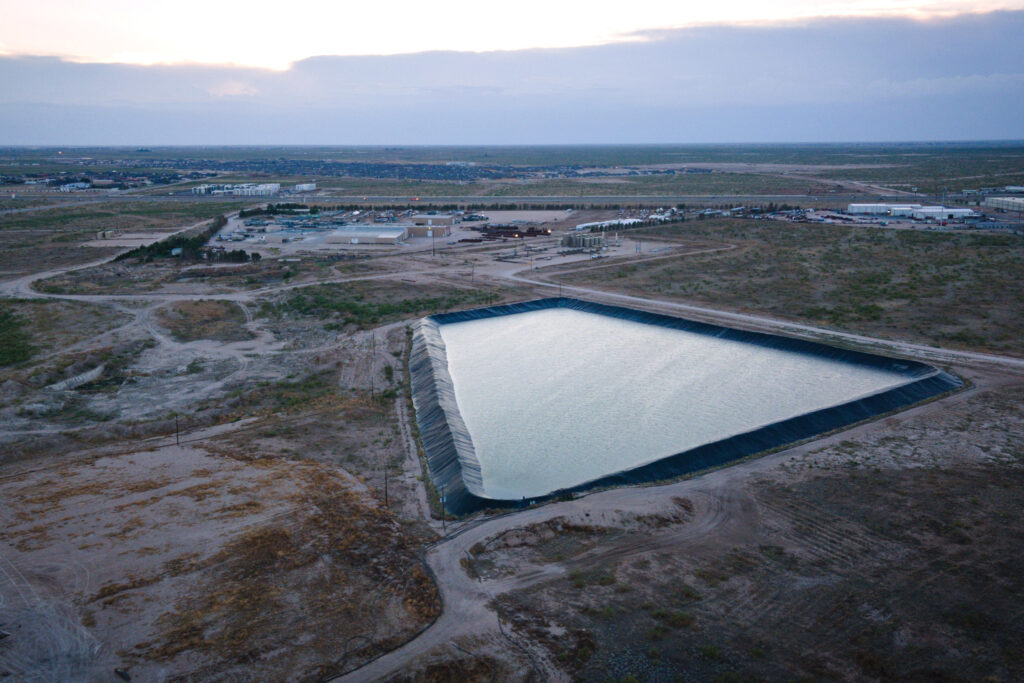
Texas is dealing with billions of gallons of produced water, the wastewater from oil and gas drilling and fracking.
Traditionally, produced water is injected into disposal wells. However, these wells have been linked to earthquakes, prompting companies to find alternatives. There’s a growing effort to transform produced water from waste into a valuable resource, leading to legal questions about its ownership.
The Texas Supreme Court recently ruled on Cactus Water Services v. COG Operating. The Court sided with COG, stating that the drilling company holding the oil and gas lease owns the produced water, not the surface owner. Justice John Devine clarified that produced water is oil and gas waste, thus part of the mineral rights estate.
The justices noted that landowners must explicitly state ownership of produced water in leases. “[P]roduced water is not water,” they explained. Though it contains water molecules, the solution is considered waste.
John McFarland, an attorney specializing in oil, gas, and mineral rights, commented that the ruling is unsurprising and practical regarding produced water ownership.
Determining Produced Water Ownership
In drilling, a mixture of water, sand, and chemicals is injected to release underground hydrocarbons, also bringing water from the formations to the surface. This returned water often contains arsenic, heavy metals, and salts.
Texas is exploring the use of treated produced water for agriculture and mining it for critical minerals. Element3 announced last year that it successfully extracted lithium from produced water in the Permian Basin.
The Cactus v. COG case centers on whether produced water is part of surface rights or mineral rights. Mineral rights allow the extraction of oil and gas, distinct from surface ownership rights, and involve leases with companies like COG, which then pay royalties.
In Texas, groundwater belongs to surface owners, a principle known as the rule of capture. The case questions whether produced water is oil and gas waste under a mineral lease or groundwater, owned by the surface owner.
The Collier family leased 37,000 acres in Reeves County to COG Operating LLC, which drilled 72 wells generating over 52 million barrels of produced water. COG spent millions disposing of this water, which contained elements like potassium and hydrogen sulfide, according to court records.
The Colliers later signed agreements with Cactus Water Services, giving Cactus rights to the produced water. COG sued Cactus in 2020, asserting ownership of the produced water.
Both the trial and appeals courts favored COG. Numerous oil and gas companies and trade associations supported COG, while associations for landowners backed Cactus.
The Texas Supreme Court ruled in favor of COG on June 27. Raleigh Hart of Harris, Finley & Bogle noted the decision highlights the importance of clear language in leases.
McFarland mentioned that companies like COG worry about liabilities if produced water is reused. Gov. Greg Abbott signed House Bill 49, protecting companies selling produced water from liability.
McFarland also pointed out unresolved questions, such as who owns minerals like lithium in the produced water, since oil and gas leases don’t cover other minerals.
Original Story at insideclimatenews.org