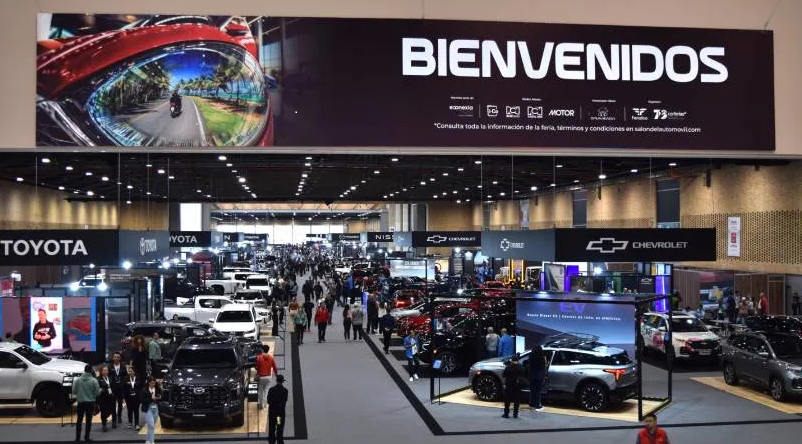
The automotive landscape in Colombia is undergoing a significant transformation, as demonstrated by the recent Bogota Automobile Hall. This year’s event marked a pivotal moment where electric vehicles (EVs) took center stage, signaling a shift in the country’s automotive market dynamics.
In its 17th edition, the Bogota Automobile Hall showcased an impressive array of EVs, with 55 out of 90 new model arrivals being either fully electric or plug-in hybrids. The event underscored the increasing dominance of EVs in Colombia, supported by the expanding availability of competitive models from various global brands.
The Rise of Electric Vehicles
During the exhibition, 32 car brands introduced new electric or plug-in hybrid models. While Chinese manufacturers were the most prominent, seven European and two Japanese brands also participated, reflecting the global interest in Colombia’s burgeoning EV market. Despite the diverse lineup, there were no new entries from American brands, with Tesla being the only notable U.S. presence, albeit without any fresh launches.
Colombia’s EV market share has been steadily increasing, reaching nearly 20% in recent months. The influx of new models at the Automobile Hall is expected to further boost this figure, as more consumers turn to EVs due to their competitive pricing and improved range capabilities. Most of the showcased EVs offer at least 350 kilometers of range, making them viable options for regular travelers.
Spotlight on Non-Chinese EVs
Among the non-Chinese EVs, the Renault 4 e-Tech stood out due to its cultural significance in Colombia. As a beloved model, the Renault 4 has been a symbol of the Colombian middle class for decades. However, the new e-Tech version’s price point of 100 million COP ($28,500) may pose a challenge, as it is significantly higher than Chinese alternatives in the hatchback segment.
Other notable entries included the BMW iX3 and Cupra Terramar, both priced at a premium compared to their segments. Meanwhile, Kia’s EV2 and EV3 models managed to offer competitive pricing, positioning the brand as a strong contender against Chinese manufacturers.
Chinese EVs Make a Mark
Chinese carmakers showcased a wide array of EVs, with some models expected to significantly impact the Colombian market. The Chery ICaur V23, for example, offers a robust off-road capability at a relatively low price, appealing to consumers looking for versatile SUVs.
BYD presented the Sealion RWD, a direct rival to Tesla’s Model Y, offering a larger battery and better range at a lower cost. Additionally, the XPeng L03 aims to challenge Tesla’s dominance by providing full self-driving features at a competitive price.
In the subcompact SUV segment, the Ora 5 emerged as a standout option due to its large battery and affordability, making it one of the most cost-effective choices for budget-conscious buyers. Meanwhile, the JMEV GSX offers an impressive range of 500 kilometers, though the brand’s limited recognition could be a hurdle.
As the Colombian market continues to evolve, the affordability and diversity of Chinese EVs are likely to attract more consumers, further accelerating the country’s transition to electric mobility.
Original Story at cleantechnica.com