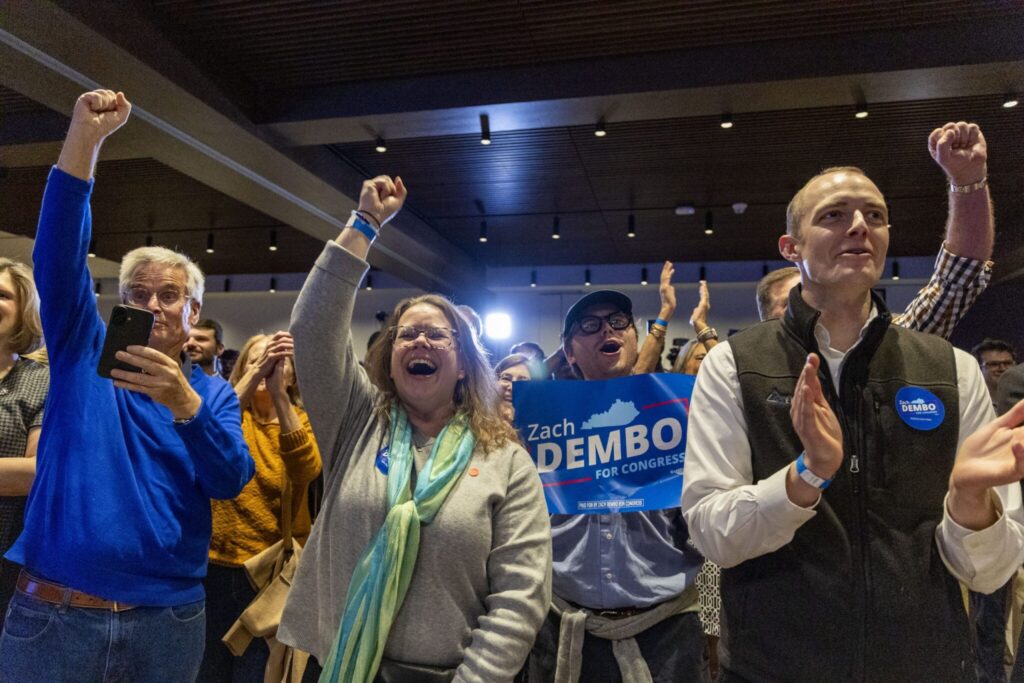
For millions of American families, the cost of a doctor’s visit, a prescription, or a hospital stay can determine whether the bills get paid that month — and now, a dramatic shift in Washington is poised to reshape who has access to care and what it costs. Democrats swept to control of both chambers of Congress in Tuesday’s midterm elections, and their first order of business is reversing a wave of cuts that have left families scrambling for affordable coverage.
The scope of Tuesday’s results was striking. According to The Associated Press, Democrats secured 237 seats in the House — well above the 218 needed for a majority — and flipped 29 Republican-held seats. In the Senate, the party exceeded all expectations, flipping seven seats to reach a total of 54 seats held by Democrats and independents who caucus with them, according to the AP. Those numbers translate directly into legislative power — the kind needed to revisit health care policy that has squeezed household budgets from coast to coast.
Voters made their frustrations plain on Election Day. Rising prices in grocery stores, record fuel costs, and an ongoing conflict in the Middle East now in its ninth month all weighed heavily on families. Exit polling and campaign messaging both pointed to the same kitchen-table concerns: health care, costs, and economic security. These monumental midterm victories were driven, in large part, by people who felt left behind by policies made in Washington.
What Democrats Are Promising on Health Care
House Democratic leaders held a press conference Wednesday afternoon pledging to fight for an affordable America in the new Congress. Among the most consequential health care commitments: reversing roughly $1 trillion in Medicaid cuts embedded in the Republican mega tax and spending cut law passed earlier in Trump’s term. Over a decade, those cuts would have meant millions of low-income Americans — including children, seniors, and people with disabilities — losing access to the doctors and hospitals they depend on.
Rep. Ted Lieu of California spelled out the priorities clearly. Democrats will push legislation to restore enhanced Affordable Care Act tax credits that expired in December 2025. Those credits helped individuals and families who buy their own health insurance through the ACA Marketplace afford their monthly premiums. Without them, many people faced a stark choice: pay significantly more for coverage or go without it entirely.
House Minority Leader Hakeem Jeffries, who is now positioned to become the next Speaker of the House and would make history as the first Black person to hold that role, described the election results as a clear directive from the public.
“The American people have chosen House Democrats because they want to see a dramatic change in direction, and that’s exactly what House Democrats will deliver beginning on Day One,”
Jeffries said.
Jeffries was joined by Democratic Congressional Campaign Committee Chair Suzan DelBene of Washington, House Democratic Whip Katherine Clark of Massachusetts, and Reps. Pete Aguilar and Ted Lieu of California, the chair and vice chair of the House Democratic Caucus.
The Medicaid Stakes for Real Families
The roughly $1 trillion in Medicaid cuts Democrats are targeting aren’t just numbers on a government spreadsheet. Medicaid is the coverage source for more than 80 million Americans, including low-income parents, children, nursing home residents, and people managing chronic illness. Rolling back that funding over ten years would have forced states to either raise their own funds — unlikely in many cases — or reduce who qualifies and what services are covered. For families already navigating tight budgets, losing Medicaid could mean skipping medications, delaying care, or facing catastrophic medical debt.
Restoring the ACA tax credits carries similar real-world weight. When those subsidies expired at the end of 2025, premiums on the ACA Marketplace climbed sharply. Families who had been able to afford coverage suddenly found themselves priced out. For self-employed workers, gig workers, and small business employees without employer coverage, the ACA Marketplace is often the only option — and without the tax credits, it quickly becomes unaffordable.
Labor and Progressives Signal High Expectations
Not everyone is simply celebrating. Union leaders and progressive lawmakers made clear Wednesday that the wins come with high expectations and a short timeline to deliver.
Shawn Fain, president of the United Auto Workers union — which has roughly 1 million active and retired members, including 350,000 in Michigan alone — offered a measured take on the results after his union endorsed Democratic Senate candidate Abdul El-Sayed, who won his race in Michigan on Wednesday.
“It’s not a massive win for anybody until these people go to work and deliver results,”
Fain said.
“I believe this election is a mandate for change, but it is up to the Democratic Party now to deliver. And if they don’t deliver, we’ll be the first ones to call them out on it.”
Rep. Greg Casar of Texas, who chairs the Congressional Progressive Caucus — a group of roughly 100 House members — echoed that urgency and pushed back on any impulse toward incrementalism.
“Last night was not a sign that all of Democrats’ problems are solved,”
Casar said during a virtual call with reporters.
“The election is not an endorsement of returning to the status quo or tinkering around the edges. This is a message that people in this country are mad as hell, and are giving Democrats a shot to show them we can do something about it.”
Rep. Pramila Jayapal of Washington state, a prominent progressive voice, acknowledged that the party still has work to do to earn broader public trust.
“I think we’ve got a shot to show that we can deliver on the kind of bold populist change that people ran on and won on,”
Jayapal said.
“And I think that is going to be our task going forward for the next two years.”
Senate Democrats Draw a Clear Line
Senate Democratic Leader Chuck Schumer, expected to lead the upper chamber again come January, described Tuesday as
“a generational remake of the Senate map that has huge consequences for history.”
He said the caucus would focus on three priorities: lowering the cost of living, addressing corruption in government, and providing oversight of the Trump administration’s decisions at home and abroad.
On health care and economic costs, Schumer left little room for ambiguity about the caucus’s willingness to act — with or without cooperation from the White House.
“We are going to work hard to drive costs down with the president or without him. Period,”
Schumer said.
He also suggested that the Senate would use its control over the federal budget — the so-called “power of the purse” — as a potential lever on other policy disputes, including the ongoing Iran conflict.
“Whenever Trump defies the will of the American people or the law, we will launch investigations, take him to court, and entangle him in legislative razor wire,”
Schumer said.
For families watching their health insurance premiums rise, their Medicaid eligibility hang in the balance, or their prescription costs climb, the next Congress will be a critical test of whether Washington can translate election-night promises into relief that actually reaches their households.