Originally reported by The Examination, a nonprofit newsroom focusing on global health threats.
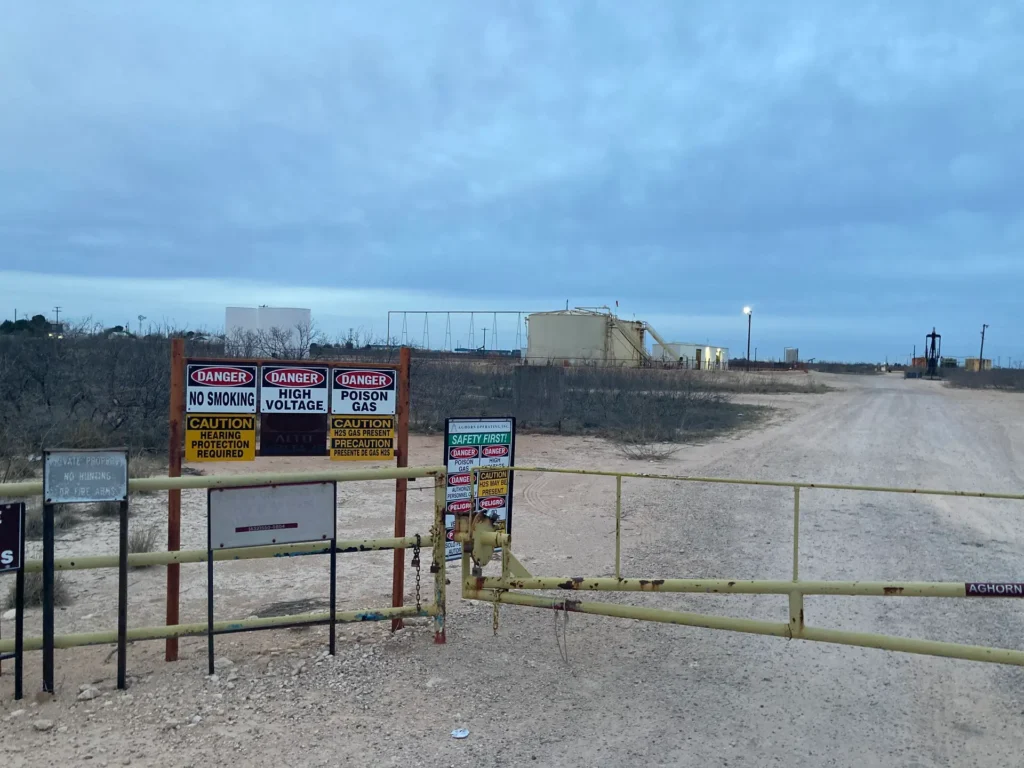
Rachel Curtis encountered the strong smell of hydrogen sulfide while visiting her 86-year-old grandmother in Odessa, Texas. This toxic gas, known for its rotten egg odor and fatal effects at high concentrations, was detectable even inside the house. Her grandmother, who lived near an oil pumpjack operated by Aghorn Operating, suffered frequent headaches, a symptom of H2S exposure.
Curtis learned that Aghorn, responsible for nearby oil equipment, had pleaded guilty to health and safety violations after the deaths of employee Jacob Dean and his wife, Natalee, due to a hydrogen sulfide leak in 2019. Curtis expressed frustration over the ongoing risks to her grandmother’s health.
Aghorn’s leadership did not respond to inquiries. The company, in a court filing, claimed improvements in safety protocols, including hiring a safety manager and upgrading gas monitors.
Hydrogen sulfide, or “sour gas,” arises naturally in oil-rich regions and leaks during oil production. Exposure can lead to neurological issues like headaches and dizziness. An investigation by The Examination and the Houston Chronicle highlighted widespread exposure in Texas, with regulators often issuing minimal penalties for gas leaks.
In 2019, Dean died inspecting faulty Aghorn equipment, followed by Natalee, who sought him. Their children waited outside in the car. Federal prosecutors charged Aghorn with violating safety laws and making false statements, alleging a culture prioritizing profits over safety.
Aghorn admitted to negligence, resulting in a $1 million fine and a prison sentence for vice president Trent Day. Expert Jim Kirksey reported Aghorn’s disregard for safety complaints and inadequate regulatory response.
Nearby residents, like Adrianna Yanez, reported adverse health effects from leaks. Inspectors found recurring leaks at Aghorn sites, often resolved without penalties. This pattern persisted despite regulatory visits and fixes.
Some Texas legislators have proposed legislation for stricter hydrogen sulfide regulation, though efforts have stalled. The Sierra Club’s Cyrus Reed noted the challenges due to the oil industry’s influence, but some lawmakers plan to reintroduce legislation.
Following Curtis’s complaints, inspectors identified and patched leaks, but issues reappeared. Despite fixes, regulators continued finding violations at Aghorn sites, including near an elementary school.
Rachel Curtis called for accountability, not just from Aghorn but across regulatory levels.
The Examination is a nonprofit newsroom focused on global health threats. Subscribe for updates.
Original Story at insideclimatenews.org