In one of the country’s most competitive governor’s races, the central question isn’t just about politics — it’s about who Nevadans trust to ease the financial squeeze on their families. With gas prices near record highs, housing costs continuing to climb, and grocery bills still strained by inflation, the 2026 election in Nevada has become a referendum on everyday economic survival.
Gov. Joe Lombardo (R) is fighting for a second term in a race that has grown significantly tighter in recent weeks. His challenger, Attorney General Aaron Ford (D), has capitalized on widespread economic frustration — the same frustration Lombardo himself rode to victory four years ago. Emerson College polling shows a large plurality of Nevada voters — 43 percent — identify the economy as their top concern heading into Election Day.
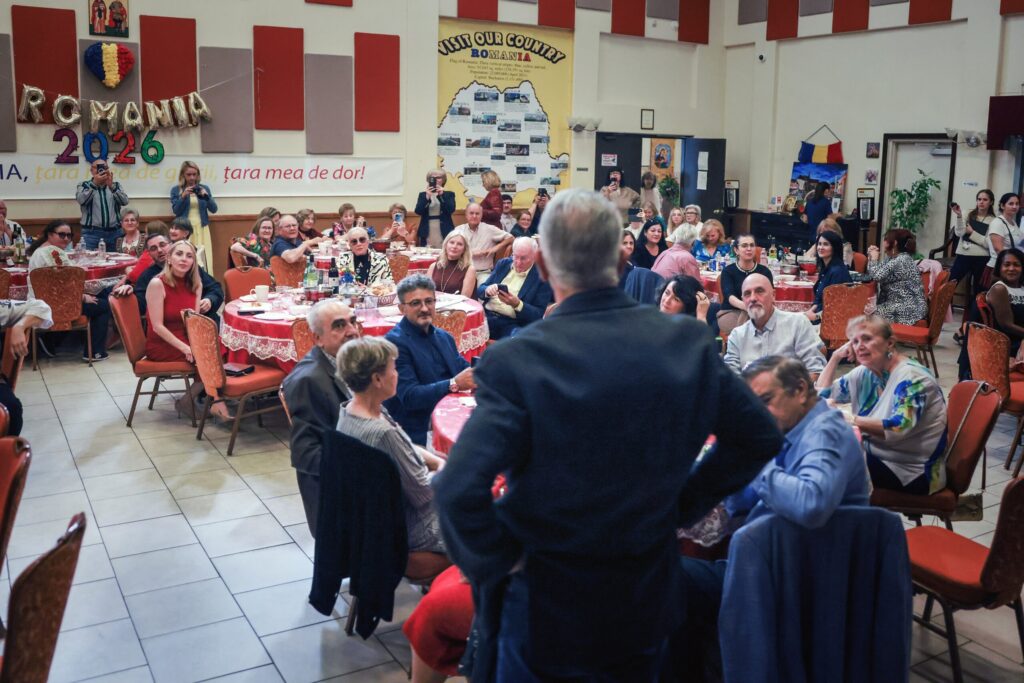
That economic anxiety is shaping every stop on the campaign trail. In the final days before the election, Lombardo visited a Romanian Orthodox church in Las Vegas, spoke at the groundbreaking for Nevada’s first standalone children’s hospital, knocked on thousands of doors across the state, and sat down with a conservative radio station. His message has been consistent: he needs four more years to finish what he started.
“We still have a significant amount of work to be done. I need another four years to finish it,”
he told parishioners at the St. George & St. Dimitrie Romanian Orthodox Church in Las Vegas.
A Familiar Playbook — Now Used Against Him
There’s an uncomfortable irony at the heart of Lombardo’s reelection campaign. In 2022, he unseated then-Gov. Steve Sisolak (D) by hammering him on inflation and rising costs — and tying him directly to President Joe Biden. Now Ford is running nearly the same playbook, connecting Lombardo to President Donald Trump and focusing relentlessly on affordability.
For many Nevada families, that argument lands hard. Gas prices have spiked close to record levels. Rent and housing costs remain stubbornly high. And Lombardo even made headlines for acknowledging that when it comes to inflation and affordability, “I can’t control that” — a candid admission that reflects the reality that governors have little direct control over the broader economy, even as they bear the brunt of voter frustration.
Lombardo has tried to redirect that frustration toward what he says he can control. His campaign ads tout job growth figures — claiming Nevada leads the country — along with $900 million in down payment assistance programs and other housing affordability measures. His team has also featured endorsements from Democrats, including Clark County District Attorney Steve Wolfson.
Meanwhile, groups supporting Lombardo have spent heavily attacking Ford over out-of-state travel and his votes for clemency for convicted murderers. With TV ads and outside spending pushing the total race cost to $76 million according to ad-tracking firm AdImpact, the back-and-forth has left both candidates bruised.
Rebecca Gill, a political science professor at UNLV, summed it up bluntly:
“They’ve kind of bloodied each other up a little bit,”
adding that Nevada’s lack of a Senate or presidential race this cycle has offered Lombardo some insulation from the broader national headwinds.
Trump’s Shadow Over the Race
Perhaps the biggest factor Lombardo can’t fully outrun is Trump. The president’s unpopularity has dragged on Nevada Republicans across the board, and prediction market odds have shifted noticeably in Ford’s favor as early vote totals have been nothing but good news for Democrats. A late seven-figure advertising boost from national Democrats has helped level the financial playing field after months of pro-Lombardo spending dominated the airwaves.
Signs of strain are visible elsewhere too. GOP super PACs have withdrawn spending from competitive Southern Nevada House races — not a reassuring signal for down-ballot Republicans.
Gill noted that Trump himself is part of the problem for Lombardo:
“Trump himself is ensuring that to the best of his ability, when voters think of the Republican who’s on the ticket, they think of Trump.”
Lombardo’s strategy has been to maintain distance. When asked about federal economic policies, he told The Nevada Independent that he is focused on what he can accomplish within state lines.
“I’m more concerned about what influence I could have within the boundaries of our state,”
he said, arguing that states must build on federal programs where possible and work around the ones they disagree with.
That distinction doesn’t always cut through, though. UNR political science professor Jeremy Gelman noted that Lombardo’s situation is fundamentally different from the one Democrats faced in 2022. While former Gov. Sisolak faced specific backlash over COVID-era policies that voters could trace directly to him, Ford is trying to make a broader leap — connecting Lombardo to Trump’s national record.
“I think the political environment for Republicans this cycle is more challenging than it was for Democrats in 2022, so it cuts both ways,”
Gelman said.
“The main difference is … the policies between Sisolak and Lombardo were directly traceable to Sisolak. Ford’s trying to make that extra jump to Trump as president.”
At the same time, Lombardo went off-script at an August rally with Trump to defend the president caring for his “billionaire friends” — a moment that has since been run as an ad by Democrats.
What Voters Are Actually Saying
At the annual Nevada Day parade in Carson City, voters offered a window into the economic anxieties driving decisions at the ballot box. Monique Grant, a 47-year-old nonpartisan voter, said she hadn’t made up her mind yet and was frustrated by what she described as Trump’s “obvious corruption.” Erik Charm, a 59-year-old who described himself as right of center politically, said Trump has “done some good things” and “some incredibly stupid things” — but that the president isn’t weighing into his final vote. He plans to back Lombardo based on his experience as Clark County sheriff.
Voters also voiced clear fatigue with negative campaign ads.
“Tell me why you’re a good candidate, OK,”
Charm said.
“I would rather hear your positives, if there are any, rather than a misrepresented list of other candidates’ negatives.”
Twenty-two-year-old Harper Lopiccolo, who voted for Ford, echoed the sentiment:
“There’s a lot more attack ads than policy ads. I learn more about a candidate and the positive things that they’re bringing to the table than just about the negative history that they might have, and so that’s something I’ve noticed a lot of, and I’d obviously like that to change.”
At the Romanian Orthodox church, Agripina Serban, 57, was moved enough by Lombardo’s message that she approached his campaign staff afterward to volunteer. She told The Nevada Independent that his words gave her “goosebumps” and that she appreciated his honesty about the pace of economic change.
“If they’re on the path of doing certain things, it does take time. … Most people say I voted today, it has to be changed tomorrow. It can’t be,”
she said.
Ford, meanwhile, has been running a higher-profile campaign — holding multiple press conferences a week, working with social media personalities, and campaigning alongside national figures including former Vice President Kamala Harris and Rep. Alexandria Ocasio-Cortez (D-NY). Lombardo’s most prominent surrogate in the final stretch is former Virginia Gov. Glenn Youngkin (R) — a name most voters wouldn’t immediately recognize.
Lombardo told The Nevada Independent that he believes meeting voters where they live is the only way to break through the noise of a crowded media environment.
“Sometimes people don’t hear it, and that’s why you’re out knocking on doors, and that’s why you’re meeting people from where their lives are,”
he said.
Whether that ground-level approach can overcome the national political headwinds may ultimately come down to Nevada’s large bloc of nonpartisan voters — the state’s single largest voting group. Gelman was clear-eyed about how much either candidate can actually move that number.
“Lombardo and Ford want to believe that they have a significant effect on the mix of this electorate, and the reality is they probably don’t,”
he said.
“They might have an effect on the margins, and they might have an effect on whether they run well or less well with certain segments of the electorate, but the broad nature of it, whether it’s going to be more Democratic or more Republican, that cake is baked.”
Lombardo noted that Nevada’s voting patterns can shift dramatically from early returns to Election Day.
“Traditionally, in the state of Nevada, those things fluctuate significantly depending on the cycle or where you’re at in the cycle and the actual voting day,”
he said. His focus, he added, remains singular:
“People need contact. They don’t want you just showing up four years later.”