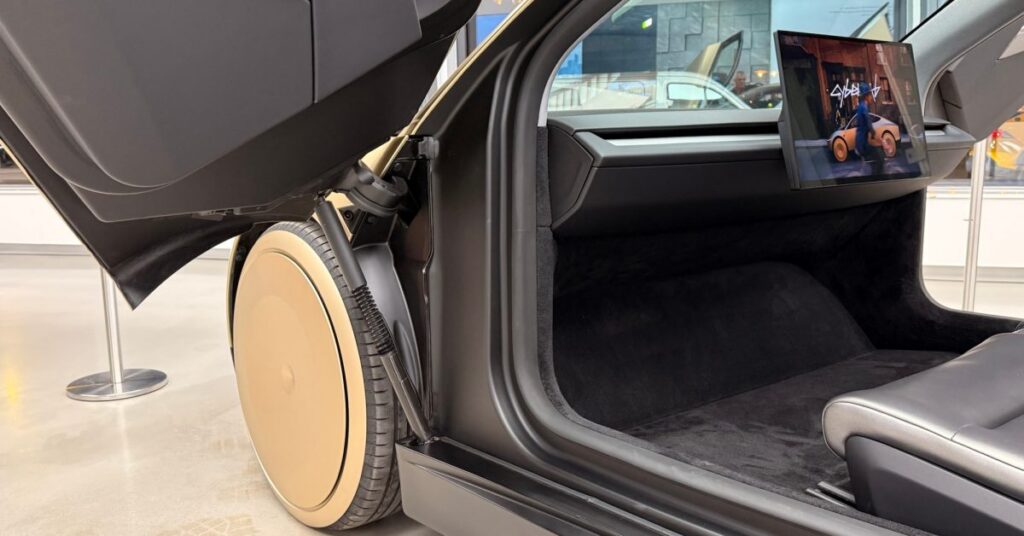
Tesla’s Unveiling: Cybercab to Hit the Market Amidst Operational Questions
In a surprising move, Tesla announced that it would release its new Cybercab to consumers by the year’s end. This announcement, however, leaves many pondering how a vehicle devoid of steering wheels and self-driving software will serve its owners.
During Tesla’s Q3 conference call, the timeline for delivering unsupervised full self-driving (FSD) capabilities to customer vehicles was addressed. The company slightly altered its usual forecast, projecting that FSD would be available in customer cars by mid-next year, specifically targeting Q2 2027.
This prediction marks a significant shift from the current level 2 automation to a more autonomous level 4 or 5. The latter are the only classifications that allow for self-driving without human oversight, unlike level 3, which still requires a driver ready to intervene.
Amidst these discussions, VP of Engineering Lars Moravy disclosed that Cybercabs would be available to customers within the remaining months of this year. He stated:
“In short we’re trying to get Cybercabs to customers by the end of this year in 2026, obviously we’re producing a lot in Texas but all of those are going to our own internal Robotaxi fleet, and as Tesla grows we’ll mainly deliver fully designed autonomous vehicles to our customers and Cybercab will be the first. And so as we start small this year and we learn about all the things Ashok mentioned about delivery and ownership and fleet management and autonomous vehicles in customer hands, we’ll continue to scale that.”
Elon Musk added that Cybercabs would primarily function as Tesla-owned transport services, which seems to conflict with Tesla’s earlier call for Cybercab fleet buyers announced alongside the launch event.
This situation presents an intriguing dilemma. With the unsupervised FSD not slated for release until Q2 2027, a gap emerges where Cybercabs, designed without traditional driving controls, could potentially be non-functional. The question remains if these vehicles will be equipped with steering wheels upon delivery, as some units already have these features.
If the Cybercab is delivered lacking these controls, it might seem logical to rebrand it akin to a Model 2, a move previously speculated when Tesla considered launching an affordable $25k model. Alternatively, Cybercabs might be confined to current operational zones. Although Musk once predicted widespread Robotaxi coverage, the service is currently limited to small areas in six cities across two states.
Despite promises of allowing customers access to Tesla’s software, the company confirmed that this would not happen until Q2 2027, even in existing operational areas. This implies that Tesla plans to market a car with limited usability in the interim, unless all timelines are speculative. However, Tesla has never been known to make up timelines, have they?
Charge your electric vehicle at home using rooftop solar panels. Find a reliable and competitively priced solar installer near you on EnergySage, for free. They have pre-vetted installers competing for your business, ensuring high-quality solutions and 20-30% savings. It’s free, with no sales calls until you choose an installer. Compare personalized solar quotes online and receive guidance from unbiased Energy Advisers. Get started here. – ad*


Original Story at electrek.co