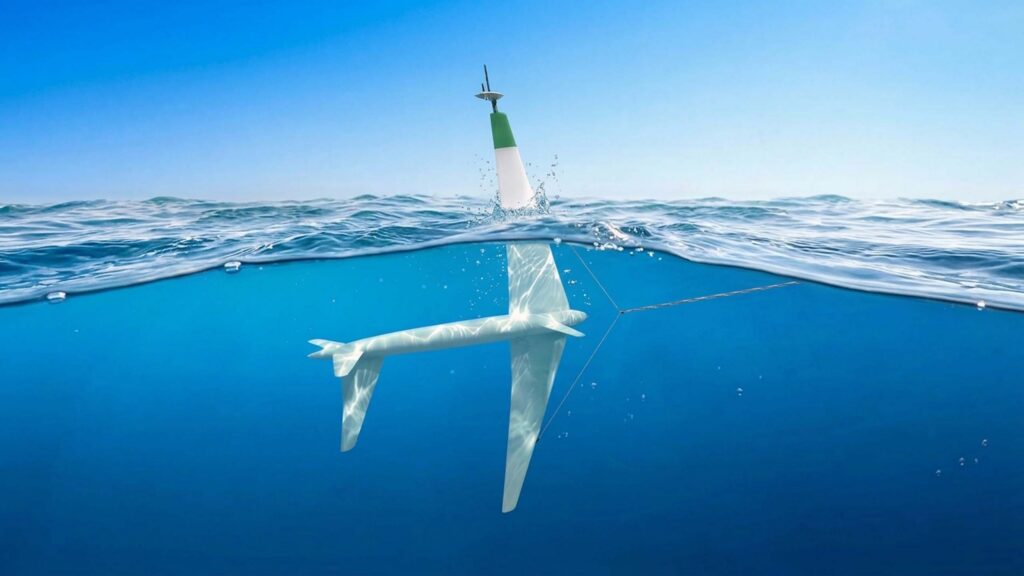
Innovative Underwater Kites: A New Frontier in Renewable Energy
As the world intensifies its battle against climate change, the quest for sustainable energy solutions has never been more critical. While solar and wind energy lead the charge, a novel approach is being explored by Evan Variano, a civil and environmental engineering professor at UC Berkeley. He is investigating tidal energy harnessed through the use of underwater kites.
In a discussion with Berkeley Engineering, Variano shared insights into this promising technology. The underwater kite, resembling its aerial counterpart, uses a tether to guide its movement in figure-eight patterns. This motion allows the kite to convert the kinetic energy from ocean currents into a viable source of power.
The Role of Underwater Kites in Renewable Energy
Underwater kites present an attractive addition to the renewable energy landscape. According to Variano, these kites offer portability and efficiency, making them an excellent alternative to traditional underwater turbines, which require significant construction efforts. “Kites shine when you want something that’s very portable,” Variano notes. They also provide a reliable energy source in areas where solar or wind energy may not be feasible.
These kites have potential applications in remote coastal communities, where they can supplement existing energy sources. By capturing energy from predictable tidal patterns, they ensure a consistent power supply even when solar or wind conditions are unfavorable. Variano highlights the practical benefits, stating that ocean-goers could use tidal kites to recharge batteries, reducing reliance on fuel.
Community Impact and Ethnographic Research
Variano emphasizes the importance of balancing new technology with existing maritime activities. Tvetene Carlson, a Berkeley researcher, is conducting ethnographic studies in Alaska to understand local water use and value systems. This research aims to ensure that tidal kites can coexist with fishing and other water-dependent activities.
Origins and Research Goals
Variano’s journey with underwater kites began five years ago, inspired by a collaboration with Tom Libby, a former Berkeley colleague. Together, they have advanced the Manta kite project, combining SRI International’s robotics expertise with Variano’s fluid-flow knowledge.
Maximizing Power with the Manta Kite
The current research focuses on optimizing power generation and developing an effective autopilot system. Variano describes their approach as using “a computational brain inside the kite” with sensors to navigate and maximize energy output by adapting to tidal conditions.
Future Directions
Looking ahead, Variano is excited about refining the kite’s design for efficiency and marketability. Collaborations with product design experts like Chris Myers at the Jacobs Institute for Design Innovation are crucial in achieving these goals. The team is also seeking investors to tailor this technology to specific customer needs, ensuring it becomes a viable commercial product.
Original Story at engineering.berkeley.edu