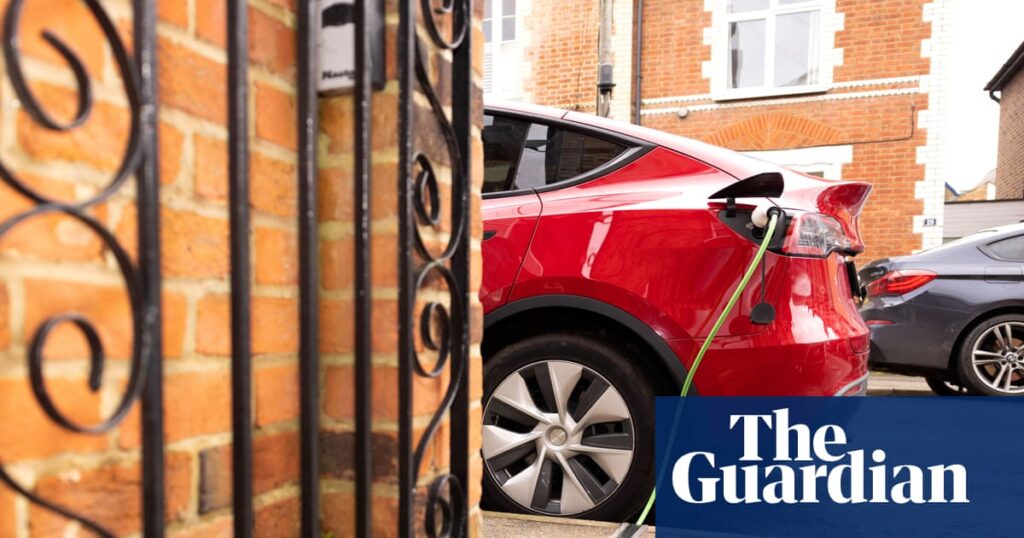
As the demand for electric vehicles (EVs) continues to rise, innovative solutions like pavement gullies are being introduced to make charging more accessible for those without off-street parking. However, despite legal changes designed to simplify the installation process, many UK households are still grappling with challenges and costs associated with this new infrastructure.
New Legal Changes and Their Impacts
In a significant policy shift, drivers in England with no off-street parking will no longer need planning permission to install a pavement gully for EV charging. This change is aimed at making it easier for residents to charge their electric vehicles at home without the hassle of public charging stations.
Pavement gullies allow EV charging cables to connect to parked vehicles without causing a trip hazard, integrating seamlessly into the pavement. By using home energy supplies for charging, drivers can potentially reduce their costs by up to 90% compared to public charging fees.
Challenges with Local Authorities
Despite the new legal ease, over 20 local councils, including some in London such as Ealing, Waltham Forest, and Hackney, remain opposed to allowing these installations. The reasons cited range from safety concerns to maintenance responsibilities. Waltham Forest, for instance, highlights issues related to pedestrian safety and liability.
Alison Williams, a resident of Ealing, expresses her frustration: “It’s really frustrating… You either have to have enough money to have a house with a driveway, or you have to be able to afford the additional cost of charging at a public charger.” Her sentiments reflect the broader challenges faced by residents in areas where councils have yet to embrace the gully installations.
Financial Implications of Installation
While some councils offer funding to help residents with the cost of gully installations, the financial landscape is varied. Ben Whitaker of Kerbo Charge notes that the typical cost without a grant is around £1,200, though some councils like Surrey and South Gloucestershire offer reduced rates. “Sadly, there is quite a variety of approaches and prices,” he remarks.
For those in areas with available funding, the government has allocated £25 million to support these initiatives. However, the distribution of these funds varies by council, leading to inconsistencies in implementation and costs.
Council Refusals and Their Justifications
Many councils continue to resist the implementation of pavement gullies, citing safety, liability, and maintenance concerns. As Carl Cashman from the Local Government Association states, “local authorities would like to support on-street charging as much as possible but have limited resources and significant demands to meet.”
Residents like Nick Theobald, who lives in Fulham, find themselves caught in a postcode lottery. Though nearby Richmond permits gully installations, his area does not, illustrating the inconsistencies across different regions.
Cost-Effective Home Charging
For those able to install gullies, the cost savings are considerable. Gregg Francis from Wales, who benefited from a local council scheme, charges his EV for a fraction of the price he would pay at public charging stations. “If we went to the public charger, we could be looking at £30 to £63 for the same amount of electricity,” he explains.
The discrepancy in costs is further highlighted by figures from ChargeUK, showing that off-peak home charging costs about 8p per kWh, compared to 54p for public charging. Vicky Edmonds of EVA England emphasizes that drivers with a driveway save significantly compared to their peers without off-street parking.
Original Story at www.theguardian.com