Renowned agronomist and forester Georges-Henri Florentin has stepped into the role of President of the French Academy of Agriculture for 2026. With vast experience in forestry and wood science, Florentin addresses pressing issues such as wildfires, climate change adaptation, and the farming crisis in a recent interview with The European Scientist.
Florentin’s Journey from Jura to the Academy
The European Scientist: Can you share details about your professional journey and your current role as the 2026 President of the French Academy of Agriculture?
Georges-Henri Florentin: Growing up in the Jura, a region with a strong forest presence, shaped my early interest in forestry. This led to my scientific education at the Institut national agronomique in Paris and the École des eaux et forêts in Nancy. My career initially involved a decade as a silviculturist in the Jura, followed by a long tenure at the FCBA technology institute. Post-retirement, I have been involved in promoting wood usage in the Paris Olympic Games facilities.
At the Academy, I’ve focused on enhancing the visibility of our farmers’ and foresters’ contributions to ecological transitions through scientific reports and public sessions. In 2026, topics such as farm income, forest adaptation, and environmental risks were discussed, showcasing the Academy’s diverse work.
Summer 2026: Fires and Droughts
TES: How do you view the impact of recent wildfires in France and Europe, especially in the context of climate change?
G.-H. F.: The wildfires, exacerbated by 2026’s severe droughts and heatwaves, underscored the need for climate adaptation. This summer’s events highlighted the vulnerability of agricultural output and forest resilience, prompting us to work on a report titled “Resilient and Multifunctional Forests” due in 2027.
We must address the causes of fires and evaluate land-use planning and silvicultural practices. Lessons from the Gironde and other affected areas emphasize the importance of underbrush clearing, firebreaks, and species mixing. Human activity, responsible for the majority of fires, necessitates improved communication and penalties.
Debunking “Let Nature Take Its Course”
TES: What is your stance on the idea that forests are best managed by leaving them alone?
G.-H. F.: While some advocate for non-intervention, we believe active management is crucial, especially in the face of rapid climate change. Unmanaged forests may suffer from limited regeneration and increased vulnerability to pests and fires. Our Academy’s forthcoming report will further explore these issues.
The Big Book of Trees and Forests
TES: You co-edited “Le Grand Livre des arbres et de la forêt.” How has this work contributed to public understanding of forestry complexities?
G.-H. F.: The book, written by 32 experts, aims to enhance public discourse by providing comprehensive insights into forestry’s complexities. It challenges simplistic narratives and encourages informed discussions based on science and facts, reflecting the Academy’s mission to share knowledge and promote informed debate.
Wood: A Pressured Renewable Resource
TES: How is wood, as a renewable resource, currently faring?
G.-H. F.: Wood remains a vital, renewable resource due to photosynthesis. However, climate change is affecting tree growth and increasing mortality rates. Despite these challenges, the forest stock continues to grow, albeit at a slower rate, highlighting the importance of research to sustain carbon sequestration.
The Farming Crisis and National Debate
TES: Could you discuss the Academy’s stance on the farming crisis and the recent debate with former agriculture ministers?
G.-H. F.: The farming crisis involves interconnected challenges requiring structural solutions. In a private session, former ministers discussed the need for a national debate on agriculture. The Academy aims to facilitate informed discussions, leveraging its expertise to address both immediate and long-term agricultural issues.
The meeting concluded with consensus on the importance of innovation, science, and collective approaches in addressing agricultural challenges. The Academy continues to engage with stakeholders to promote resilient farming systems.
Interview by The European Scientist
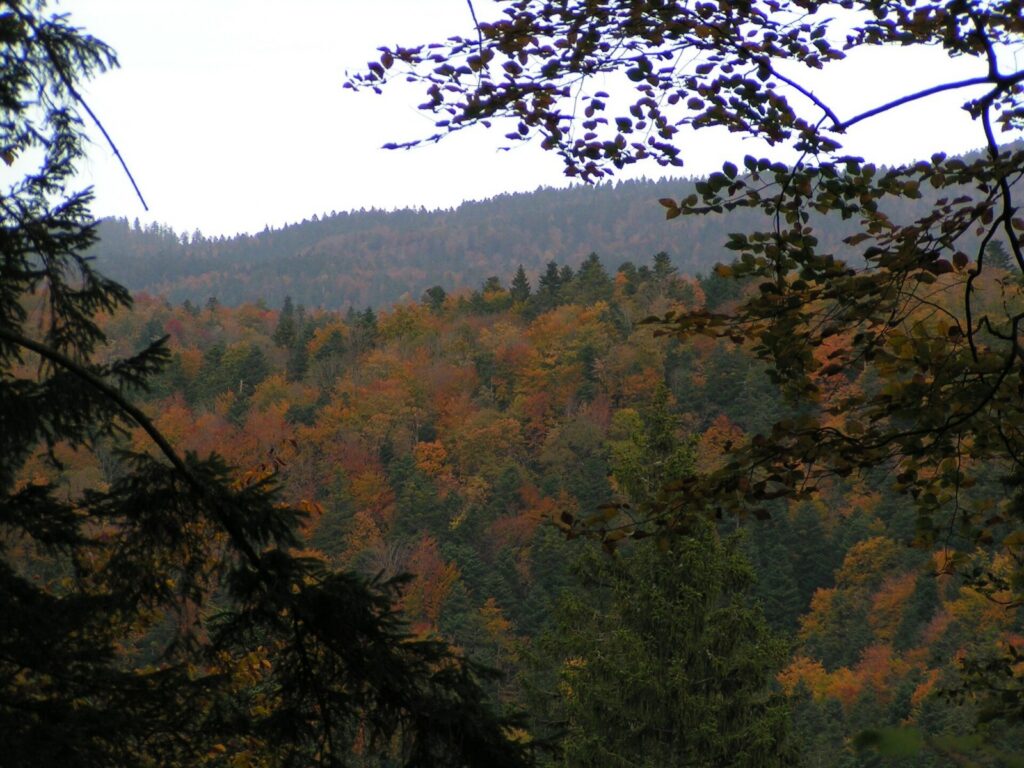
Image: mixed broadleaf and conifer forest in the Jura mountains in autumn. Photo by Juraastro, via Wikimedia Commons, licence CC BY-SA 3.0.
Read also
This post is also available in:
FR
Original Story at www.europeanscientist.com