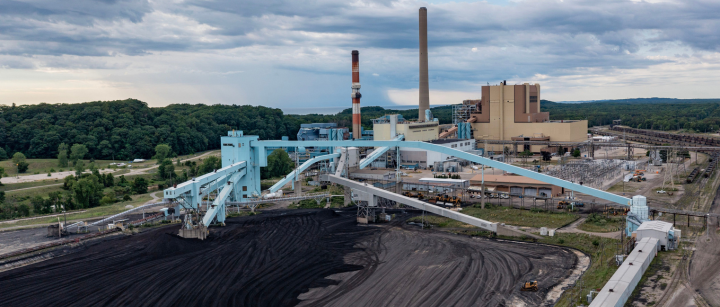
Recent changes in U.S. energy policy have sparked debate over their implications for the reliability of the power grid and consumer costs. The Trump administration’s partial repeal of a regulation aimed at limiting carbon emissions from power plants has been portrayed as a move to protect grid reliability, though experts challenge this claim.
Trump administration officials claim that revoking the regulation, along with other policies, will reduce electricity costs for Americans. While a slight decrease in prices is anticipated from the repeal, other policies could potentially drive prices up.
Environmental Protection Agency Administrator Lee Zeldin argued that the previous government’s rules endangered communities by driving up energy costs. Zeldin stated, “The overbearing and often-unlawful rules that were sought by prior administrations to destroy reliable baseload power made energy prices skyrocket and threatened many communities and states throughout our country,” during a Houston event on September 14, announcing the rule’s revocation (source).
Secretary of Energy Chris Wright echoed these sentiments, asserting that the repeal would ensure electricity generation reliability, independent of weather conditions, by maintaining coal and natural gas power generation (source).
Impact on Coal Plants and Grid Reliability
The 2024 power plant regulation was intended to reduce emissions from coal and new gas plants. It was projected by the EPA to deliver long-term climate and health benefits worth up to $370 billion with minimal impact on electricity prices. Some coal plants might have retired earlier under this rule, but experts like Nikhil Kumar from GridLab argue that this trend was already driven by economic factors, not the regulation itself.
Experts also rebutted claims that the regulations threatened grid reliability. Martin Ross from Duke University noted, “The system reliability has not had a problem adapting to renewables in the past, and there’s really no particular reason to think it will in the future.” Advances in battery storage now allow energy to be stored and used later, aiding grid reliability amidst the integration of renewable resources.
Arguments for and Against Regulation
The EPA’s legal stance for repealing the regulation is based on the argument that greenhouse gas emissions aren’t considered pollution under the Clean Air Act, thus falling outside their regulatory authority. This rationale extends to other contexts, such as vehicle emissions. However, the global impact of power plant emissions remains significant, contributing significantly to worldwide greenhouse gas emissions.
According to Johannes Pfeifenberger from the Brattle Group, grid reliability issues are often linked to distribution infrastructure rather than generating capacity. He emphasized that outages are typically due to distribution problems, particularly in storm-prone areas with overhead wires, rather than a lack of power generation.
Future Energy Demand and Price Implications
With electricity demand set to rise due to technological advancements and electrification efforts, the need for new generation capacity grows. Renewable energy sources, supported by battery storage, are gaining traction as reliable contributors to the grid.
The deregulation of power plant emissions might initially raise electricity prices slightly, but a long-term decrease is expected. The EPA estimates retail electricity prices could rise by 0.7% by 2030 but drop by 5.8% by 2035. However, this is amid broader policy changes that could offset these savings.
Reports suggest that the Trump administration’s broader energy policies might lead to increased electricity prices due to reduced federal support for clean energy projects. The Natural Resources Defense Council projects a price increase of 4.2% to 5.5% by 2035 due to these policies.
Original Story at www.factcheck.org