An Evolutionary Marvel: The Scarlet Monkeyflower’s Rapid Adaptation
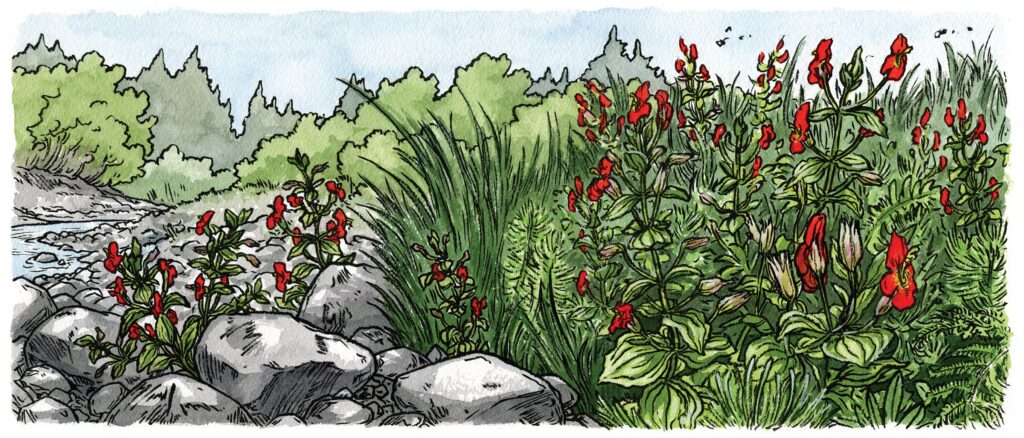
The vibrant world of the scarlet monkeyflower is buzzing with scientific intrigue, as these charming blossoms reveal new secrets about evolution and climate adaptation. Found along streams from Washington to Northern Mexico, these flowers have attracted not only hummingbirds but also the attention of researchers keen to understand their evolutionary prowess.
Earlier this year, an insightful study led by ecologist Amy Angert, from the University of British Columbia, highlighted the remarkable ability of the scarlet monkeyflower (Mimulus cardinalis) to evolve rapidly in response to climate change. This discovery marks the first time scientists have documented a plant species adapting swiftly enough to potentially ‘rescue’ itself from environmental threats.
From Streams to Scientific Breakthroughs
Since 2010, Angert’s team has been diligently visiting numerous monkeyflower habitats, gathering seeds and data to explore their adaptive traits. By cultivating multiple generations in controlled environments, the researchers observed significant drought-tolerant adaptations, such as changes in leaf thickness and blooming schedules.
The monkeyflowers’ distinctive scent, as described by Angert, is “a little sweet, a little pungent,” an aroma that transports her back to the field every time.
Model Organisms in Evolutionary Studies
Scarlet monkeyflowers serve as an exemplary “model species” in the study of evolutionary biology. Their appeal lies in their long history of research dating back to the 1800s, their short lifecycle, adaptability to lab conditions, and prolific seed production. Despite advances in genetic sequencing technologies, the monkeyflower’s small genome remains a beneficial trait for researchers.
Decoding Climate Resilience
Research from Angert’s lab reveals that southern populations of the scarlet monkeyflower boast greater genetic diversity for adaptation compared to their northern counterparts. This variance underscores the need for caution when generalizing findings across different populations.
Angert’s team is also investigating the concept of “stress memory” in plants. This phenomenon involves non-genetic changes that can be passed down through generations, potentially aiding adaptation even when genetic evolution lags.
Floral Specialization and Evolution
The scarlet monkeyflower has evolved characteristics that perfectly suit hummingbird pollinators, including its bright red hue and tubular shape. In contrast, the closely related Lewis’ monkeyflower (Mimulus lewisii) is adapted for bumblebee pollination with its pink blooms and inviting petal structure. Despite their ability to hybridize, these species seldom do, thanks to their pollinators’ distinct preferences.
Illustrations by Emily Poole.
For more information, contact editor@hcn.org or submit a letter to the editor. View our letters to the editor policy.
This article is featured in the October 2026 print edition under the title “Get to know the scarlet monkeyflower.”
Republish our articles for free, online or in print, under a Creative Commons license.
Original Story at www.hcn.org