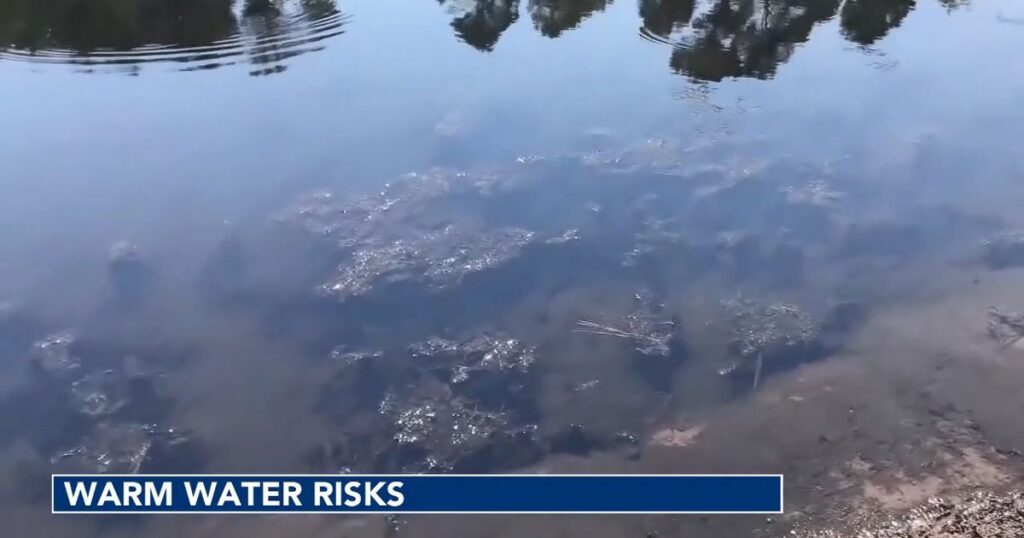
As concerns grow over North Carolina’s water safety following a teen’s death from a rare amoeba infection and two other deaths from Vibrio bacteria, residents are questioning what is in their local waters. These incidents highlight the risks associated with warm water bodies, particularly in light of changing climate conditions.
On a recent Labor Day morning near the Neuse River, locals Cynthia Gary and Michael Fennell opted for a bike ride instead of taking a dip. “The water levels have been very low and the water is extra warm this year because of the high temperatures,” Gary noted. “I don’t think it’s a good idea to be out there for me.”
Fennell echoed this caution, citing frequent news reports of waterborne illnesses. “I see it on the news all the time,” he remarked. “I’m kind of leery of that.”
Their apprehension is understandable given the recent death of a teenager from Naegleria fowleri, an amoeba thriving in warm freshwater, and two fatalities linked to Vibrio vulnificus, a bacteria found in warm coastal waters. While these infections are rare, they underscore the impact of prolonged warm weather on North Carolina’s waterways.
Warmer Waters and Extended Heat
Meteorologist Shel Winkley from Climate Central explains that extended heat is particularly significant in shallow or slow-moving waters. “If we’re not seeing water be pushed through our waterways, then that water just kind of sits there,” Winkley stated, adding that this can lead to the warming of ponds and streams.
In Raleigh, the period of summer-like temperatures has notably lengthened. Historically, days reaching around 85 degrees ended by early October in 1970. Now, these temperatures extend until mid-October.
It’s not just temperature that affects water safety. Factors like nutrients, rainfall, sunlight, and water movement also play roles. Heavy rainfall can introduce nutrients into waterways, and subsequent hot, dry conditions can foster harmful algal blooms.
Before Labor Day, the North Carolina Department of Environmental Quality advised the public to avoid water that appears discolored or scummy, signs of potential algal blooms, which can produce toxins harmful to humans, pets, and aquatic life.
Testing of Local Swimming Sites
Routine water-quality concerns include bacteria, which are not visible to the naked eye. Sound Rivers conducts tests on over 50 recreational sites. Their final pre-Labor Day tests showed most sites, including Raleigh and Falls Lake, met recreational water-quality standards.
However, one site at the Neuse Golf Club in Clayton failed due to elevated bacteria levels. Despite warmer conditions altering water-quality risks, most local sites passed the tests, offering reassurance to swimmers like Andrea Torrico. “I feel like every time I swim in a lake, I hear about the brain-eating amoeba,” Torrico shared. “But I’m willing to take that risk. It is very rare.”
Water Utilities and Preparedness
The impact of warmer water extends beyond recreational concerns. Raleigh Water’s Assistant Director Ed Buchan highlighted the city’s use of ozone in its treatment system to mitigate taste and odor issues caused by algae. “One of the concerns you have is that with warmer climate, more sun, you can have more algae issues,” Buchan stated.
Falls Lake, Raleigh’s main water source, is less prone to issues affecting smaller reservoirs during hot, dry periods. While warmer waters don’t inherently make North Carolina’s lakes and rivers unsafe, they do prolong summer-related risks.
DEQ advises avoiding water that appears bright green, blue, discolored, or scummy, and keeping children and pets away from suspected algal blooms. State health officials also recommend preventing warm freshwater from entering the nose to minimize the already low risk of Naegleria infection.
Despite these advisories, Torrico intends to continue enjoying the water. “I love swimming,” she said. “What can I say?”
Original Story at www.wral.com