A federal judge has overturned New York’s Climate Change Superfund Act, stating it conflicts with federal authority.
The law aimed to make fossil fuel companies contribute to climate adaptation costs. However, the judge ruled it operates in a legal area dominated by federal interests, making it unenforceable.
This decision follows a lawsuit filed in February 2025 by attorneys general from 22 Republican-led states, supported by major fossil fuel industry groups.
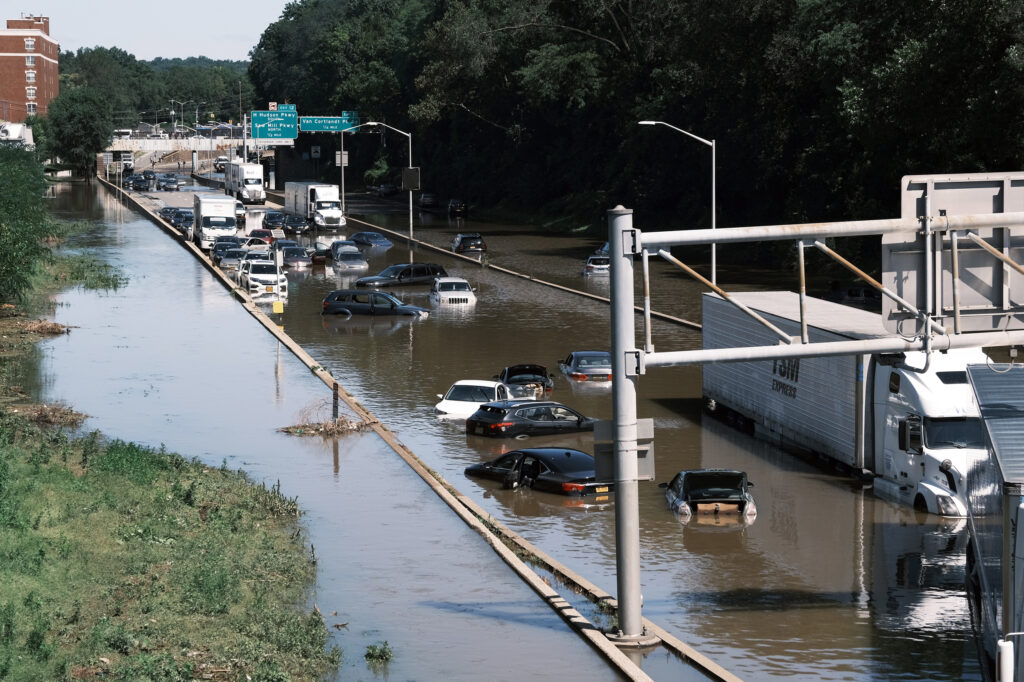
The legislation sought to collect $75 billion over 25 years from fossil fuel firms, a fraction of the over $500 billion needed for climate adaptation in New York.
“Fossil fuel companies knew the damage they were causing,” stated Assemblyman Jeffrey Dinowitz, a co-sponsor of the legislation. “The law aimed to have them share the cost of the damage.”
Ken Lovett, communications advisor for New York Governor Kathy Hochul, remarked that taxpayers should not bear the costs due to polluters, noting they are reviewing the decision.
Judge Brenda Sannes of the Northern District of New York indicated the act exceeded state law limits and referenced a 2021 case where New York City was blocked from seeking compensation from oil companies for climate-proofing infrastructure.
The 2nd Circuit Court of Appeals had ruled federal law limited the city’s ability to regulate emissions. Sannes noted New York’s law mirrored the city’s claims, making it indistinguishable.
“State climate lawsuits and superfund laws are part of a coordinated campaign against a vital industry,” stated Ryan Meyers of the American Petroleum Institute. “Climate policy is a federal issue, and we agree with the court’s decision.”
The oil industry has opposed stricter federal measures, prompting state and local governments nationwide to find alternate strategies.
The Trump administration has challenged state and local climate actions, including New York’s and similar laws in Vermont, Minnesota, Michigan, and Hawaii.
If New York appeals, the 2nd Circuit Court will evaluate the distinctiveness of the state superfund lawsuit. A similar issue may reach the U.S. Supreme Court in the Suncor v. Boulder County case.
The Supreme Court could determine if federal law precludes state-law claims for greenhouse gas emissions damages, which might impact New York’s superfund law.
“This is a binary issue,” said Blair Horner of the New York Public Interest Research Group. “Costs must be paid by either taxpayers or shared with oil companies.”
Original Story at insideclimatenews.org