In the wake of a catastrophic flash flood in Nepal, experts are raising alarms about similar risks in Europe, particularly in the Alpine region. The recent disaster, believed to be caused by a glacial lake outburst or glacier collapse, underscores the vulnerabilities faced by mountainous areas as global temperatures rise.
A deadly surge of water, mud, and debris traveled approximately 170 kilometers from southwest Tibet into central Nepal, resulting in hundreds of fatalities earlier this week. Glaciologist Olaf Eisen from the Alfred Wegener Institute for Polar and Marine Research highlights that such events, while currently more severe in the Himalayas, could become a threat in the Alps.
Eisen recalls a 2025 incident in Blatten, Switzerland, where a rock and glacier collapse occurred. Although the village was evacuated, a 64-year-old man lost his life. “The disaster in Nepal was, in terms of the volume of the avalanche, around 10 to 20 times larger than Blatten, according to current estimates,” Eisen noted.
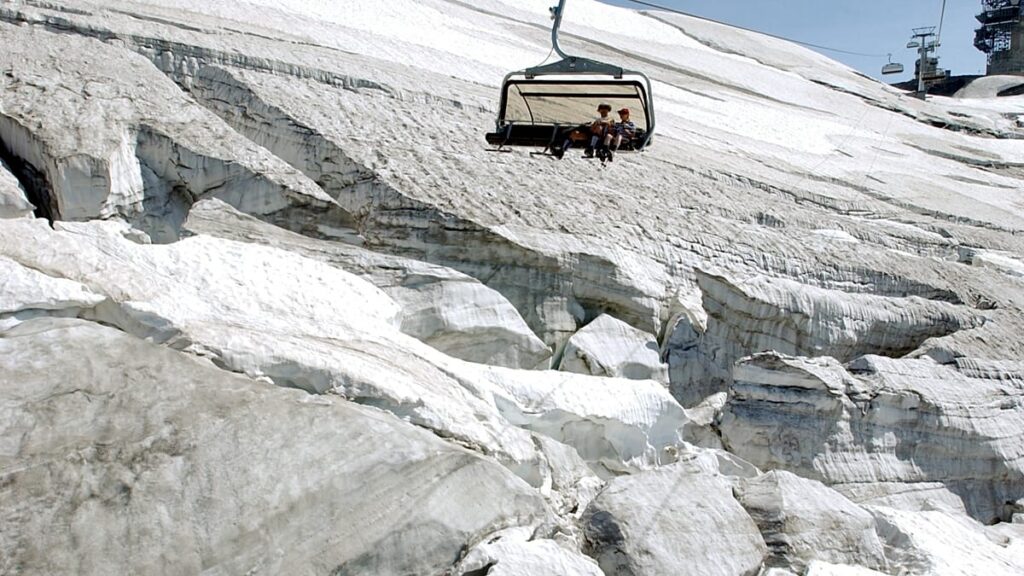
Europe is experiencing rapid warming, primarily due to human-induced climate change, affecting high mountain regions as glaciers retreat and permafrost thaws. Areas between 2,500 and 3,000 meters in countries like France, Italy, Austria, and Switzerland are particularly vulnerable.
Risk of Glacier Collapse in Switzerland
Since 1850, Switzerland has seen the disappearance of around 1,000 glaciers, losing about 1,000 square kilometers of ice cover. The Weisshorn East glacier, which recently experienced three small collapses, is under continuous observation. Frederic Imboden, mayor of Randa, the neighboring municipality, stated, “This glacier has been monitored for years and there are repeated movements – sometimes more, sometimes less.” While current risks to residents are minimal, nearby hiking and cycling paths have been closed as a precaution.
Causes of Glacier Collapses
Glacier collapses can result from natural, cyclical processes, but increasingly, human-driven climate change is a significant factor. Regions with historically permanent sub-freezing temperatures, containing permafrost, are at particular risk. As global temperatures rise, permafrost thaws, weakening the glacier’s grip on the ground, which can lead to sudden collapses.
During heatwaves or heavy rainfall, water pockets beneath glaciers can create immense pressure, causing the frozen glacier fronts to fail. This was evident in 2022 on Italy’s Marmolada glacier, where a large ice block detached, killing 11 mountaineers.
“Climate protection is glacier protection. Every tenth of a degree less counts. If average temperatures were to fall again, glaciers could adapt and grow,” Eisen emphasized. While mechanical protections provide short-term relief in select ski areas, they require substantial energy and labor.
Original Story at www.euronews.com